Apollo Program
Landing humans on the Moon
Apollo was NASA's program to land humans on the Moon, born from President John F. Kennedy's 1961 challenge to do so "before this decade is out". Driven by Cold War competition, it grew into one of the largest technical projects in history, costing about $25.8 billion in then-year dollars — roughly $309 billion today.
Its architecture paired the giant Saturn V rocket with the Apollo Command and Service Module and a separate Lunar Module, using lunar-orbit rendezvous: two astronauts descended to the surface while a third orbited overhead. NASA flew eleven crewed Apollo missions, from the Earth-orbit shakedown of Apollo 7 in 1968 to the final landing of Apollo 17 in 1972.
Six of those missions landed, putting twelve astronauts on the Moon and returning 382 kilograms of rock and soil that scientists still study. After Apollo 17, budget cuts ended the program; no human has returned to the lunar surface since — a gap NASA's Artemis program now aims to close.
Every crewed Apollo flight
Apollo 7
Oct 1968First crewed Apollo flight — an Earth-orbit shakedown of the redesigned Command and Service Module after the Apollo 1 fire.
Apollo 8
Dec 1968First crewed flight to the Moon — ten orbits to test deep-space navigation and reentry.
Apollo 9
Mar 1969Earth-orbit test of the Lunar Module, including docking, undocking and crewed flight of the lander.
Apollo 10
May 1969Full dress rehearsal in lunar orbit; the lander descended to about 14 km above the surface without landing.
Apollo 11
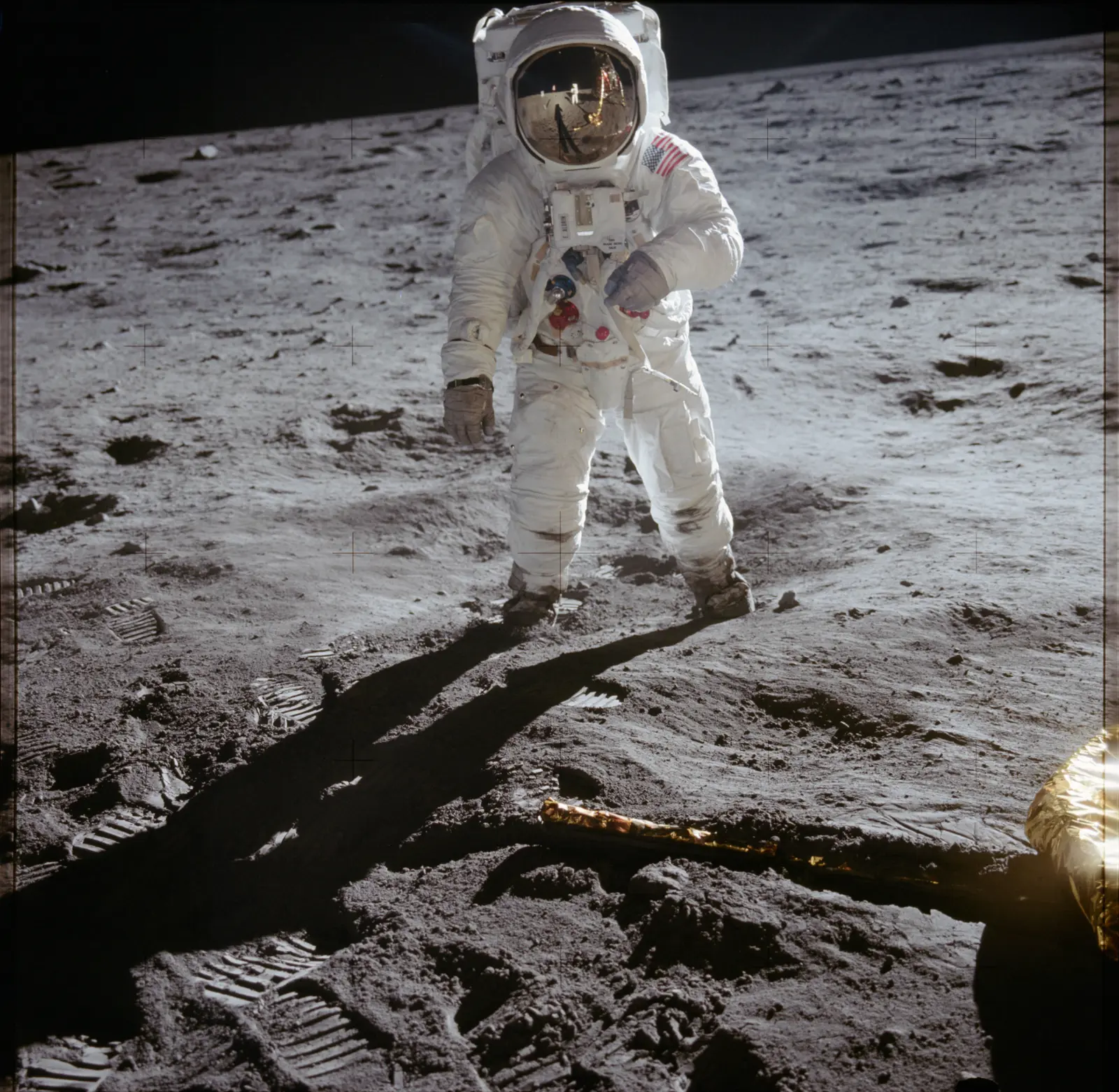
Jul 1969The first crewed Moon landing, at the Sea of Tranquility.
Apollo 12
Nov 1969Second landing — a pinpoint touchdown beside the robotic Surveyor 3 probe in the Ocean of Storms.
Apollo 13
Apr 1970Intended third landing at Fra Mauro, aborted after an oxygen-tank explosion en route.
Apollo 14
Jan–Feb 1971Reached the Fra Mauro highlands that Apollo 13 could not.
Apollo 15
Jul–Aug 1971First extended "J-mission", with the Lunar Roving Vehicle at Hadley–Apennine.
Apollo 16
Apr 1972First landing in the lunar highlands, at Descartes.
Apollo 17
Dec 1972The final Apollo landing, at Taurus–Littrow, with the first geologist on the Moon.
Apollo–Soyuz
Jul 1975Final flight of Apollo hardware — a joint mission docking with a Soviet Soyuz.
Apollo launches
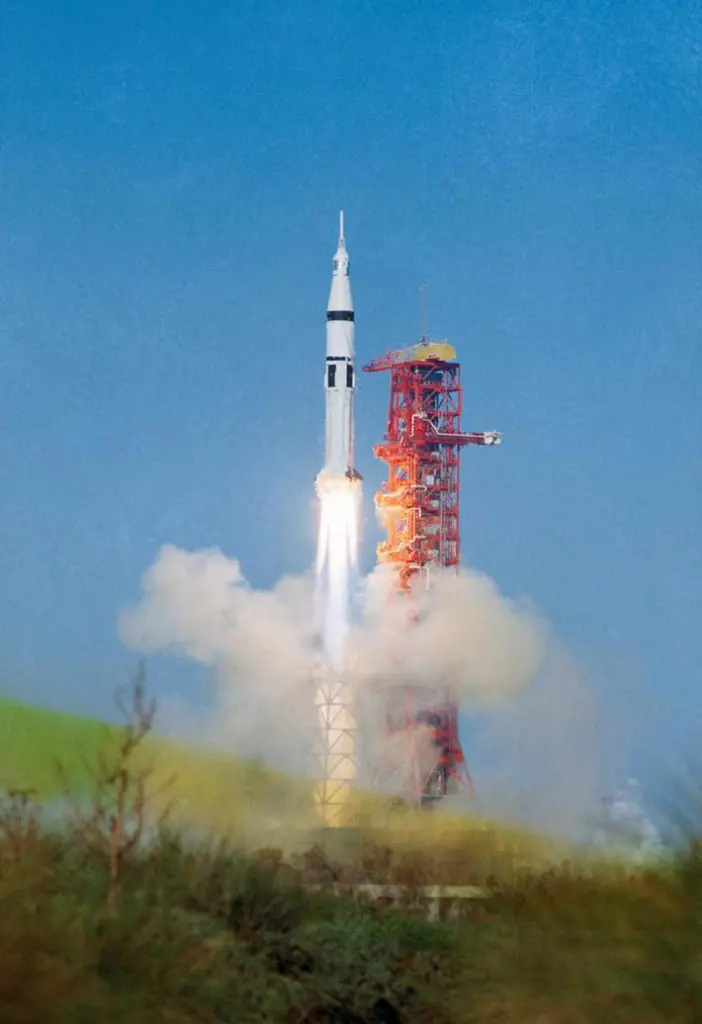
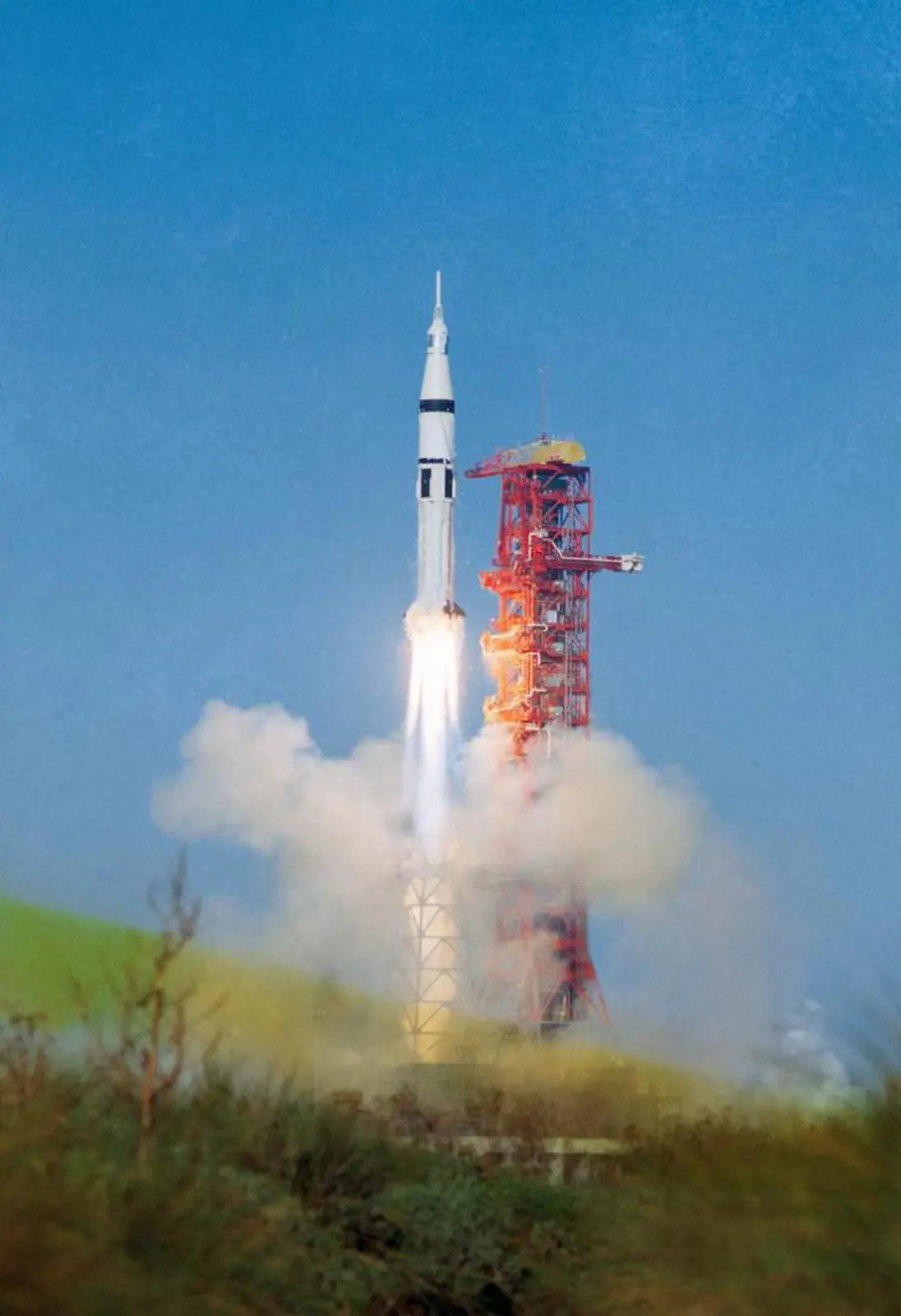
Apollo 7
Oct 11, 1968, 3:02 PM
NASA
Saturn IB
Cape Canaveral SFS, FL, USA
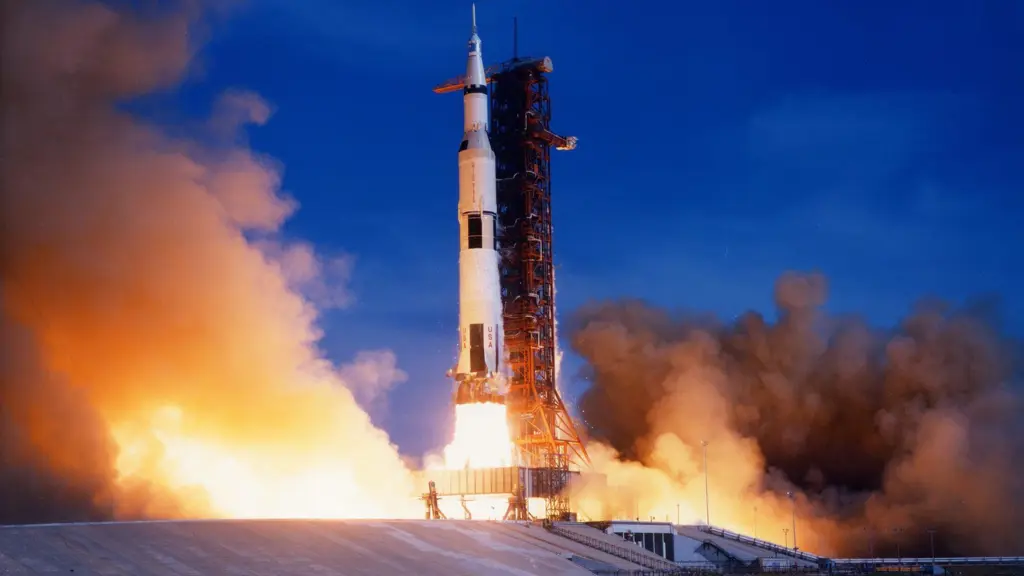
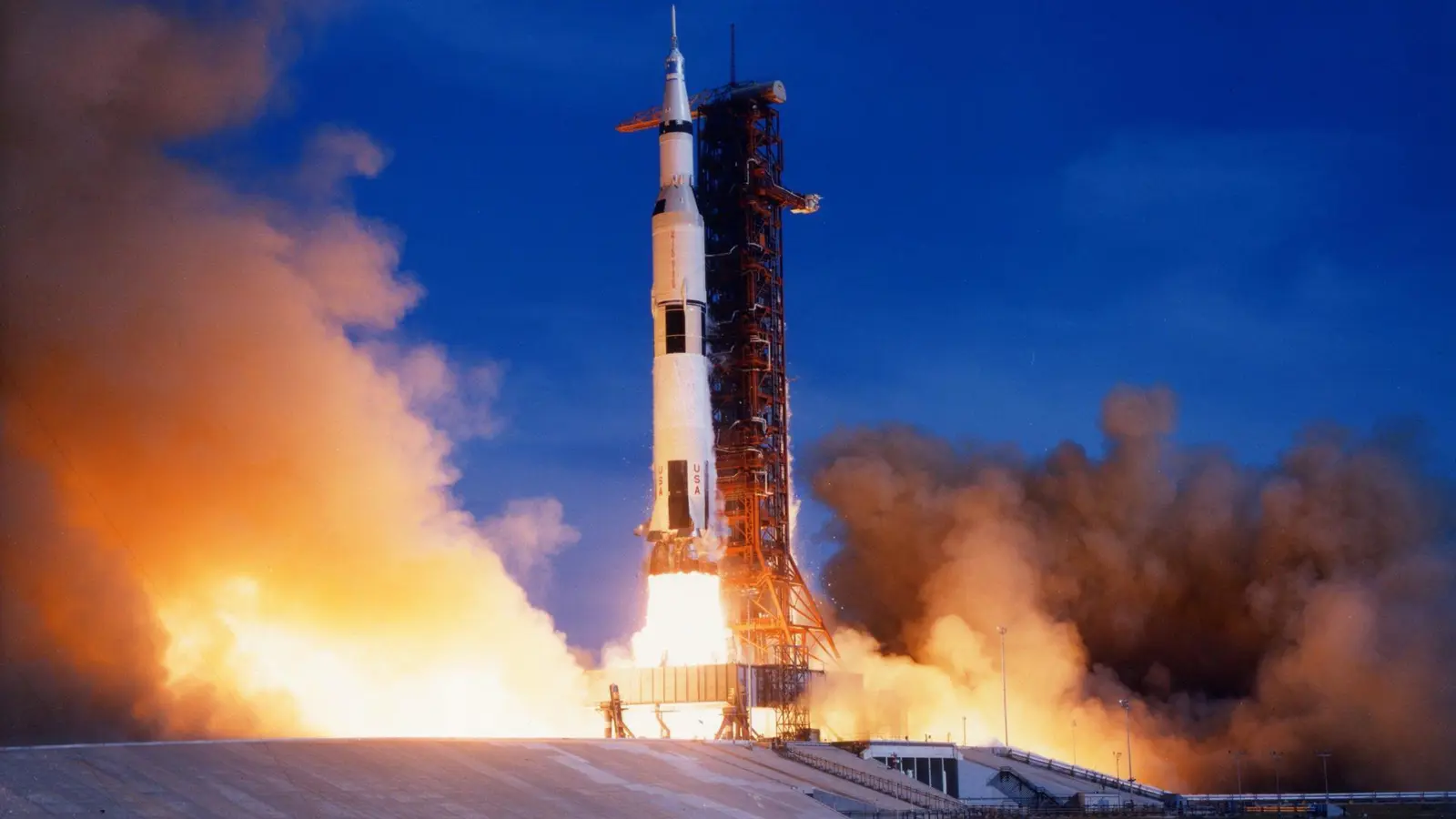
Apollo 8
Dec 21, 1968, 12:51 PM
NASA
Saturn V
Kennedy Space Center, FL, USA
Apollo 9
Mar 3, 1969, 4:00 PM
NASA
Saturn V
Kennedy Space Center, FL, USA
Apollo 10
May 18, 1969, 4:49 PM
NASA
Saturn V
Kennedy Space Center, FL, USA
Apollo 11
Jul 16, 1969, 1:32 PM
NASA
Saturn V
Kennedy Space Center, FL, USA
Apollo 12
Nov 14, 1969, 4:22 PM
NASA
Saturn V
Kennedy Space Center, FL, USA
Apollo 13
Apr 11, 1970, 7:13 PM
NASA
Saturn V
Kennedy Space Center, FL, USA
Apollo 14
Jan 31, 1971, 9:03 PM
NASA
Saturn V
Kennedy Space Center, FL, USA
Apollo 15
Jul 26, 1971, 1:34 PM
NASA
Saturn V
Kennedy Space Center, FL, USA
Apollo 16
Apr 16, 1972, 5:54 PM
NASA
Saturn V
Kennedy Space Center, FL, USA
Apollo 17
Dec 7, 1972, 5:33 AM
NASA
Saturn V
Kennedy Space Center, FL, USA
Apollo-Soyuz Test Project
Jul 15, 1975, 7:50 PM
NASA
Saturn IB
Kennedy Space Center, FL, USA
Apollo crews
Apollo 11
First person to walk on the Moon.
Orbited the Moon alone aboard Columbia.
Second person to walk on the Moon.
Apollo 12
Apollo 13
Flew to the Moon twice (Apollo 8 & 13) but never landed; the landing was aborted after the explosion.
Made the call "Houston, we've had a problem."
Apollo 14
First American in space; the oldest moonwalker.
Apollo 15
Apollo 16
Later commanded the first Space Shuttle flight.
The youngest person to walk on the Moon.
Apollo 17
The last person to walk on the Moon.
The only professional geologist to walk on the Moon.
Apollo landing sites
Sea of Tranquility (Mare Tranquillitatis)
Apollo 11The first crewed landing site — 'Tranquility Base' — on a smooth, low-latitude lava plain chosen for safety.
Ocean of Storms (Oceanus Procellarum)
Apollo 12A pinpoint landing beside the robotic Surveyor 3 probe, proving Apollo could reach a precise target.
Fra Mauro Highlands
Apollo 14Hilly highlands targeting material thrown out by the giant Imbrium impact, probing deeper crust.
Hadley–Apennine
Apollo 15First mission with the Lunar Roving Vehicle, at the foot of the Apennine mountains beside winding Hadley Rille.
Descartes Highlands
Apollo 16The only landing in the central lunar highlands; it returned 'Big Muley', the largest single Apollo rock.
Taurus–Littrow Valley
Apollo 17The final and most scientifically rich landing, with the only geologist on the surface and orange volcanic soil.
Apollo timeline
- 25 May 1961Kennedy sets the goal
President Kennedy challenges the United States to land a man on the Moon and return him safely before the decade is out.
- 12 Sep 1962"We choose to go to the Moon"
Kennedy's Rice University speech frames the lunar landing as a deliberate national challenge — "not because it is easy, but because it is hard".
- 27 Jan 1967The Apollo 1 fire
A cabin fire during a launch-pad test kills Gus Grissom, Ed White and Roger Chaffee, forcing a major redesign of the command module.
- Dec 1968Apollo 8 orbits the Moon
Borman, Lovell and Anders become the first humans to leave Earth orbit and circle the Moon, capturing the famous 'Earthrise' photograph.
- 20 Jul 1969Apollo 11 lands
Neil Armstrong and Buzz Aldrin touch down at Tranquility Base, and Armstrong takes the first human steps on another world.
- Apr 1970Apollo 13's "successful failure"
An oxygen-tank explosion cripples the spacecraft; the crew uses the lunar module as a lifeboat and returns safely.
- Dec 1972Apollo 17 — the last landing
Gene Cernan and geologist Jack Schmitt close out Apollo with a record haul of samples; Cernan is the last person to walk on the Moon.
- Jul 1975Apollo–Soyuz handshake
An Apollo spacecraft docks with a Soviet Soyuz — the first international crewed mission and the final flight of Apollo hardware.
Legacy
Samples from six sites still drive lunar science and reshaped the leading theory that the Moon formed from debris of a giant impact with the early Earth.
Apollo validated lunar-orbit rendezvous, deep-space navigation and high-speed reentry — the playbook Artemis now builds on.
Laser retroreflectors left by Apollo crews are still ranged from Earth today, measuring the Moon's distance to within centimetres.
Apollo 8's photograph of Earth rising over the lunar horizon became an icon of the environmental movement.