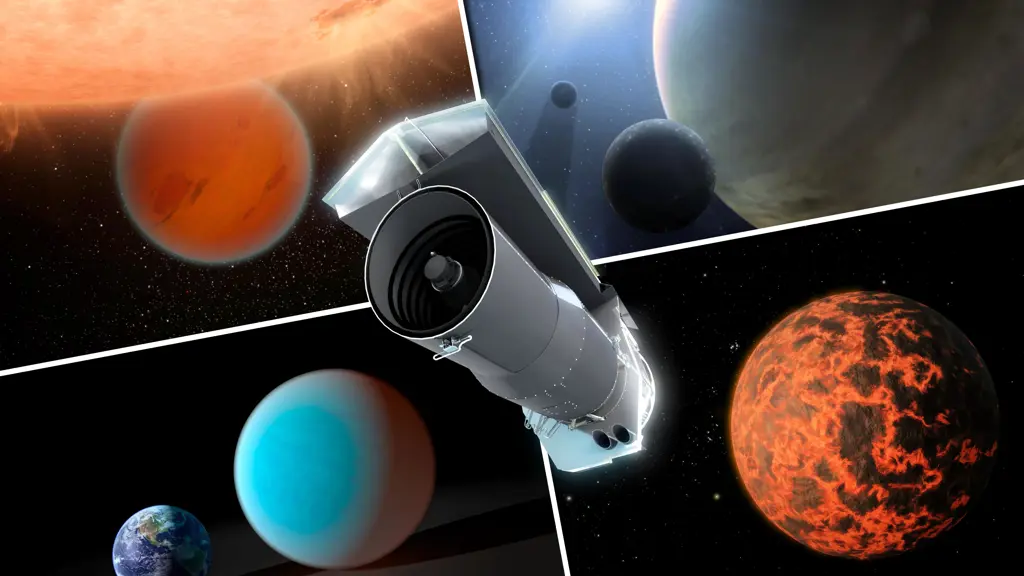
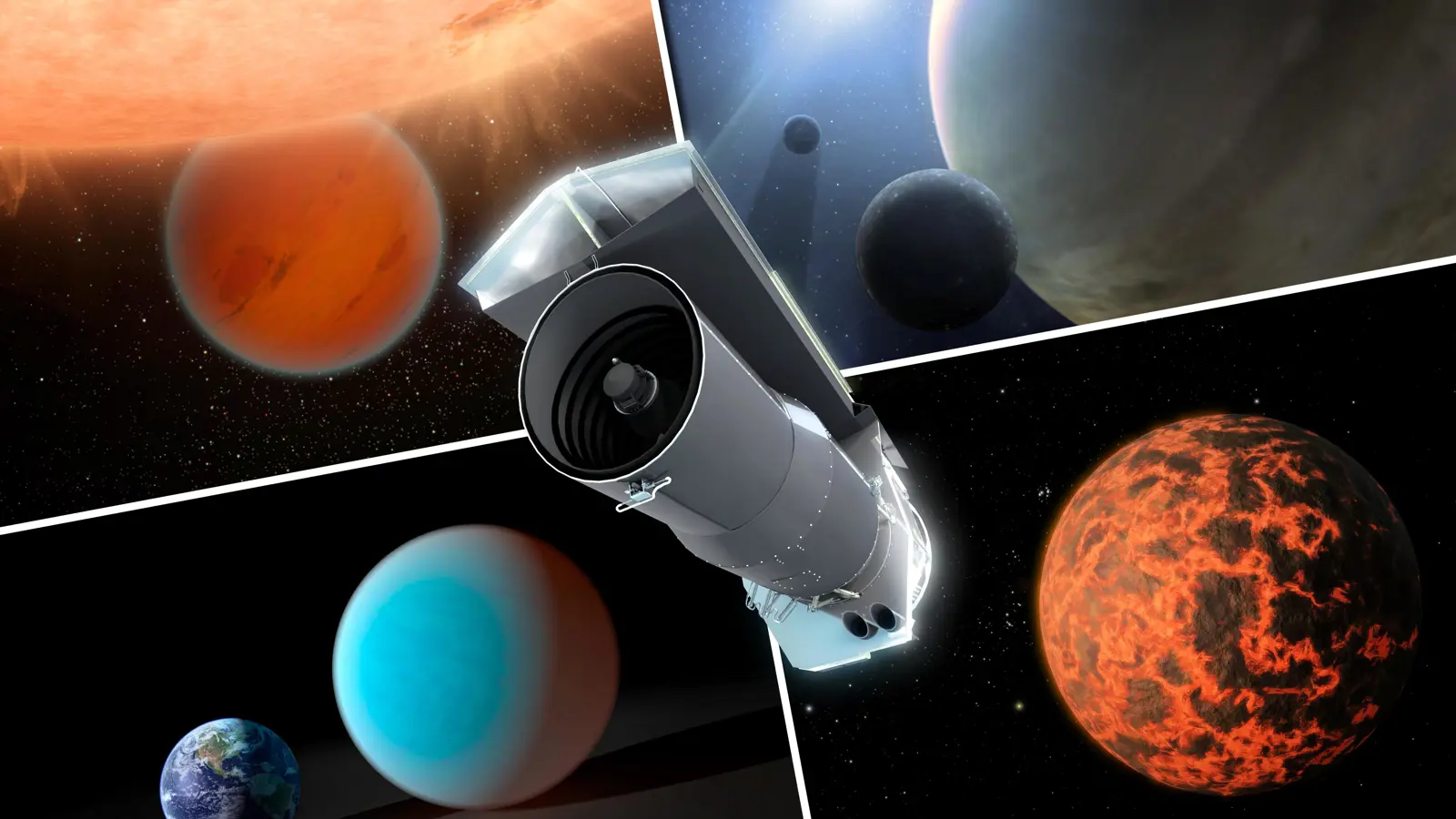
Spitzer Space Telescope
Sixteen years in the infrared
Spitzer was the fourth and final Great Observatory — the infrared half of NASA's plan to image the universe in every wavelength from gamma-rays to far-IR. Its 0.85 m beryllium mirror was small by space-telescope standards, but cooling it to a few degrees above absolute zero let it see through dust that visible-light telescopes simply can't pierce.
Rather than a low Earth orbit, Spitzer was placed into an Earth-trailing solar orbit, slowly drifting away from Earth at about a tenth of an astronomical unit per year. That kept it far from the warm Earth and let the telescope passively cool itself, drastically reducing the liquid helium it needed to carry.
When the cryogen ran out in May 2009 the long-wavelength channels died — but two of IRAC's near-infrared channels could still operate at 28 K passively, and Spitzer's 'Warm Mission' continued exoplanet, transit and survey science for another ten years. NASA shut Spitzer down on 30 January 2020 after sixteen years of operations.
Mission timeline
- 2003 · Aug 25Launch
Delta II 7920H from Cape Canaveral places Spitzer into an Earth-trailing heliocentric orbit.
- 2003 · DecFirst-light images
Star-forming nebula IC 1396 and other early targets show the universe in dust-piercing infrared.
- 2005 · MarFirst exoplanet light detected
Spitzer detects the infrared emission of HD 209458 b — the first direct detection of light from an exoplanet.
- 2009 · May 15Cryogen depleted
Liquid helium runs out — the long-wavelength channels die, but IRAC's 3.6 and 4.5 µm channels keep working passively.
- 2009 · JulWarm Mission begins
Spitzer transitions to the 'Warm Mission' — a near-IR-only second life that lasts almost as long as the cold mission.
- 2009 · OctPhoebe ring discovered
Spitzer's announcement of Saturn's giant Phoebe ring — a tenuous dust ring extending out to roughly 270 Saturn radii from the planet, by far the largest planetary ring in the Solar System.
- 2017 · FebTRAPPIST-1 system
Spitzer's transit timing reveals seven Earth-sized worlds around the ultracool dwarf TRAPPIST-1, three of them in the habitable zone.
- 2020 · Jan 30Mission ends
After 16 years and a fifth Sun–Earth orbit, Spitzer is placed into safe mode and decommissioned. The torch is passed to JWST.
Frequently asked questions
Mission simulation

Active instruments
- Infrared Array Camera
Imaging at 3.6, 4.5, 5.8 and 8.0 µm — only the two shortest channels survived into the Warm Mission
- Infrared Spectrograph
Low- and high-resolution spectroscopy from 5 to 40 µm — cryogenic era only
- Multiband Imaging Photometer for Spitzer
Far-infrared imaging at 24, 70 and 160 µm — cryogenic era only
Headline discoveries
Spitzer's precise transit timing confirmed seven Earth-sized planets around the ultracool dwarf TRAPPIST-1 — three of them in the habitable zone, the most planets ever found around a single star outside our own.
First direct detection of infrared light from an exoplanet (HD 209458 b, 2005) — opened the entire field of exoplanet atmospheric characterization.
Discovered a vast, sparse dust ring around Saturn linked to its moon Phoebe — by far the largest planetary ring in the Solar System, completely invisible in visible light.
Track Spitzer in real time
Follow Spitzer in NASA's Eyes on the Solar System — a real-time 3D simulation of the Earth-trailing solar orbit it drifted into across its mission.
Data: NASA/JPL — Eyes on the Solar System
Infrared universe
Infrared lineage
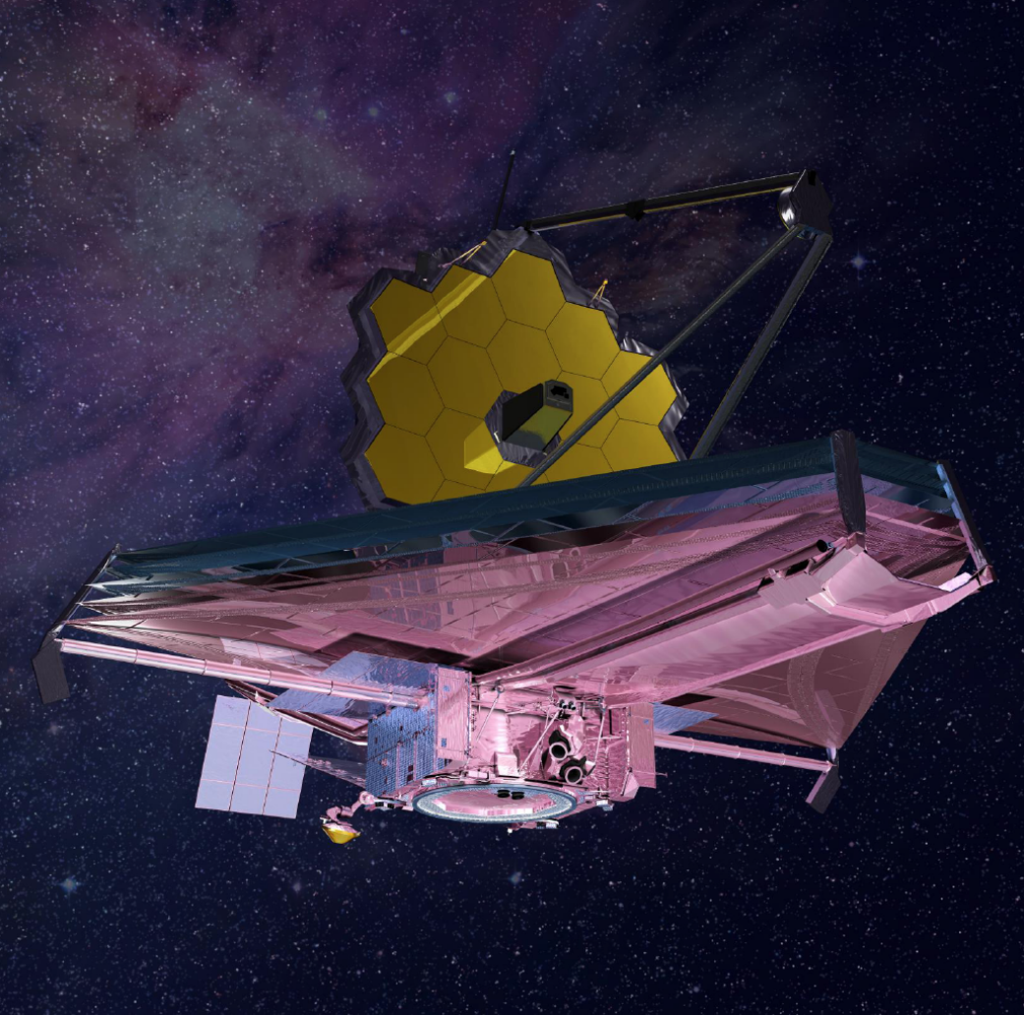
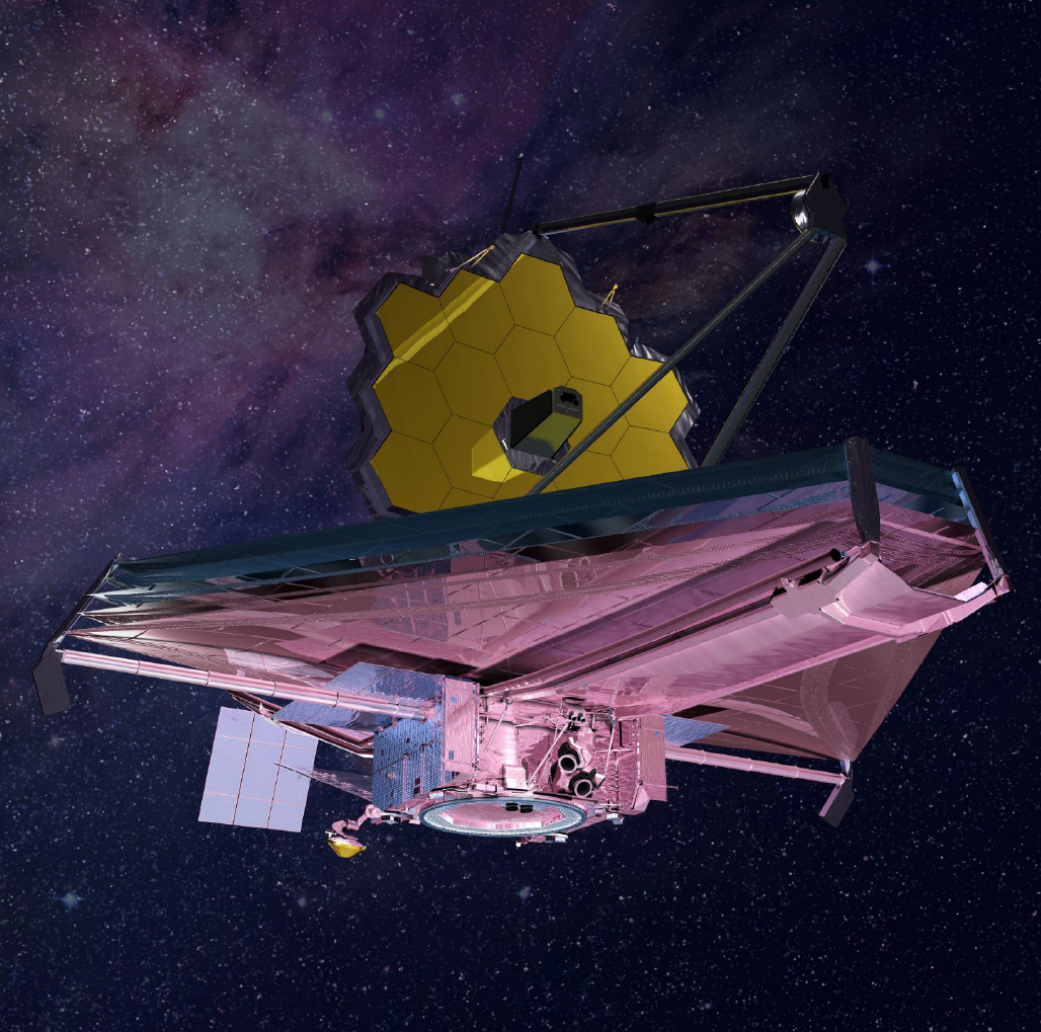
James Webb Space Telescope
OperationalInfrared eyes at the second Lagrange point
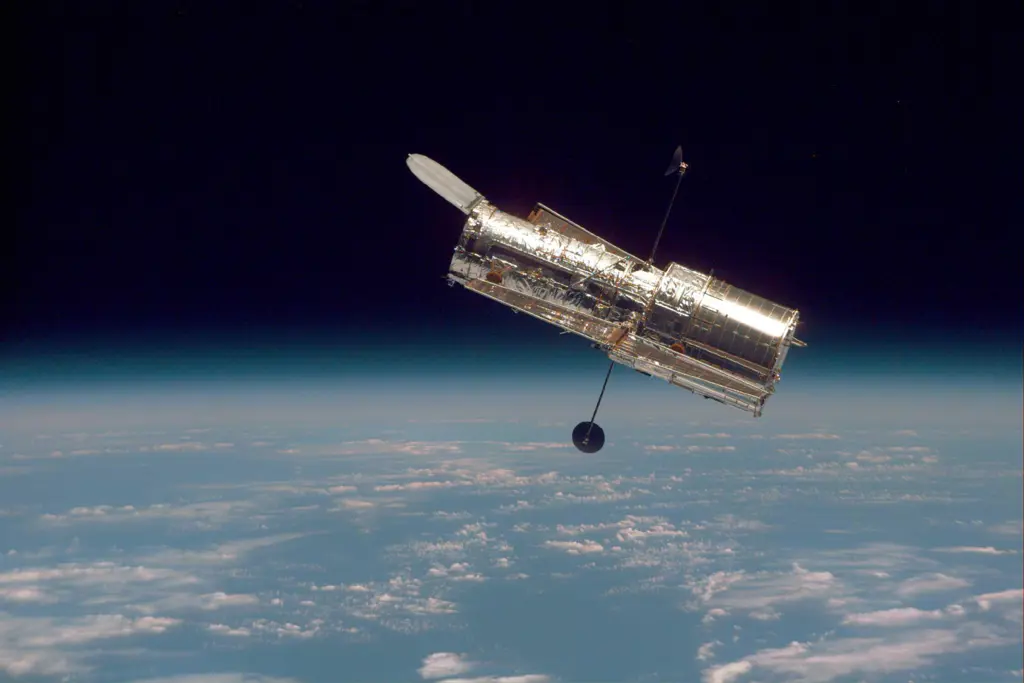
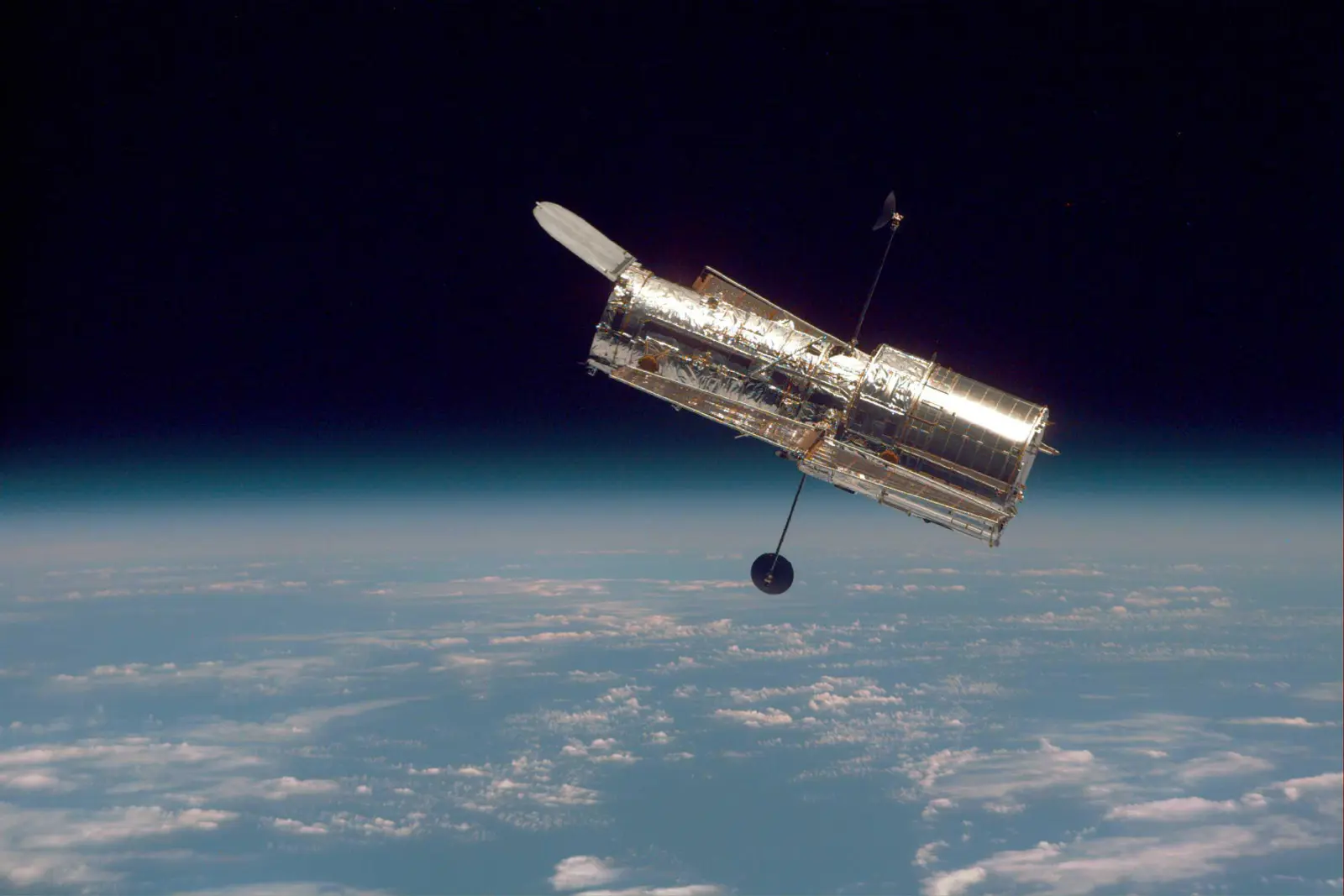
Hubble Space Telescope
Operational35 years above the atmosphere
Chandra X-ray Observatory
OperationalThe sharpest X-ray eyes ever flown