KosmosWiki
The encyclopedia of space — ask anything about rockets, missions, planets and the cosmos.
Articles
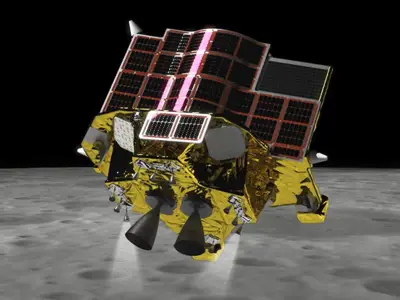
SLIM
'Moon Sniper' — Japan's precision lunar lander, the first spacecraft to demonstrate 10-metre-class pinpoint landing on the Moon.
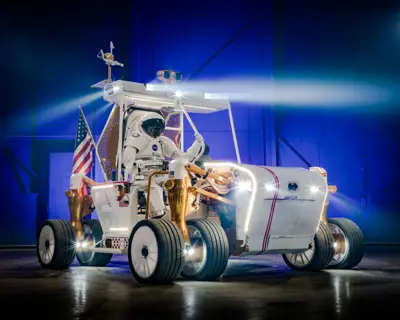
Lunar Terrain Vehicles
From Apollo's moon buggy to Artemis's autonomous electric rovers — humanity's quest for surface mobility on the Moon.
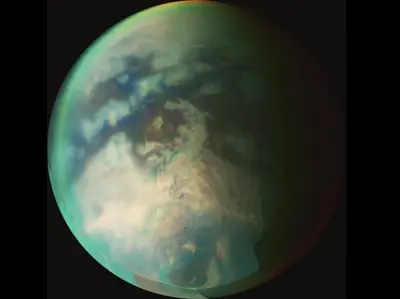
Titan
Saturn's largest moon — the only world beyond Earth with stable surface liquids, a dense nitrogen atmosphere, and a methane-based weather cycle.
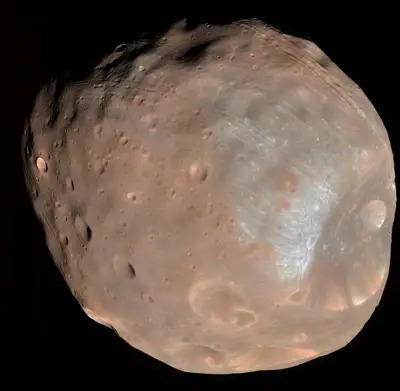
Phobos
Mars's inner moon — a doomed, potato-shaped world spiraling toward its end
Canopus
The second-brightest star in the night sky — a stellar giant 310 light-years away, blazing with the light of 13,000 suns, and a trusted guide for sailors, philosophers, and spacecraft alike.
Canis Major
The Greater Dog — home to the brightest star in the night sky and one of the oldest constellations in the sky.
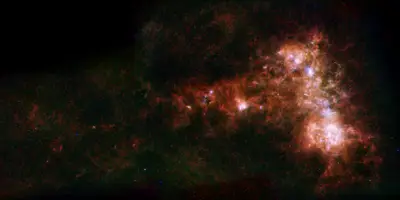
Small Magellanic Cloud
A dwarf irregular galaxy 200,000 light-years away — the Milky Way's disrupted companion and one of astronomy's most productive laboratories.
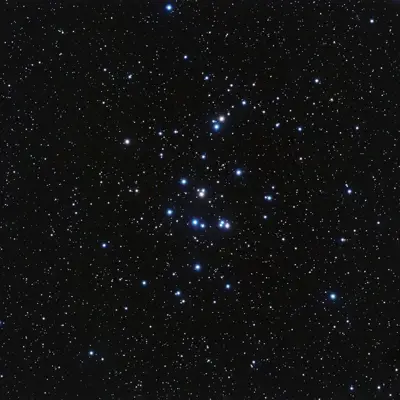
Beehive Cluster
A swarm of roughly 1,000 stars floating 600 light-years away in Cancer — observed since antiquity, resolved by Galileo, and now known to host its own planetary systems.