Juno
Unlocking Jupiter from pole to pole
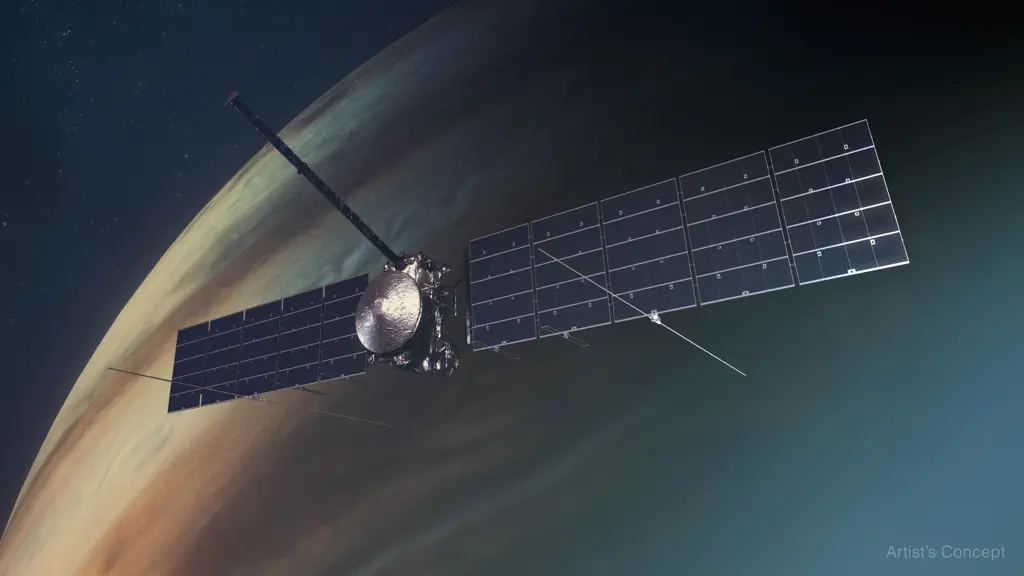
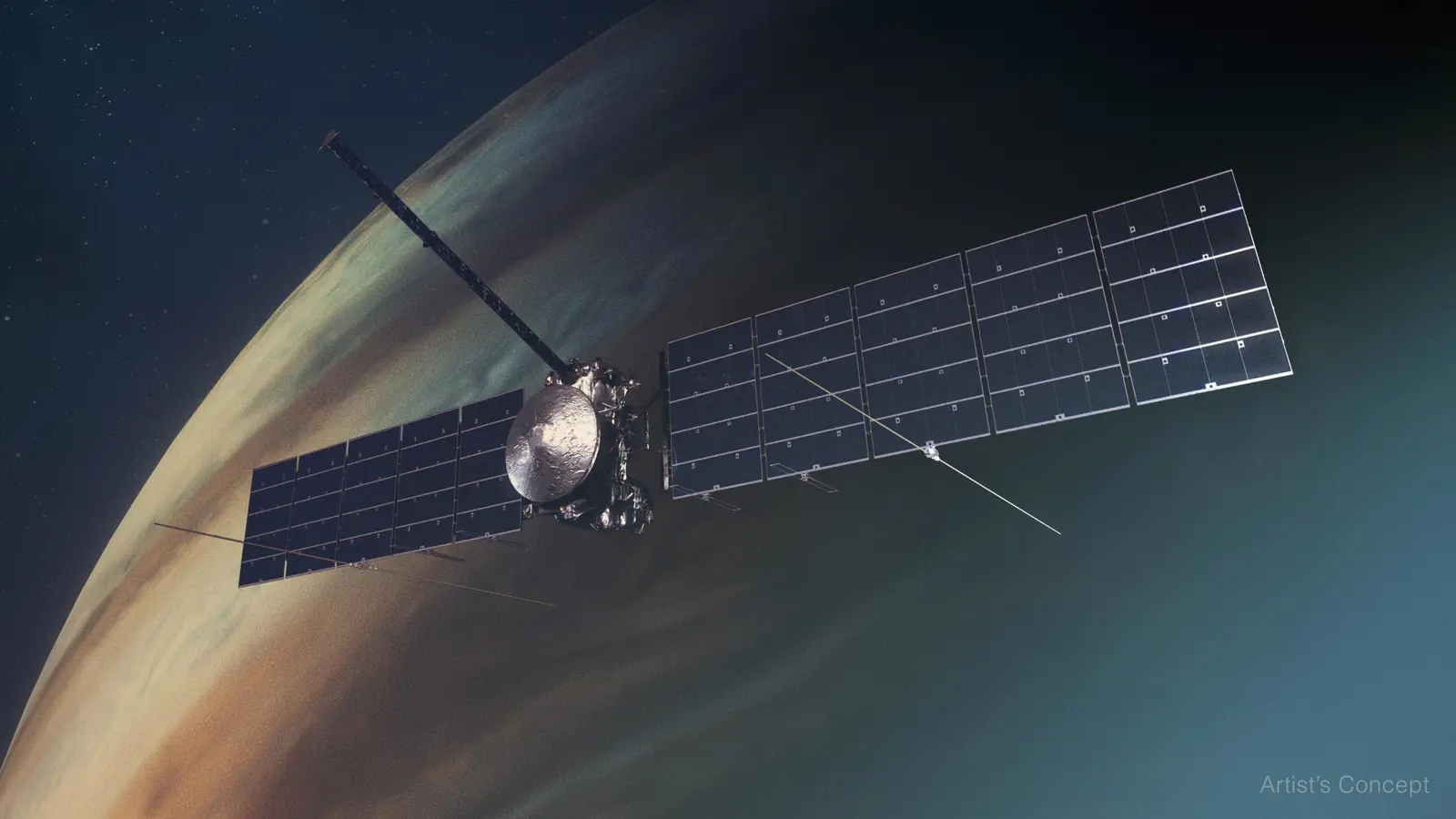
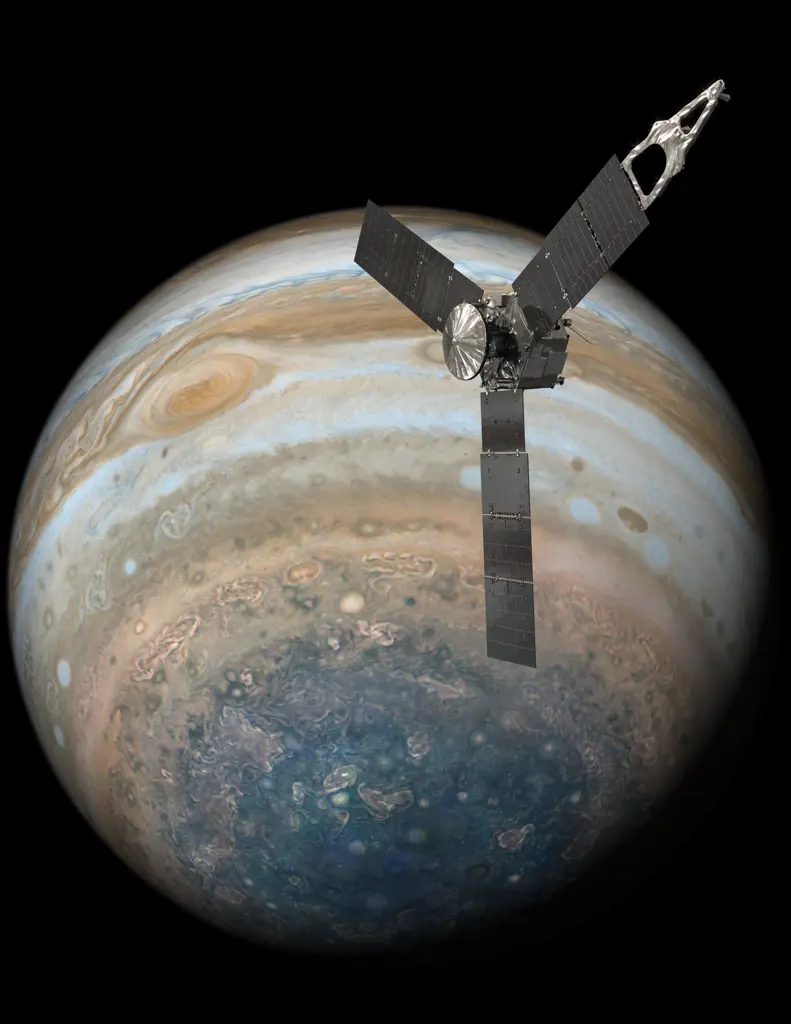
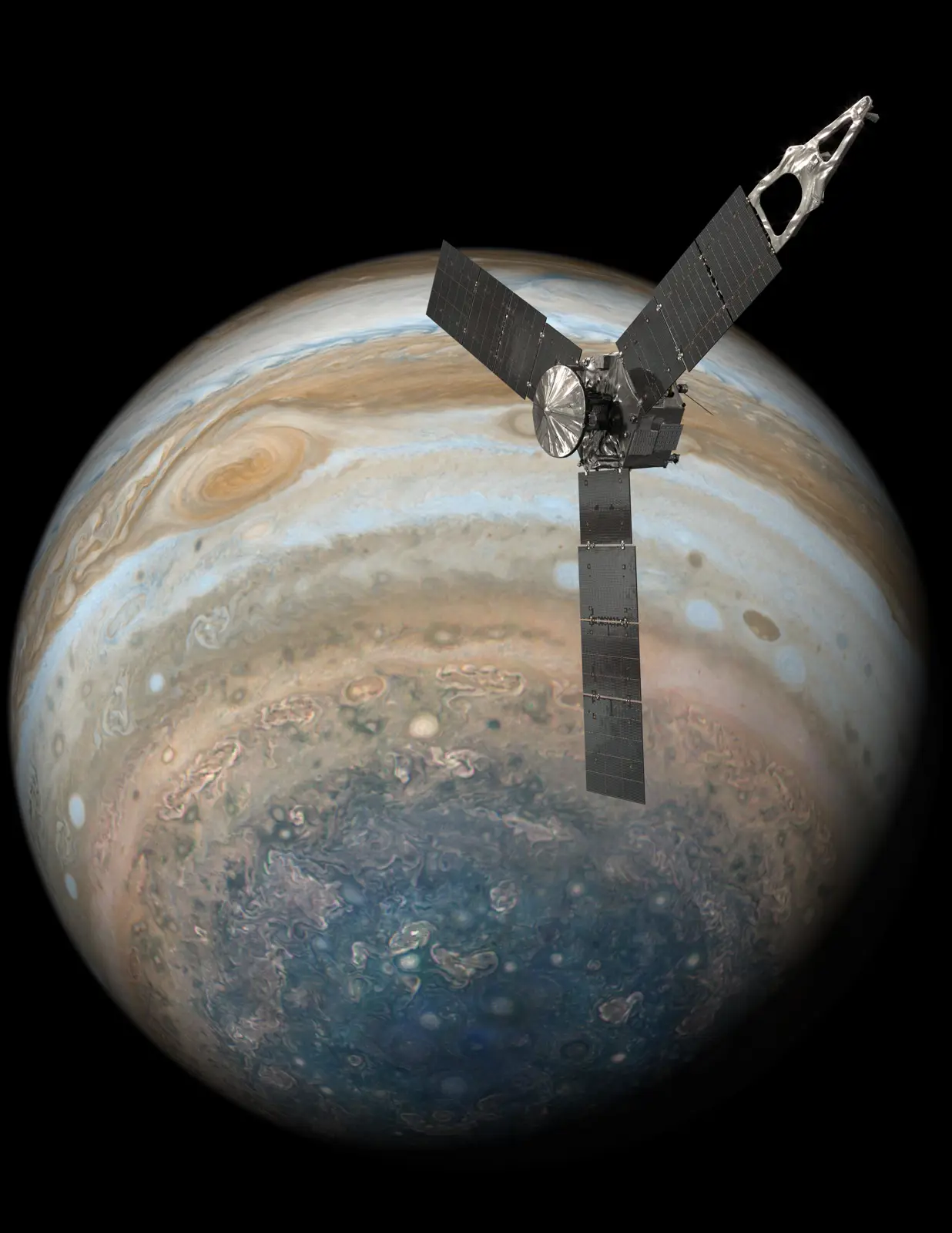
Juno is NASA's mission to look beneath Jupiter's clouds. Where earlier spacecraft photographed the weather, Juno was built to measure the planet itself — its deep atmosphere, internal structure, enormous magnetic field and the auroras crowning its poles — to work out how the solar system's largest planet formed.
Launched in 2011, it swung past Earth for a gravity assist in 2013 and slid into a wide, looping polar orbit around Jupiter on 4 July 2016. Juno is the most distant solar-powered spacecraft ever flown, running on three enormous solar wings because the radiation and distance at Jupiter make panels safer than they sound. Each close pass — a 'perijove' — skims just thousands of kilometres above the cloud tops before swinging far back out to stay clear of the worst radiation.
Its findings have rewritten Jupiter: a large, 'fuzzy' core diluted through the interior rather than a small solid one, winds reaching thousands of kilometres deep, and clusters of giant cyclones arranged in neat polygons at each pole. An extended mission added close flybys of Ganymede, Europa and Io. NASA's most recent extension approved operations through September 2025, and any further continuation depends on future funding decisions.
Mission timeline
- 2011 · Aug 5Launch
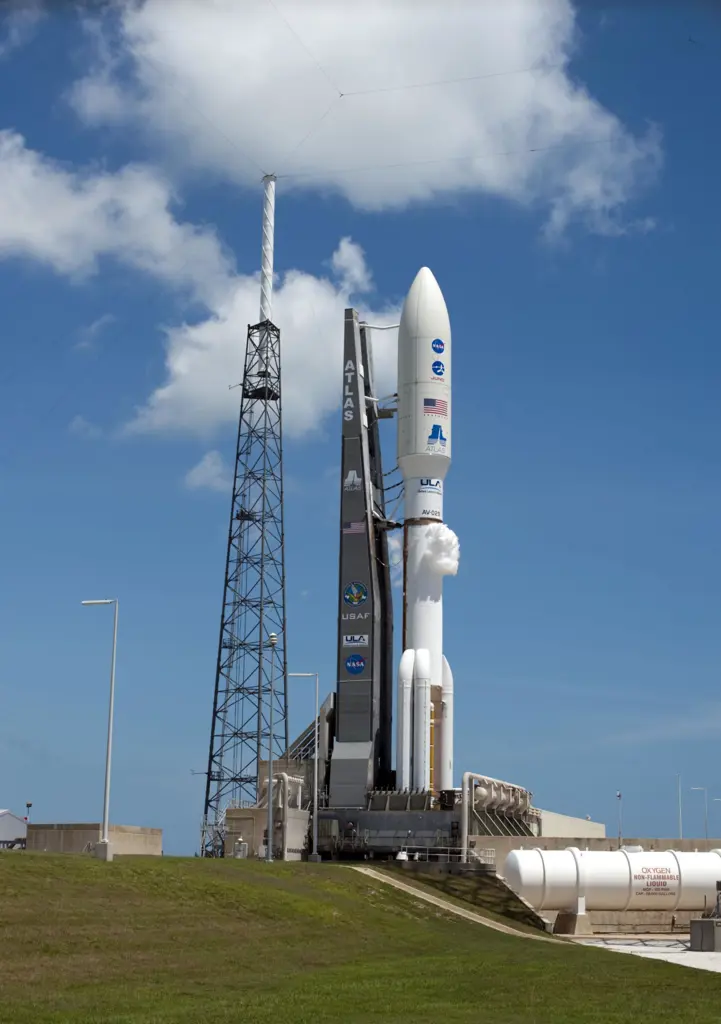
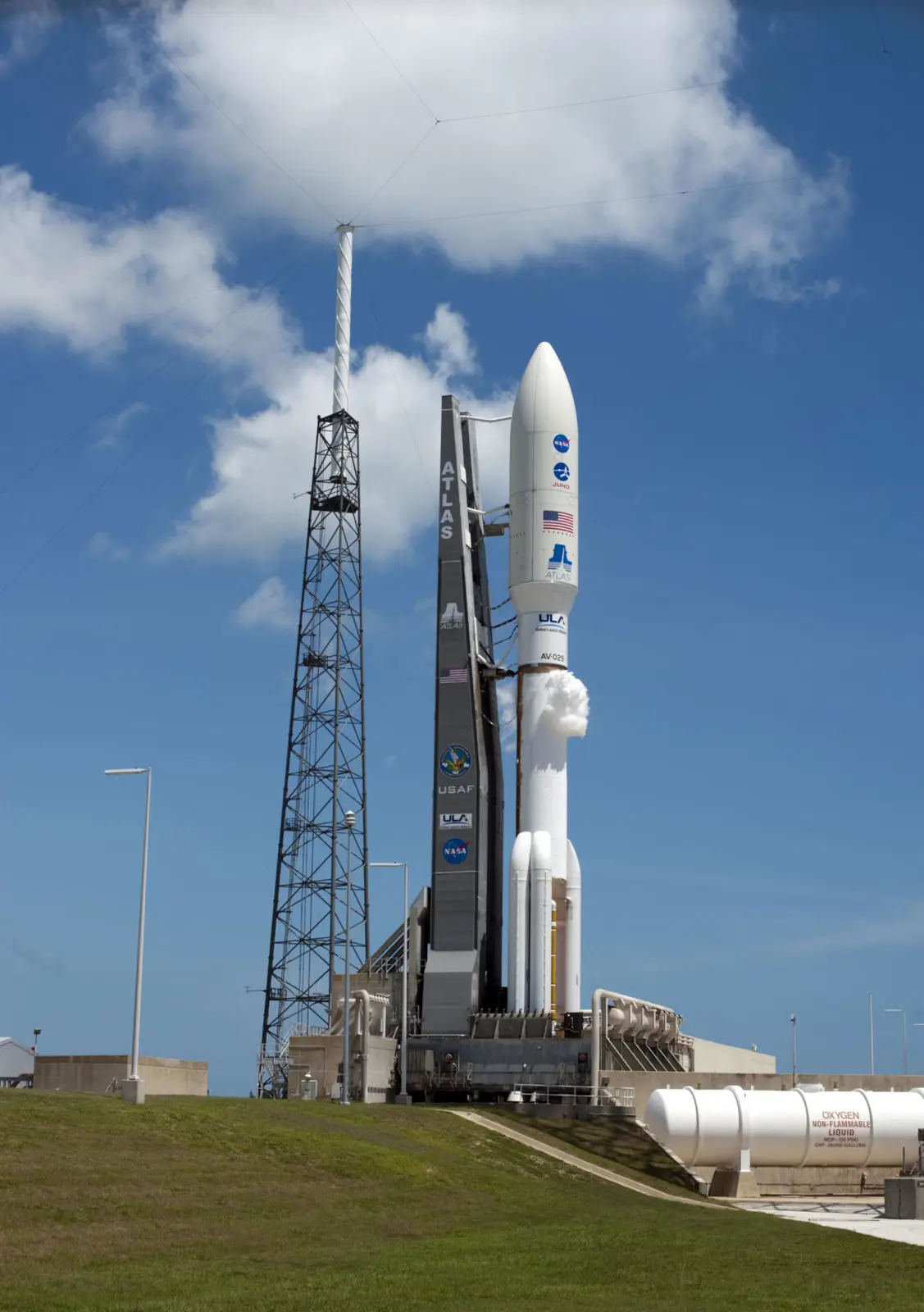
Lifts off from Cape Canaveral on an Atlas V 551, bound for Jupiter on a five-year cruise.
- 2013 · Oct 9Earth gravity assist
A close flyby of Earth boosts Juno's speed enough to reach Jupiter.
- 2016 · Jul 5Jupiter orbit insertion
A 35-minute engine burn captures Juno into a polar orbit — only the second spacecraft to orbit Jupiter.
- 2021Extended mission begins
After completing its primary science, Juno is extended into a tour of Jupiter's rings and large moons.
- 2021 · Jun 7Ganymede flyby
Juno passes about 1,000 km above Ganymede — the closest any spacecraft had come to the giant moon in two decades.
- 2022 · Sep 29Europa flyby
A close pass of the ocean moon Europa returns sharp images of its fractured ice shell.
- 2023 · DecIo close flybys
The first of two close Io flybys (December 2023 and February 2024) images the most volcanic world in the solar system.
- 2025 · SepEnd of approved extension
NASA's January-2021 mission extension carries Juno through September 2025 or end of spacecraft life; any continuation beyond that depends on later funding decisions.
- TodayMapping Jupiter pole to pole
Across its primary and extended missions Juno has dived past Jupiter every 53 days, probing its interior, magnetic field, stormy poles and large moons.
Frequently asked questions
Mission simulation

Active instruments
- Microwave Radiometer
Sees beneath the clouds to map water and ammonia deep in Jupiter's atmosphere
- Magnetometer
Maps Jupiter's powerful, intricate magnetic field to probe the dynamo inside
- Radio Doppler tracking
Tiny shifts in Juno's radio signal weigh the interior — the evidence for the fuzzy core
- Jovian Infrared Auroral Mapper
Italian infrared imager of the auroras and the heat of the deep atmosphere
- Radio and Plasma Wave Sensor
Listens to the radio and plasma waves driving Jupiter's auroras and lightning
- Visible-light Camera
Public-engagement camera whose images, processed by volunteers, gave us Jupiter's iconic poles
Headline discoveries
Gravity measurements show Jupiter's core is not small and solid but large and 'diluted', with heavy elements mixed far out into the planet — likely the scar of a giant impact early in its history.
Juno revealed clusters of vast cyclones arranged in geometric patterns around each pole — eight around the north, five around the south — unlike anything seen on the other giant planets.
The banded jet streams that paint Jupiter's face extend roughly 3,000 km down, and the magnetic field is lopsided, including a localised anomaly nicknamed the 'Great Blue Spot'.
Track Juno in real time
Fly Juno's looping polar orbit in NASA's Eyes on the Solar System — a real-time 3D simulation of its dives past Jupiter and its moons.
Data: NASA/JPL — Eyes on the Solar System