Moon Base I
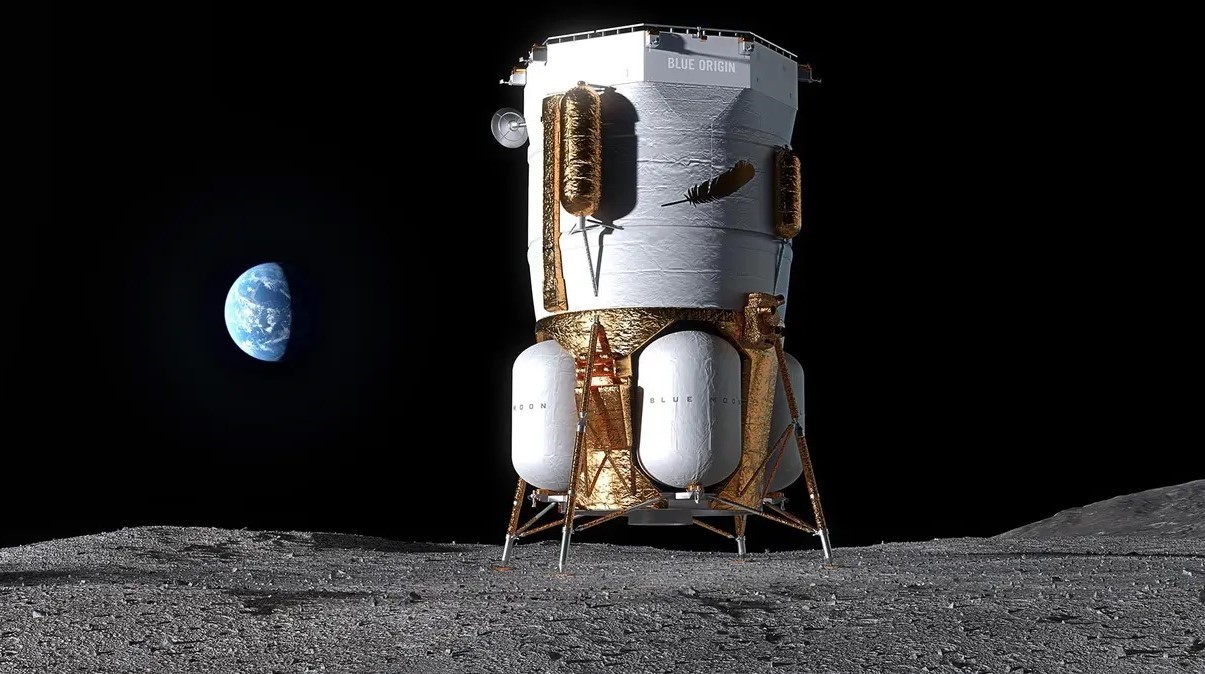
Blue Origin's Blue Moon MK1 'Endurance' — NASA's first Moon Base cargo lander, targeting the Shackleton Connecting Ridge at the lunar south pole no earlier than fall 2026.
Moon Base I
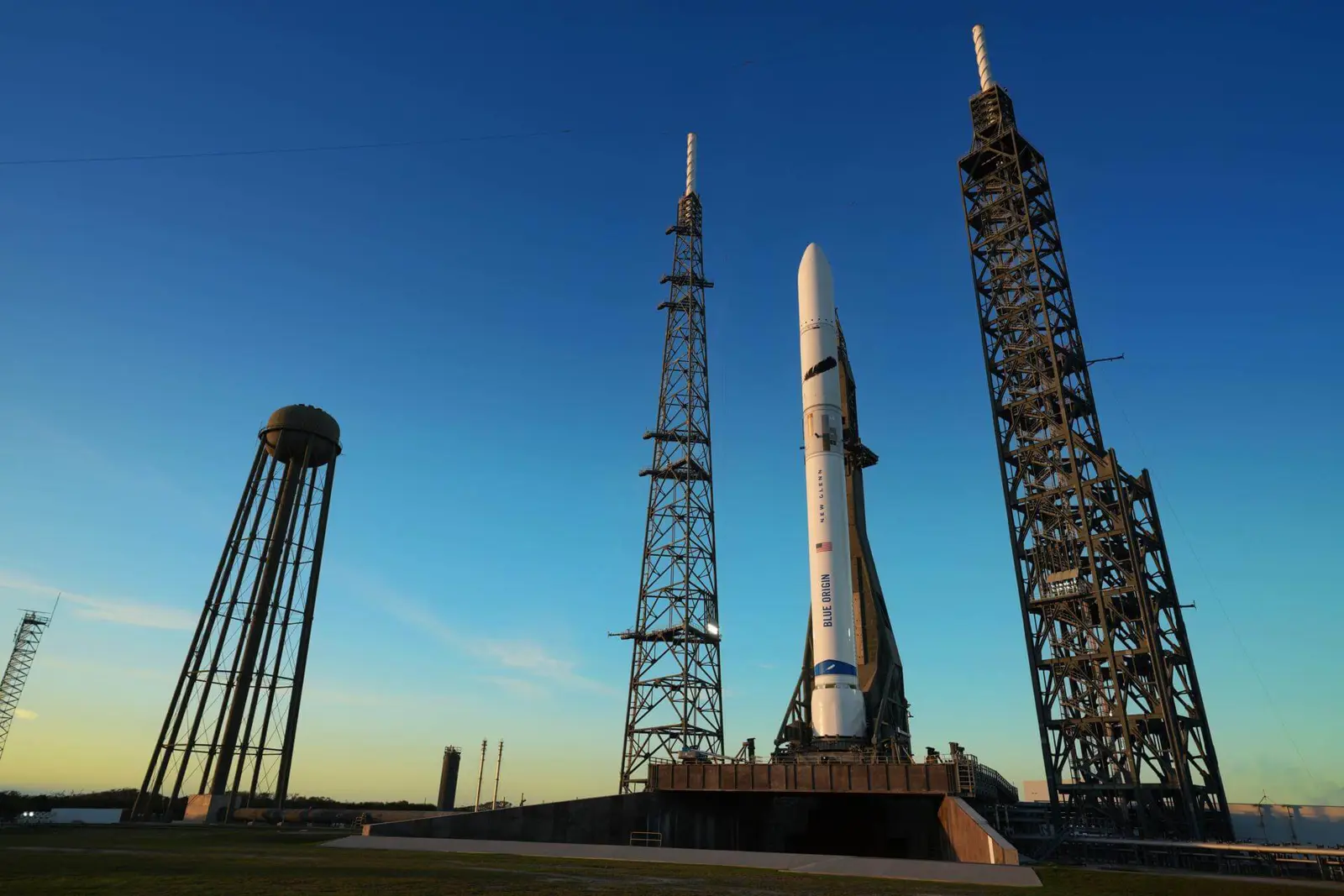
Moon Base I is the inaugural cargo mission of NASA's Moon Base initiative — an uncrewed robotic landing at the lunar south pole designed to deliver science payloads and demonstrate technologies required for future crewed Artemis landings. The mission is flown by Blue Origin using the Blue Moon Mark 1 (MK1) lander, officially designated Endurance Endurance, and is targeted for launch no earlier than fall 2026 aboard Blue Origin's New Glenn heavy-lift rocket.
The lander is directed to touch down on the Shackleton Connecting Ridge — a ridge structure adjacent to crater Shackleton near the Moon's south pole. NASA selected this site to demonstrate precision autonomous landing and cryogenic propulsion in the high-latitude terrain where future Artemis crews and a permanent base are planned. Moon Base I carries two NASA science and technology payloads under the Commercial Lunar Payload Services (CLPS) initiative.
The mission is funded by Blue Origin as a commercial demonstration under a Space Act Agreement with NASA, advancing technologies for the Human Landing System (HLS) programme and serving as a pathfinder for the larger, crew-rated Blue Moon Mark 2 lander planned for Artemis V.
Spacecraft: Blue Moon Mark 1 Endurance
The Blue Moon Mark 1 is an uncrewed, single-launch, expendable cargo lander developed by Blue Origin. Standing approximately 8–8.05 m tall with a primary cylindrical body diameter of about 3.08 m, the vehicle is sized to fit within the 7 m diameter fairing of the New Glenn launch vehicle. Its fully fuelled mass is approximately 21,350 kg, and it is capable of delivering up to 3,000 kg of cargo to any location on the lunar surface, including the south polar region.
Propulsion is provided by a single BE-7 cryogenic engine burning liquid oxygen and liquid hydrogen, producing approximately 40 kN of thrust. The hydrolox propellant combination was chosen for its high specific impulse and compatibility with long-duration cryogenic storage in the deep-space environment. The lander remains on the surface after landing — there is no ascent stage.
Standard payload interfaces on the aft module and top deck include structural mounts, regulated DC power, RS-485/RS-422 data handling, and direct-to-Earth communications. Optional services include active thermal management, surface offloading of payloads, and custom interface support. The forward module carries mission payloads; a rotating davit arm and cable-and-winch offloader system can lower heavy cargo from the top of the forward module to uneven polar terrain, and has been tested to roll and pitch slopes of up to 10°.
Before flight, Endurance completed thermal vacuum testing in Chamber A at NASA Johnson Space Center, verifying structural and thermal integrity and overall system performance under simulated space vacuum and lunar thermal conditions.
Landing Site: Shackleton Connecting Ridge
Moon Base I is targeted to land on the Shackleton Connecting Ridge, a ridge structure near crater Shackleton in the lunar south polar region. NASA selected this site to demonstrate landing and operations in the rugged, high-latitude terrain representative of future Artemis base locations. The mission is explicitly designed to reduce risk for planned crewed Artemis landings in 2028 and to provide operational data relevant to the broader Moon Base architecture being developed at the south pole.
The south polar environment poses particular challenges: irregular slopes, boulder fields, and persistent-shadow craters characterise the terrain near Shackleton. Moon Base I will demonstrate that the MK1 lander can autonomously navigate and land within 100 m of a designated target point under these conditions, gathering data that informs the design and operational planning of subsequent cargo and crewed missions.
Science & Technology Instruments
- Stereo Cameras for Lunar Plume–Surface Studies
An array of high-resolution stereo cameras that observe how the lander's BE-7 engine plume interacts with lunar regolith during descent and landing, improving models of surface erosion, dust transport, and hardware damage risk.
- Laser Retroreflective Array
A compact passive laser reflector that allows orbiting spacecraft to determine precise lander positions by measuring reflected laser light, helping refine lunar geodesy and navigation data for the south polar region.
Mission Objectives
Moon Base I has four primary technical objectives. First, it will demonstrate precision autonomous guidance, navigation, and control (GNC), targeting a landing accuracy within 100 m of the designated site on the Shackleton Connecting Ridge. Second, it will validate the BE-7 cryogenic engine and the lander's propellant storage and management systems through the full descent and landing sequence. Third, it will maintain continuous downlink communications throughout descent and surface operations. Fourth, its two NASA payloads — SCALPSS and the Laser Retroreflective Array — will collect science and navigation data directly relevant to future Artemis surface missions.
Beyond these technical demonstrations, Moon Base I serves as the programmatic first step in a sequence of Blue Moon MK1 cargo landings intended to build up mobility infrastructure and pre-deploy assets at the lunar south pole ahead of the first crewed Artemis landings. Subsequent MK1 missions are planned to deliver Lunar Terrain Vehicles (LTVs) and additional cargo, with the first LTV delivery targeted before the crewed Artemis 4 mission, currently planned for 2028.
Key Milestones
- Apr 2020NASA design contract awarded
Blue Origin received a $579 million NASA contract to advance a human lunar lander concept for Artemis over approximately 10 months under the HLS base period.
- May 2023NASA HLS Sustaining Lunar Development award
NASA selected Blue Origin under NextSTEP-2, Appendix P, awarding a $3.4 billion firm-fixed-price contract for the crew-rated Blue Moon Mark 2 lander to support Artemis V to the lunar south pole.
- 2024 (planned, slipped)Original MK1 landing target
The Blue Moon MK1 mission was originally targeted for a lunar landing in 2024 before slipping to 2026 due to schedule pressure, primarily related to New Glenn launcher readiness.
- Mar 24, 2026NASA Moon Base blueprint announced
NASA publicly announced the overall Moon Base blueprint at the 'Ignition' event, outlining a three-phase plan to establish a sustained human presence near the lunar south pole.
- May 2026First three Moon Base missions announced
NASA publicly announced the first three Moon Base missions, including Moon Base I, as part of Phase One of the Moon Base initiative.
- May 2026Blue Origin cargo lander contract awarded
NASA awarded Blue Origin an initial $188 million contract to deliver Lunar Terrain Vehicles and related cargo, with an option worth up to $280.4 million for two additional task orders.
- Fall 2026 (no earlier than)Moon Base I launch target
Blue Moon MK1 Endurance is targeted for launch aboard New Glenn no earlier than fall 2026, with landing on the Shackleton Connecting Ridge at the lunar south pole.
Programmatic Context: Moon Base Initiative
Moon Base I is the kickoff mission of NASA's Moon Base initiative, a long-term programme to establish a sustained human presence at the lunar south pole. The initiative is organised into three phases. Phase One ('Experiment and Learn', through 2029) is dedicated to robotic missions that test power, navigation, mobility, and survival systems; the phase targets 25 launches, 21 landings, and 4,000 kg of payload to the lunar surface. Moon Base I is among the foundational missions of this phase.
Phase Two ('Build and Expand', 2029–2032) focuses on deploying power systems, communications networks, and habitation elements, with a target of 27 launches, 24 landings, and 60,000 kg of cargo delivered. Phase Three ('Live and Work on the Moon', 2032 onwards) aims for sustained human presence with advanced infrastructure, scaling to 29 launches, 26 landings, and 150,000 kg of cargo per year.
Within this architecture, Blue Origin's MK1 missions, including Moon Base I, supply early cargo and technology demonstrations. The Blue Moon Mark 2, a larger crew-and-cargo lander planned to carry up to four astronauts for approximately 30-day stays, will follow and support the crewed phase of the programme. Blue Origin has stated that MK2 is developed under its $3.4 billion NASA HLS Sustaining Lunar Development contract, with crewed operations planned from Artemis V, currently targeted for around 2029–2030.
Frequently Asked Questions
Related
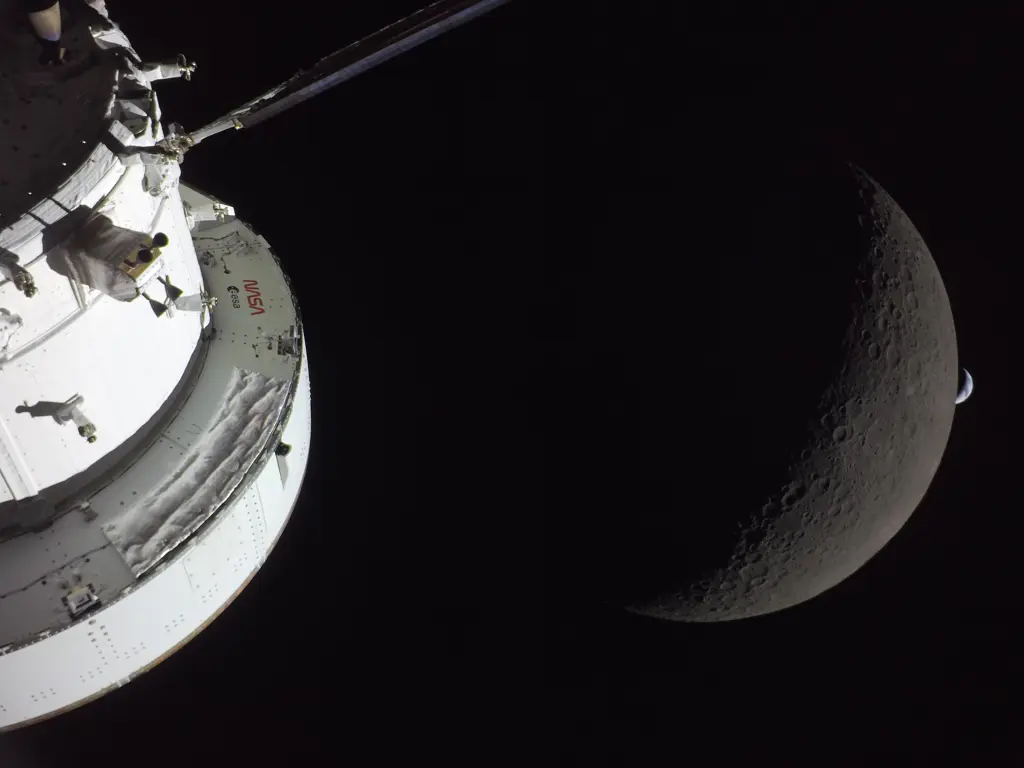
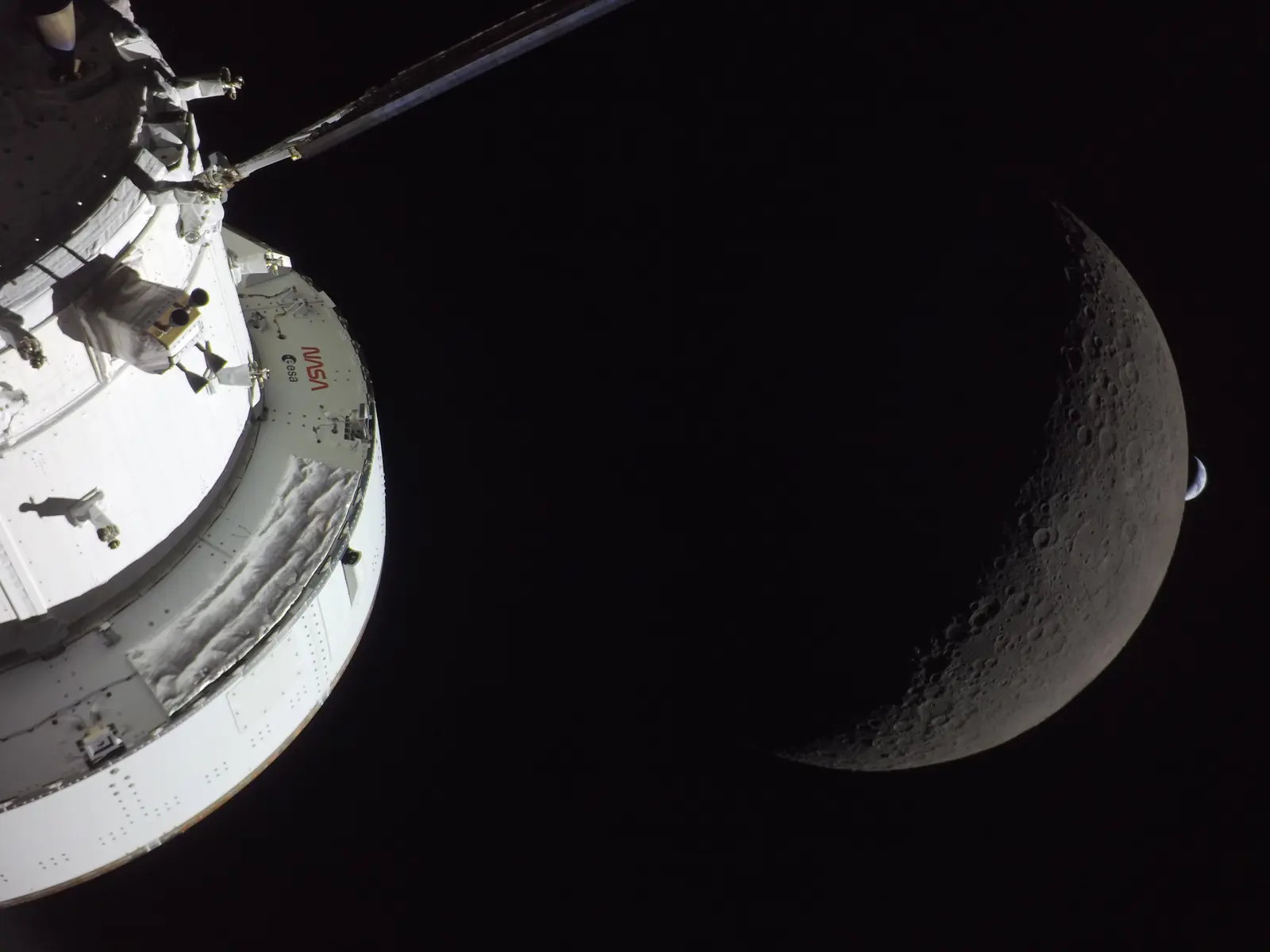
Artemis Program
OperationalReturning humans to the Moon — to stay
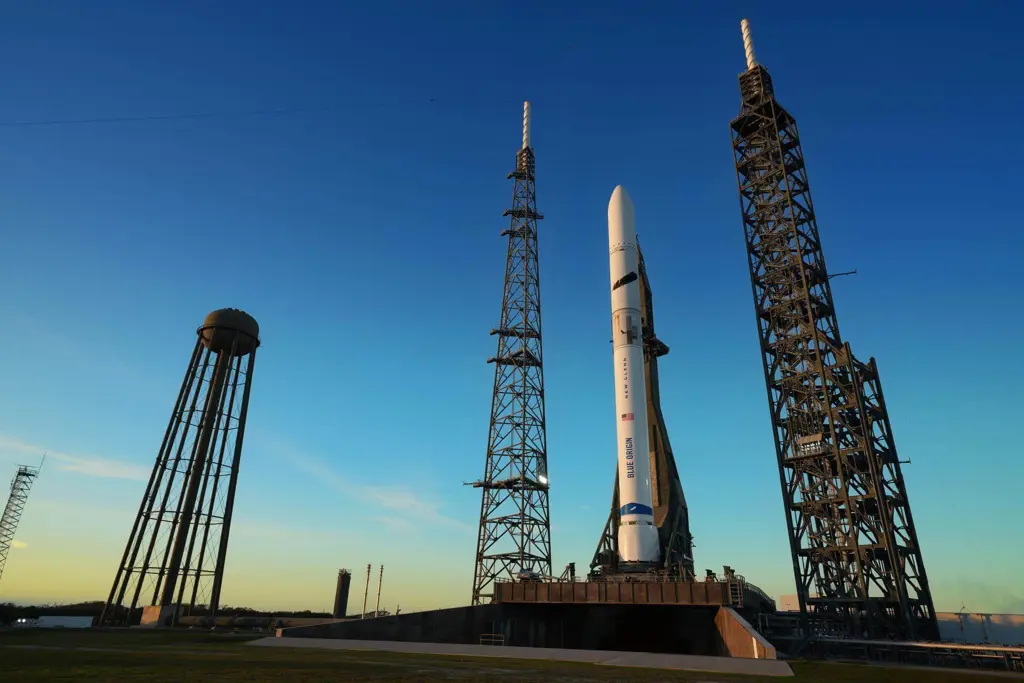
New Glenn
OperationalBlue Origin's reusable heavy-lift rocket, named for astronaut John Glenn.

The Moon
Earth's only natural satellite — a world of craters, ancient volcanoes, and frozen water that shapes our tides, steadies our seasons, and beckons a new generation of explorers.
Sources
- Blue Moon Mark 1 Lunar Lander | Blue Origin
- Blue Moon | Blue Origin
- Blue Origin Moon Lander Completes Testing at NASA Vacuum Chamber
- NASA Provides Update on Moon Base Rovers, Landers, Missions
- NASA Selects Blue Origin as Second Artemis Lunar Lander Provider
- Blue Moon Mk.1 – Gunter's Space Page
- Blue Moon Pathfinder Mission 1 – Next Spaceflight
- Moon Base – NASA
- Life on the moon? NASA unveils its 3-phase plan timeline – Fox 35 Orlando
- NASA picks Blue Origin to deliver lunar rovers to the moon – Washington Post
- Blue Moon (spacecraft) – Wikipedia
- Blue Origin tests 1st moon lander ahead of lunar launch – Space.com
- The Blue Moon MK1 flight vehicle near Shackleton – Blue Origin Instagram
- Blue Moon MK1 second unit production – Blue Origin Facebook