Apollo 15
First J-class lunar expedition — the Lunar Roving Vehicle, the Genesis Rock, and a deep-space spacewalk.
Apollo 15
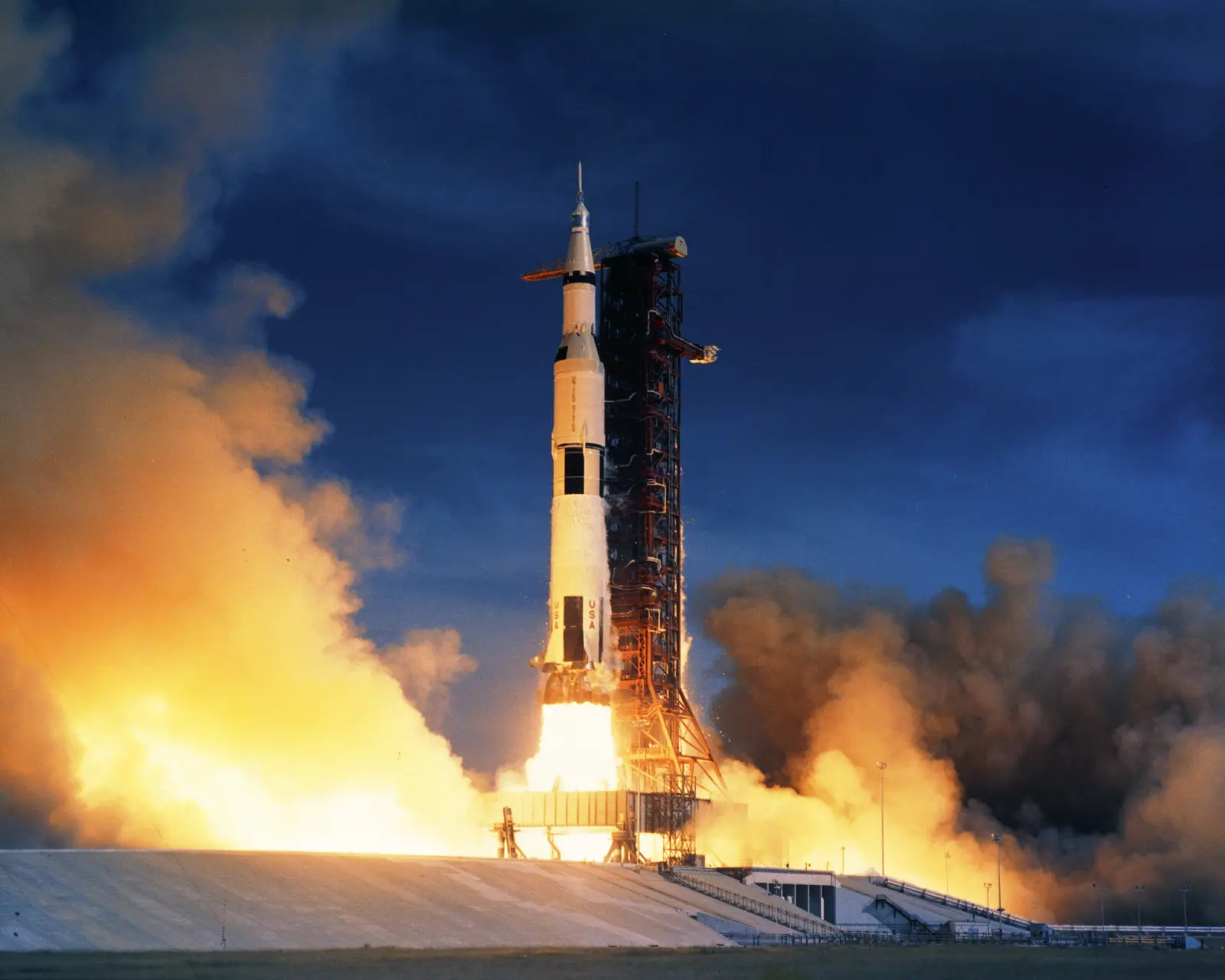
Apollo 15 was the ninth crewed mission in NASA's Apollo program and the fourth to land on the Moon. Launched on 26 July 1971 and concluding on 7 August 1971, it was the first of the J-class missions — a series specifically designed for longer surface stays and greatly expanded scientific return compared with earlier Apollo landings.
Commander David R. Scott and Lunar Module Pilot James B. Irwin landed the lunar module Falcon in the Hadley–Apennine region on 30 July 1971, spending approximately 67 hours on the surface. Command Module Pilot Alfred M. Worden remained in lunar orbit aboard CSM Endeavour, conducting orbital science and later performing a spacewalk in deep space during the return to Earth.
The mission introduced the first Lunar Roving Vehicle (LRV), which Scott and Irwin drove a total of 27.8 km across three geology traverses. The crew returned roughly 77 kg of lunar material, including the celebrated 'Genesis Rock' — an ancient anorthosite representing primordial lunar crust — and became the longest Apollo mission up to that time at 12 days 7 hours.
Crew
Colonel, USAF. Previous flights: Gemini 8, Apollo 9. Landed Falcon at Hadley–Apennine and conducted three surface EVAs with Irwin.
Lieutenant Colonel, USAF. Explored the surface alongside Scott; one of first two humans to drive the Lunar Roving Vehicle.
Major, USAF. Operated the SIM bay instruments in lunar orbit, deployed subsatellite PFS-1, and performed the mission's deep-space EVA. At one point approximately 2,235 miles from his crewmates on the surface — described as the most isolated human being at that time.
Key Events
- 26 Jul 1971Launch
Saturn V lifts off from Kennedy Space Center at 13:34:00 UTC, carrying the all-Air Force crew of Scott, Irwin, and Worden.
- 29 Jul 1971Lunar orbit insertion
Apollo 15 enters orbit around the Moon.
- 30 Jul 1971Lunar landing
LM Falcon touches down at Hadley–Apennine at mission time 4 days 8 h 42 min, about 550 m from the planned target. Scott's stand-up EVA from the open hatch provides initial panoramic reconnaissance of the site.
- 31 Jul 1971First LRV drive (EVA-1)
Scott and Irwin deploy and drive the Lunar Roving Vehicle for the first time in history. EVA-1 lasts 6 h 32 min; the ALSEP is deployed and Heat Flow Experiment drilling begins.
- 1 Aug 1971Hadley Delta traverse (EVA-2)
The crew drives south onto the Apennine foothills. At Spur Crater they collect the 'Genesis Rock.' Additional ALSEP drilling and a deep core hole are completed. EVA-2 lasts 7 h 12 min.
- 2 Aug 1971Hadley Rille and core recovery (EVA-3)
The crew visits the rim of Hadley Rille and recovers the deep drill core. EVA-3 lasts 4 h 49 min. LM Falcon lifts off from the surface at 17:11:23 (mission time) and docks with Endeavour.
- 4 Aug 1971Subsatellite deployment and trans-Earth injection
Worden spring-launches subsatellite PFS-1 from Endeavour's SIM bay on the 74th lunar orbit. The SPS engine fires at 21:22:45 to depart lunar orbit.
- 5 Aug 1971Deep-space EVA
Alfred Worden exits Endeavour and retrieves film cassettes from the SIM bay during a 39-minute spacewalk in deep space between the Moon and Earth — the first of its kind.
- 7 Aug 1971Splashdown
Endeavour lands in the Pacific Ocean north of Hawaii at 20:45:53 UTC, completing the mission in 12 days 7 h 11 min. One of three main parachutes collapsed on descent, but the crew was unharmed.
Landing Site: Hadley–Apennine
The Hadley–Apennine landing site lies on the eastern margin of Mare Imbrium, at the foot of the Apennine mountain range — one of the most geologically diverse locations targeted in the Apollo program. LM Falcon set down on the Hadley plains approximately 2 km west of Hadley Rille, with the summit of Hadley Delta rising roughly 4,000 m above the landing area to the south.
The Apennine Mountains form part of the rim of the Imbrium impact basin, a structure more than 1,100 km in diameter. Scientists expected the Imbrium impact to have uplifted deep crustal material into the Apennine ring, exposing rocks originally formed tens of kilometres below the surface. Adjacent mare basalts offered a record of volcanic resurfacing, while Hadley Rille — a prominent sinuous lava channel cut into the plains — promised a cross-section through successive basalt flows.
The landing approach was steeper than at earlier sites, requiring a 26° descent trajectory because the terrain pressed hard against the Apennine front. Scott touched down on the rim of a small crater, leaving Falcon tilted about 6.9° — approximately 550 m from the planned target. This combination of mare, rille, and highland mountain terrain in a single accessible valley made Hadley–Apennine one of the highest-value geology targets of the entire Apollo program.
Surface Operations and the Lunar Roving Vehicle
Apollo 15 was the first mission to carry the Lunar Roving Vehicle (LRV), a battery-powered, four-wheel-drive electric vehicle with a mass of approximately 208 kg. Each of its four wheels was driven by its own motor, and the LRV was controlled by a T-shaped hand controller between the two side-by-side crew seats. An on-board dead-reckoning navigation system — combining a directional gyro with an odometer — continuously tracked heading, distance traveled, and bearing back to the lunar module.
The rover had been folded and stowed in the LM descent stage. After landing, Scott and Irwin deployed it using a system of pulleys and braked reels. The LRV's first drive occurred on 31 July 1971 — the opening of EVA-1 — making Apollo 15 the inaugural use of a rover on the lunar surface. Over three EVAs, Scott and Irwin drove 27.8 km in a cumulative driving time of 3 hours 2 minutes. Their maximum distance from the LM at any point was 5.0 km, well within the approximately 9.7 km safety limit set to ensure a crew could walk back if the rover failed.
The rover allowed the crew to reach geological targets — foothills of the Apennine Mountains, the edge of Hadley Rille, and the flank of Hadley Delta — that would have been inaccessible on foot within the available EVA time. Post-mission engineering evaluations found that the LRV met or exceeded its mobility and stability specifications across the terrain of Hadley–Apennine.
Experiments and Instruments
- Apollo Lunar Surface Experiments Package
Long-term geophysical and environmental monitoring station deployed at the surface. Included the Heat Flow Experiment (requiring two drilled holes), Passive Seismic Experiment, Lunar Surface Magnetometer, and Solar Wind Spectrometer.
- Heat Flow Experiment
Measured subsurface thermal gradient using temperature probes emplaced in two drilled holes. Significant drilling difficulty was encountered during EVA-1 and EVA-2.
- Laser Ranging Retroreflector
Corner-cube reflector array deployed on the surface, enabling precise Earth-Moon distance measurements by laser ranging from Earth.
- Solar Wind Composition Experiment
Foil collector deployed on EVA-1 to trap solar wind particles for return to Earth and laboratory analysis.
- Regolith Deep Drill Core
Core drilled to approximately 2.4 m depth, sampling subsurface stratigraphy. At least 42 distinct layers were identified, with the deepest material dating from roughly 420–750 million years ago.
- Scientific Instrument Module (Service Module)
Suite of orbital instruments operated by Worden from CSM Endeavour, including panoramic and mapping cameras, gamma-ray spectrometer, X-ray spectrometer, laser altimeter, and mass spectrometer.
- Particles and Fields Subsatellite
Small hexagonal satellite spring-launched from the SIM bay on the 74th lunar orbit. Carried instruments to measure interplanetary and lunar magnetic fields, proton and electron flux, and gravity field variations. First satellite placed in lunar orbit by a crewed spacecraft.
Key Discoveries
At Spur Crater on the flank of Mount Hadley Delta, Scott and Irwin collected a nearly pure anorthosite composed almost entirely of plagioclase feldspar. Dated at approximately 4.1 billion years, this 'Genesis Rock' provided direct physical evidence that the Moon once had a global magma ocean from which a plagioclase-rich crust crystallized. Related norite and anorthositic norite samples from the same site are approximately 4.5 billion years old, among the oldest lunar materials ever recovered.
Apollo 15 returned green pyroclastic glass beads rich in magnesium, interpreted as originating from magmatic sources approximately 400 km below the lunar surface. Subsequent laboratory analysis revealed that these glass beads contain measurable amounts of water, providing the first unequivocal evidence that the Moon's interior is not completely dry — a finding that fundamentally changed models of the Moon's formation and volatile history.
Shock-melted rocks collected at Hadley–Apennine indicate the Imbrium basin-forming impact occurred approximately 3.93 billion years ago. Combined with samples of uplifted deep crustal material in the Apennine rim, these finds helped reconstruct the regional impact stratigraphy and the sequence of large-basin formation on the Moon.
Apollo 15 was the first mission to directly explore a sinuous lunar rille. Observations at the rille rim and samples from its vicinity confirmed its origin as a collapsed lava tube or open lava channel, advancing understanding of mare basalt emplacement and volcanic processes on the Moon.
The 2.4 m deep drill core revealed at least 42 distinct layers, with the deepest material dating from roughly 420–750 million years ago. This demonstrated that the upper regolith at a mare–highland boundary records a complex history of impact gardening and resurfacing long after the main period of mare basalt emplacement ended.
The SIM bay X-ray spectrometer detected a greater fluorescent X-ray flux than anticipated and showed that the lunar highlands are richer in aluminum than the mare regions, providing the first large-scale chemical mapping of the lunar surface from orbit.
Commander Scott performed a televised experiment, simultaneously dropping a hammer and a feather on the lunar surface. In the near-vacuum of the Moon, both objects hit the ground at the same time, providing a dramatic real-world demonstration of Galilean gravitational equivalence.
Orbital Science and the Subsatellite
While Scott and Irwin worked on the surface, Alfred Worden conducted an extensive orbital science campaign from CSM Endeavour. The Service Module's Scientific Instrument Module (SIM) bay housed panoramic and mapping cameras, a gamma-ray spectrometer, a laser altimeter, an X-ray spectrometer, and a mass spectrometer. These instruments produced detailed data on lunar topography, the radiation environment near the Moon, the tenuous lunar exosphere, and the elemental composition of the surface below.
On the 74th and final lunar orbit before departure, Worden used controls in the command module to spring-launch the Particles and Fields Subsatellite (PFS-1) from the SIM bay. This small hexagonal satellite — approximately 76 cm long with three instrument booms — became the first satellite ever placed in lunar orbit by a crewed spacecraft. PFS-1 carried instruments to measure interplanetary and lunar magnetic fields, proton and electron flux, and gravitational variations, contributing to long-term mapping of the near-Moon environment.
During the return to Earth, Worden performed a 39-minute spacewalk in deep space — one of the earliest true deep-space EVAs. He exited the command module hatch, translated along handholds to the SIM bay, and retrieved film cassettes from the panoramic and mapping cameras, with Irwin assisting from the hatch. This EVA took place far from both Earth and Moon, distinguishing it from both near-Earth and lunar surface operations.
Mission Significance
Apollo 15 set several records at the time of its flight: longest crewed lunar mission at approximately 295 hours total, longest time in lunar orbit at about 145 hours, longest total surface EVA time at 18 hours 37 minutes, and greatest radial distance traveled by astronauts from the LM. It was also the only Apollo mission crewed entirely by United States Air Force officers.
As the first J-class mission, Apollo 15 demonstrated that astronauts could conduct extended geological fieldwork on the Moon, covering terrain that would have been unreachable on foot. The LRV multiplied the scientific return compared with earlier missions, and the combination of surface sampling, deep drilling, and orbital remote sensing made it one of the most productive scientific missions in the Apollo program. The samples it returned — particularly the Genesis Rock, volcanic glass beads with trapped water, and the diverse suite of highland and mare rocks — remain central to lunar science decades after the flight.
The mission concluded safely on 7 August 1971, when Endeavour splashed down in the Pacific north of Hawaii. One of the three main parachutes collapsed during Earth reentry, slightly increasing impact speed, but the crew was unharmed. Endeavour is preserved today at the National Museum of the U.S. Air Force in Dayton, Ohio.
FAQ
Related
Apollo Program
RetiredLanding humans on the Moon, 1969–1972
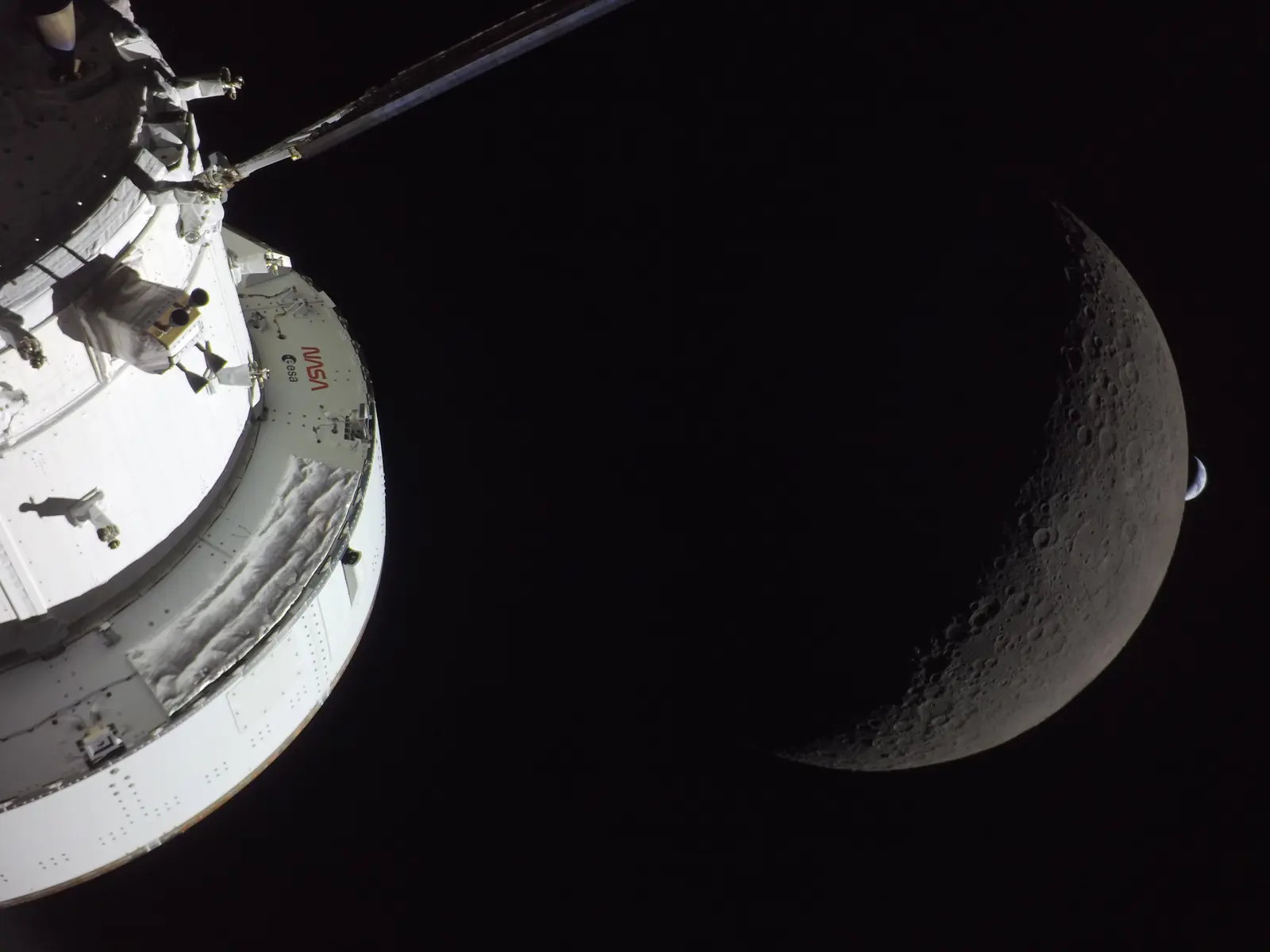
Artemis Program
OperationalReturning humans to the Moon — to stay
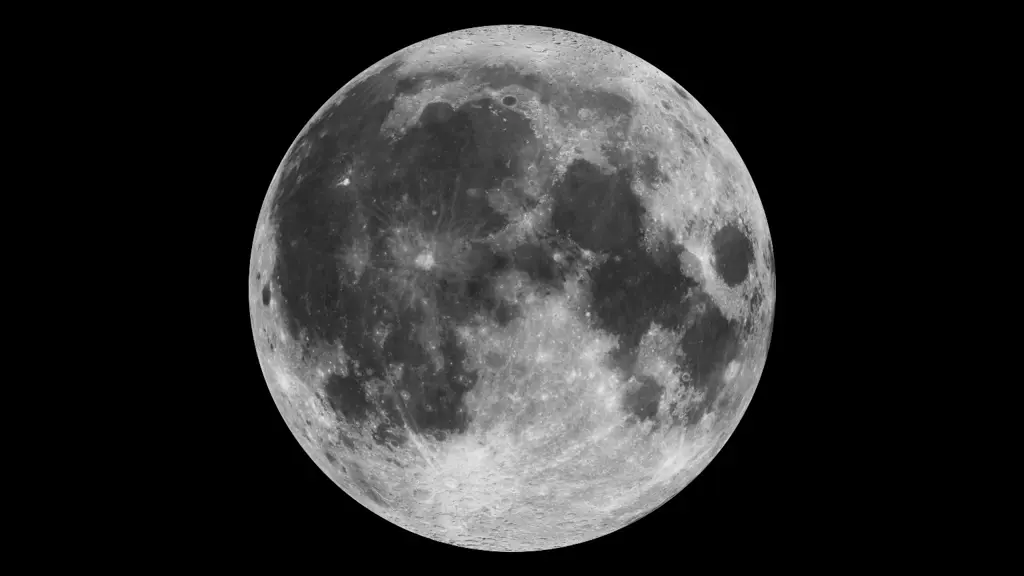
The Moon
Earth's only natural satellite — a world of craters, ancient volcanoes, and frozen water that shapes our tides, steadies our seasons, and beckons a new generation of explorers.
Sources
- Apollo 15 | The Planetary Society
- Apollo 15 — Wikipedia
- Apollo 15 Command Module — National Museum of the U.S. Air Force
- Apollo 15 Mission Overview — Lunar and Planetary Institute
- Apollo 15 — NASA
- Apollo 15 Mission Details — NASA
- 50 Years Ago: Apollo 15 Home from the Moon — NASA History
- Mobility Performance of the Lunar Roving Vehicle — NASA Technical Report
- OTD: First Use of the Lunar Roving Vehicle — Space Center Houston
- Apollo 15 Activities Timeline — Apollo Surface Journal
- A Very Unique Place: Remembering the First Deep-Space EVA — AmericaSpace
- 50 Years After Historic Moon Mission, Brown Geologist Shares Stories — Brown University
- Apollo 15 Landing Site — Lunar Reconnaissance Orbiter Camera