Apollo 17
The sixth and final Apollo lunar landing — humanity's last steps on the Moon, and its most scientifically productive.
Apollo 17
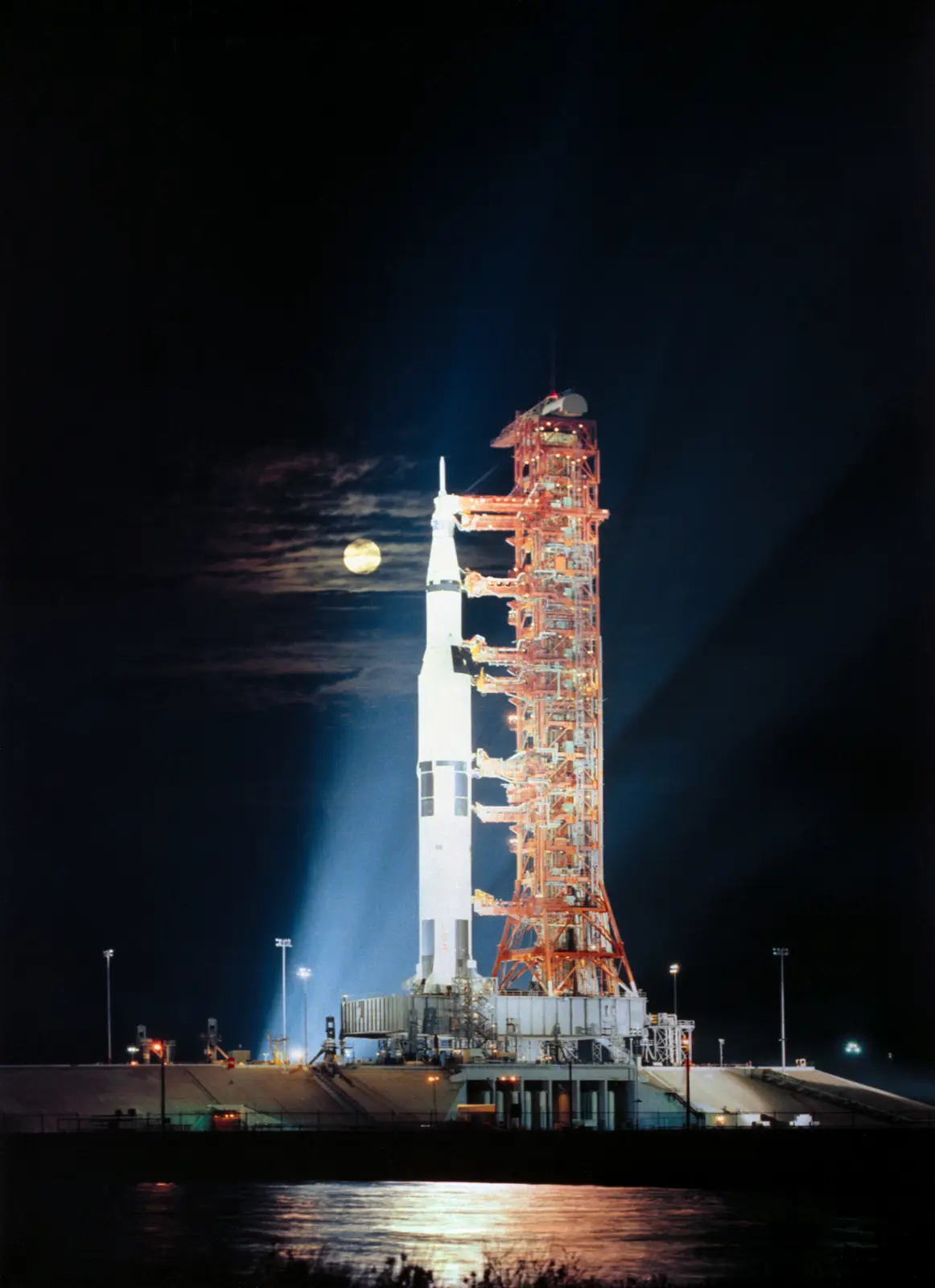
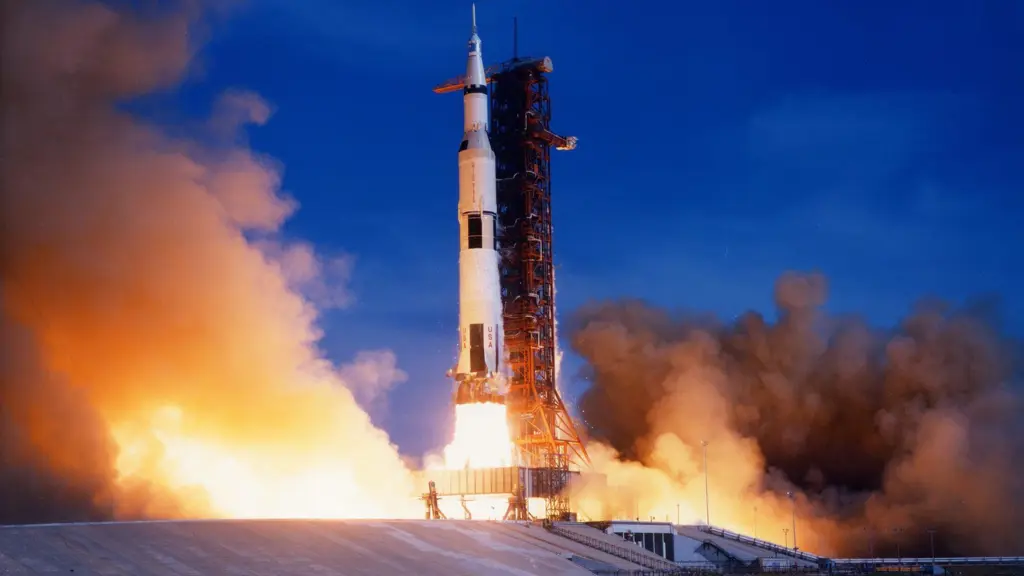
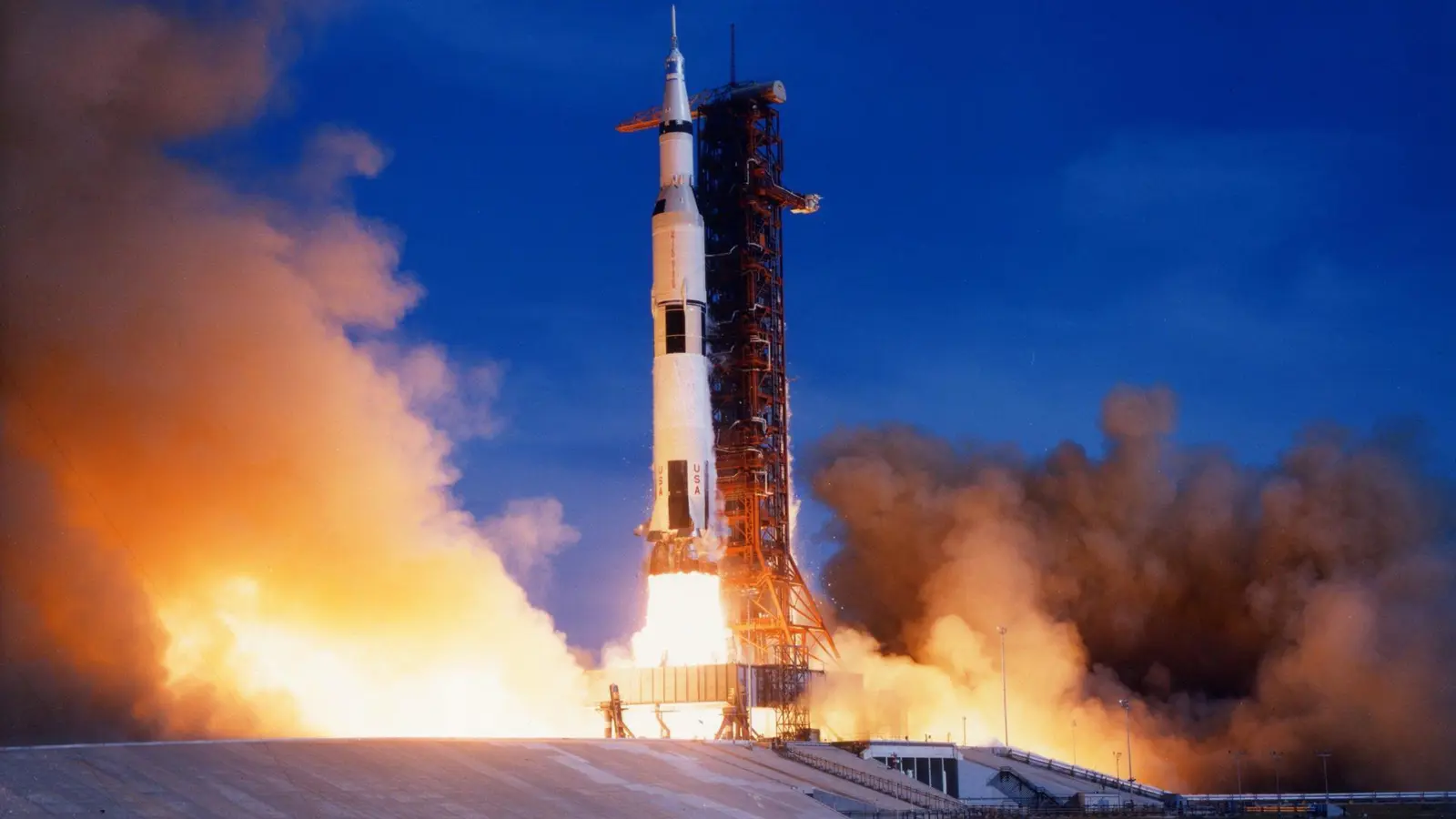
Apollo 17 was the sixth and final crewed lunar landing of NASA's Apollo program, flown 7–19 December 1972. The mission carried three astronauts to the Moon aboard a Saturn V rocket launched from Kennedy Space Center, Florida. It was the only night launch in the Apollo program, lifting off at 12:33 a.m. EST on 7 December 1972 after a delay of approximately 2 hours 40 minutes caused by an automatic cutoff in the launch sequencer.
Commander Eugene A. "Gene" Cernan and Lunar Module Pilot Harrison H. "Jack" Schmitt landed in the Taurus–Littrow valley on 11 December 1972, while Command Module Pilot Ronald E. Evans remained in lunar orbit aboard the Command/Service Module America. Cernan and Schmitt spent approximately 75 hours on the surface — the longest surface stay of any Apollo mission — conducting three extravehicular activities (EVAs) totaling 22 hours 4 minutes. Schmitt, a professional geologist, was the first scientist-astronaut to walk on the Moon.
Apollo 17 was classified as a "J-type" mission, with extended surface operations, a Lunar Roving Vehicle (LRV), and a comprehensive science payload. The crew collected 110.5 kg of lunar rocks and soil and deployed an extensive Apollo Lunar Surface Experiments Package (ALSEP). The mission's discoveries — including the identification of ancient highland breccias, pyroclastic glass deposits, and rocks dating to approximately 4.6 billion years old — significantly advanced understanding of the Moon's origin, geologic history, and interior. Cernan, the last to re-enter the Lunar Module before departure on 14 December 1972, remains the most recent human to stand on the lunar surface.
Apollo 17 Astronauts
Piloted LM Challenger to Taurus–Littrow; last person to walk on the Moon, re-entering the Lunar Module after Schmitt.
Professional geologist (Ph.D.) and the first scientist-astronaut to walk on the Moon. Conducted three geology-focused EVAs alongside Cernan.
Operated CSM America in lunar orbit during the surface stay. Performed a deep-space EVA on the return to Earth to retrieve film cassettes from the SIM bay — the last spacewalk conducted in deep space.
Apollo 17 Timeline
- Dec 7, 1972Launch — only night launch of Apollo
Saturn V SA-512 lifted off from Launch Complex 39A, Kennedy Space Center at 12:33 a.m. EST (05:33:00 UTC). A 2 h 40 min delay preceded launch due to an automatic sequencer cutoff at T−30 seconds.
- Dec 7, 1972Translunar injection
The spacecraft performed its translunar injection burn at 08:45:37 UTC, setting course for the Moon.
- Dec 10, 1972Lunar orbit insertion
Apollo 17 entered lunar orbit via a Service Propulsion System burn at 19:47:23 UTC.
- Dec 11, 1972Lunar landing — Taurus–Littrow
LM Challenger, crewed by Cernan and Schmitt, touched down in the Taurus–Littrow valley at approximately 19:55 UTC, about 240–300 m from the planned landing point.
- Dec 11–12, 1972EVA-1 — ALSEP deployment and valley floor geology
First moonwalk lasted 7 hours 12 minutes. The crew deployed the ALSEP science station and conducted initial geological traverses near the Lunar Module.
- Dec 12, 1972EVA-2 — South Massif traverse (longest Apollo moonwalk)
Duration 7 hours 37 minutes — the longest single moonwalk of the Apollo program. The LRV traverse covered 20.4 km round-trip; the crew reached a maximum distance of 7.6 km from the Lunar Module at Station 2 (Nansen), where they sampled a boulder from the South Massif. At Station 4 (Shorty crater), Schmitt discovered the famous orange soil.
- Dec 13, 1972EVA-3 — North Massif and Sculptured Hills traverse
Duration approximately 7 hours 15–16 minutes. The crew traversed about 12.0 km, with stops at the North Massif and Sculptured Hills northeast of the landing site.
- Dec 14, 1972Lunar liftoff — last human departure from the Moon
Cernan, the last person to step off the lunar surface, re-entered the Lunar Module. Challenger's ascent stage lifted off, rendezvousing with CSM America in just over 2 hours — the final time humans departed the lunar surface.
- Dec 17, 1972Deep-space EVA — Evans retrieves film
Ronald Evans conducted a spacewalk of approximately 1 hour 7 minutes outside CSM America to retrieve film cassettes from the Scientific Instrument Module bay. This was the last spacewalk performed in deep space.
- Dec 19, 1972Splashdown — end of the Apollo Moon landings
Command module America splashed down in the South Pacific at 19:54:58 UTC, approximately 4 miles (6.5 km) from the recovery ship USS Ticonderoga, roughly 560 km west of the Samoa Islands. Mission duration: 12 days 13 hours 51 minutes 59 seconds.
Landing Site: Taurus–Littrow Valley
Apollo 17 landed in the Taurus–Littrow valley, a deep graben on the southeastern rim of the Serenitatis basin in the lunar highlands. Mission planners selected this site to achieve two complementary science goals: sampling ancient highland crustal material formed far from the Mare Imbrium basin, and finding evidence of relatively young volcanic activity. The valley floor is underlain by a basalt layer estimated to be approximately 1,400 m thick at the landing site, emplaced before roughly 3.7 billion years ago. The valley walls are formed by the North and South Massifs, interpreted as faulted ejecta from the Serenitatis basin impact approximately 3.9–4.0 billion years ago.
The massifs are dominated by impact breccias — mixtures of highland rock fragments set in a fine-grained crystalline matrix produced by the heat and shock of the Serenitatis impact. Overlying the basalt floor is a thin pyroclastic ash layer approximately 3.5 billion years old, which mantles the subfloor basalt. Prior to the mission, orbital images suggested this dark mantle was a thick pyroclastic deposit; field observations revealed it was instead a thin ash layer atop a basalt-rich regolith enriched in dark glass beads, explaining the region's low surface reflectance.
A prominent "light mantle" deposit at the base of the South Massif was identified as a large-scale mass-wasting (landslide) feature rather than a primary impact ejecta blanket, demonstrating that gravity-driven resurfacing has shaped steep highland slopes on the Moon. The Sculptured Hills northeast of the landing site were later reinterpreted as far-flung ejecta from the Imbrium basin rather than Serenitatis ejecta, a distinction with significant implications for the chronology of these two major impact events.
Scientific Discoveries
At Station 4 (Shorty crater), Harrison Schmitt discovered bright orange soil later shown to consist of small spherical glass beads with high titanium content. Laboratory analysis dated the pyroclastic eruption that produced them to approximately 3.5–3.6 billion years ago, confirming explosive fire-fountain volcanism at the southeastern margin of Mare Serenitatis and demonstrating that volatile-bearing magmas were active in lunar history.
At Station 2 (Nansen depression), the crew sampled a large boulder that had rolled down from the South Massif. Chips from this boulder yielded ages of approximately 4.6 billion years, making them among the oldest lunar samples ever returned and providing constraints on early lunar crust formation and differentiation.
Combining Lunar Surface Gravimeter traverses with Lunar Seismic Profiling data, scientists determined that the mare basalt layer beneath the Taurus–Littrow valley floor is approximately 1,400 m thick — slightly greater than the ~1 km estimated from gravimeter data alone.
Seismic profiling using eight remotely detonated explosive charges measured near-surface P-wave velocities of about 104 m/s, rising to about 299 m/s at roughly 8.5 m depth. These very low velocities, consistent across Apollo 15, 16, and 17 sites, confirm the upper lunar crust is highly fractured and impact-gardened.
Impact melt samples from the North Massif, South Massif, and Sculptured Hills were used to date the Serenitatis basin at about 3.86 billion years. Subsequent analysis using Lunar Reconnaissance Orbiter imagery reinterpreted the Sculptured Hills as Imbrium basin ejecta, sharpening the distinction between the ages of the two basins and refining how the Apollo 17 sample set is linked to specific impact events.
The Lunar Atmospheric Composition Experiment (LACE) mass spectrometer found that the lunar exosphere near the landing site is composed primarily of neon, helium, and hydrogen at extremely low particle densities, confirming it as an ultra-thin, surface-bound exosphere supplied by solar wind, radioactive decay, and sputtering.
At Nansen, Cernan and Schmitt sampled soil from beneath a boulder overhang shielded from the solar wind. Comparison of shielded and exposed soils provided data on solar-wind implantation, regolith gardening, and the evolution of lunar surface chemistry.
During the mission, the crew captured one of the first photographs of Earth as a fully illuminated sphere — an image that became one of the most widely reproduced in history and a powerful symbol in Earth sciences and environmental awareness.
Instruments and Experiments
- Apollo Lunar Surface Experiments Package
Suite of five surface experiments deployed near the Lunar Module and operated remotely after crew departure.
- Heat Flow Experiment
Measured heat escaping from the lunar interior to constrain the Moon's thermal state and evolutionary history. Results indicated a heat flow of approximately 3.3 × 10⁻⁶ W/cm² in the near-surface.
- Lunar Seismic Profiling Experiment (LSP)
Used eight small explosive charges, remotely detonated after crew departure, and a network of geophones to map shallow crustal structure. Measured P-wave velocities of ~104 m/s at the surface, increasing to ~299 m/s at ~8.5 m depth.
- Lunar Surface Gravimeter
Measured local gravity variations to infer subsurface structure and attempted (unsuccessfully) to detect gravitational waves. Gravimeter traverses combined with seismic data established a basalt layer thickness of ~1,400 m beneath the valley floor.
- Lunar Atmospheric Composition Experiment
Mass spectrometer to determine the composition of the lunar exosphere. Found it to consist primarily of neon, helium, and hydrogen at extremely low particle densities.
- Lunar Ejecta and Meteorites Experiment
Measured size, velocity, and direction of micrometeorites and locally lofted dust striking the surface, providing constraints on micrometeorite flux and dust transport near the lunar surface.
- Lunar Roving Vehicle
Electric four-wheel vehicle used during all three EVAs. The crew drove a total of 35.7 km across the Taurus–Littrow valley, reaching geological targets up to 7.6 km from the Lunar Module.
- Scientific Instrument Module (orbital)
Housed panoramic, mapping, and lunar sounder cameras plus a mass spectrometer in the Service Module. Operated by Evans in lunar orbit to study topography, subsurface structure, and surface composition. Film cassettes were retrieved by Evans during his deep-space EVA.
- Biomedical Experiments
Exposed microorganisms, seeds, and biological materials to the space radiation and vacuum environment. Post-mission analysis showed increased mortality and developmental abnormalities in exposed organisms, highlighting biological sensitivity to space radiation.
Taurus–Littrow Valley
Taurus–Littrow Valley
Apollo 17A deep graben valley on the southeastern rim of the Serenitatis basin in the lunar highlands. Chosen to sample both ancient highlands crustal material from the adjacent North and South Massifs and evidence of relatively young volcanic activity on the valley floor. Touchdown was approximately 240–300 m from the planned site. The valley floor is underlain by a mare basalt sequence approximately 1,400 m thick, capped by a thin pyroclastic ash layer about 3.5 billion years old.
Records and Significance
Apollo 17 was the sixth and last human lunar landing and set several records that remain unbroken. Cernan and Schmitt spent approximately 75 hours on the lunar surface, the longest surface stay of any Apollo mission. Their three EVAs totaled 22 hours 4 minutes, the greatest cumulative moonwalk time of the program; the second EVA, at 7 hours 37 minutes, was the longest single moonwalk of Apollo. Total distance driven by the Lunar Roving Vehicle was 35.7 km. The crew returned 110.5 kg of lunar samples, the largest collection from any Apollo mission.
The mission was also notable for the inclusion of Harrison Schmitt, the only professional scientist — and first trained geologist — to reach the Moon. His fieldwork, including the discovery of the orange pyroclastic glass at Shorty Crater, exemplified the transition from demonstration missions to science-driven surface exploration. Ronald Evans's deep-space EVA on the return voyage, during which he retrieved film cassettes from the Service Module's instrument bay, remains the last spacewalk conducted in deep space.
Apollo 17 closed the Apollo program amid budget constraints and a shift in NASA's priorities toward Space Shuttle development. Its samples and ALSEP data continue to underpin modern lunar science, and the mission's photographs — including the "Blue Marble" image of a fully illuminated Earth — became enduring cultural icons. Eugene Cernan, who re-entered the Lunar Module last on 14 December 1972, remains the most recent person to have walked on the Moon.
Frequently Asked Questions
Related
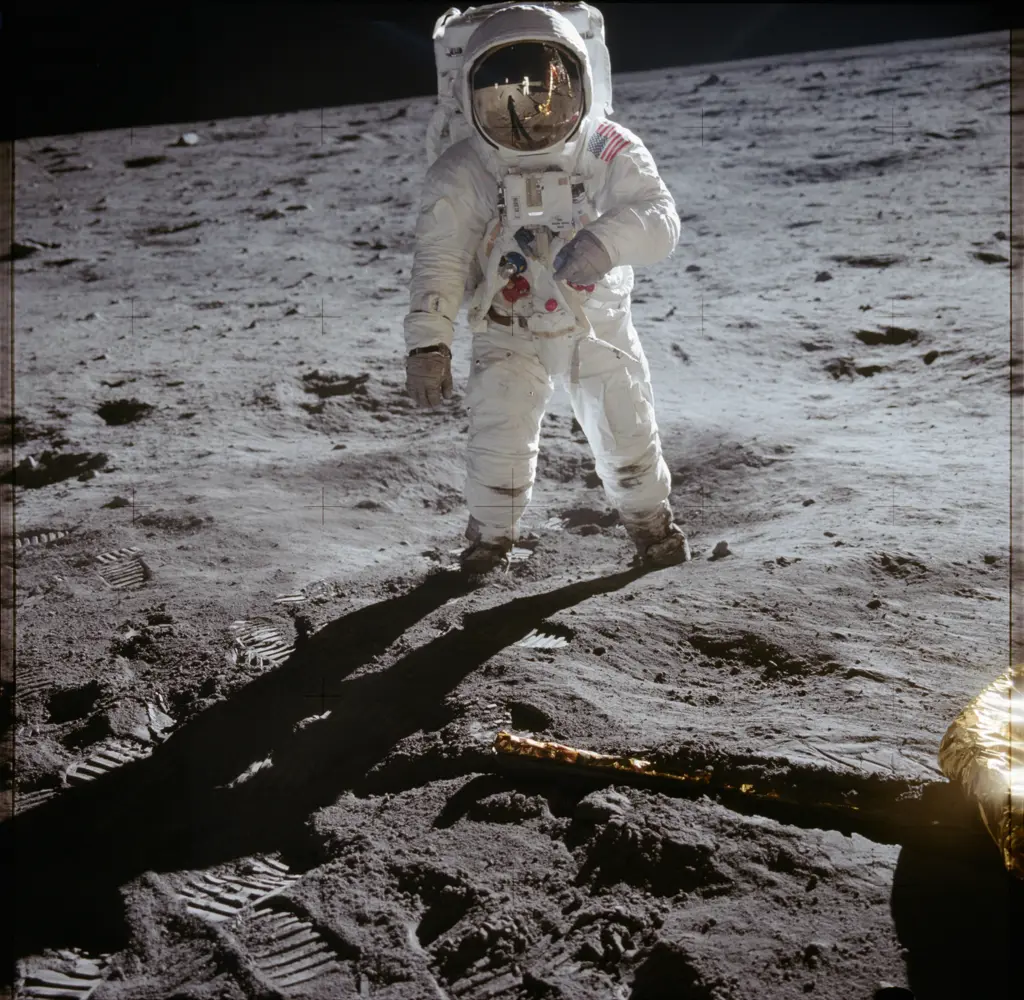
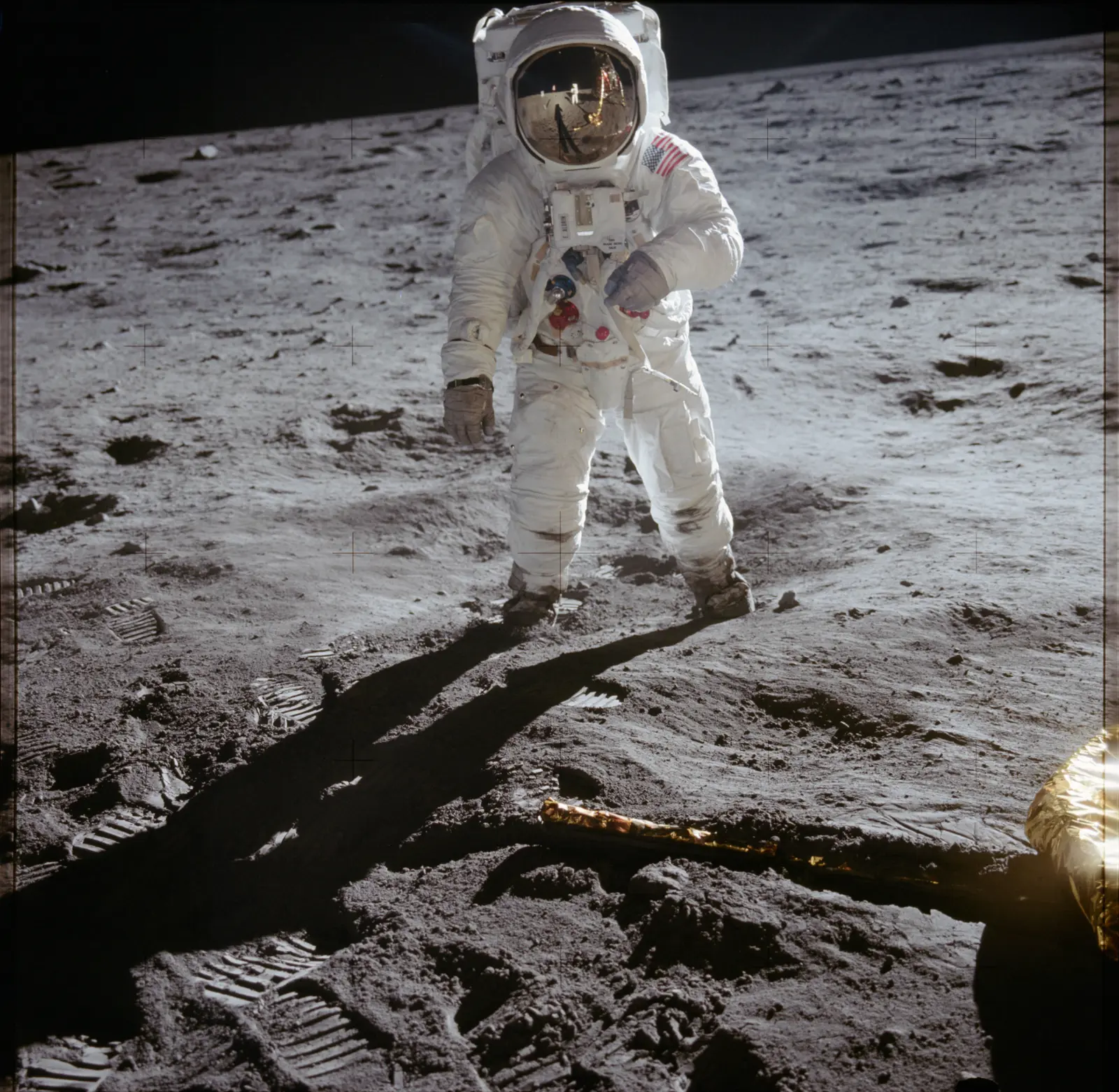
Apollo Program
RetiredLanding humans on the Moon, 1969–1972
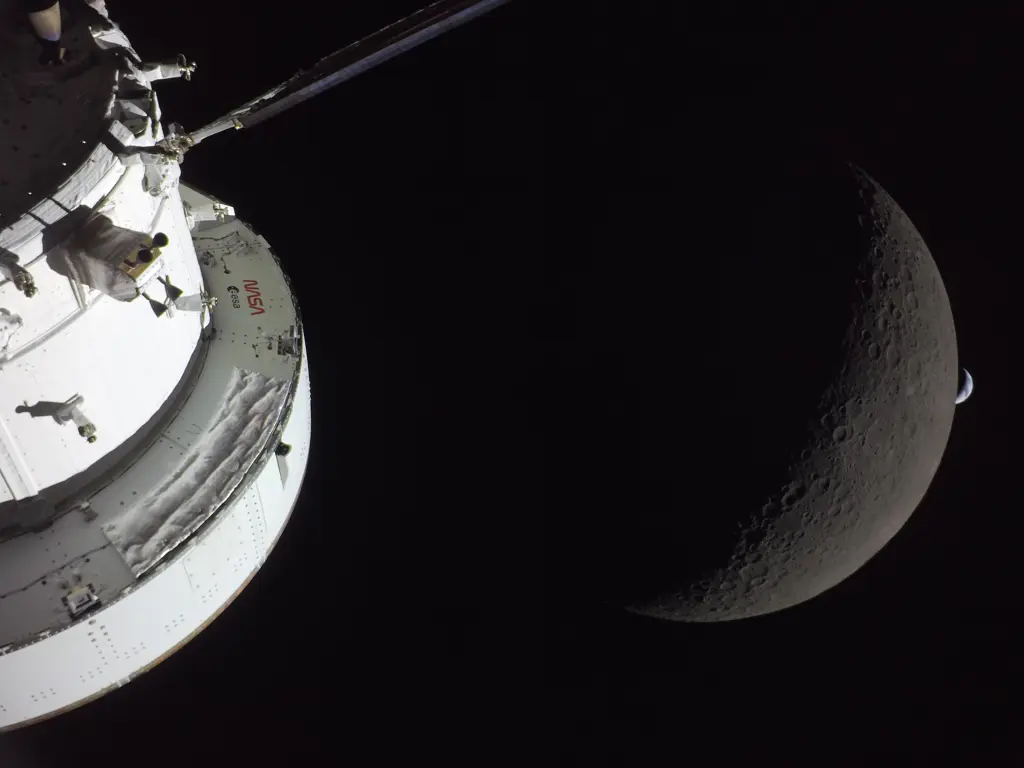
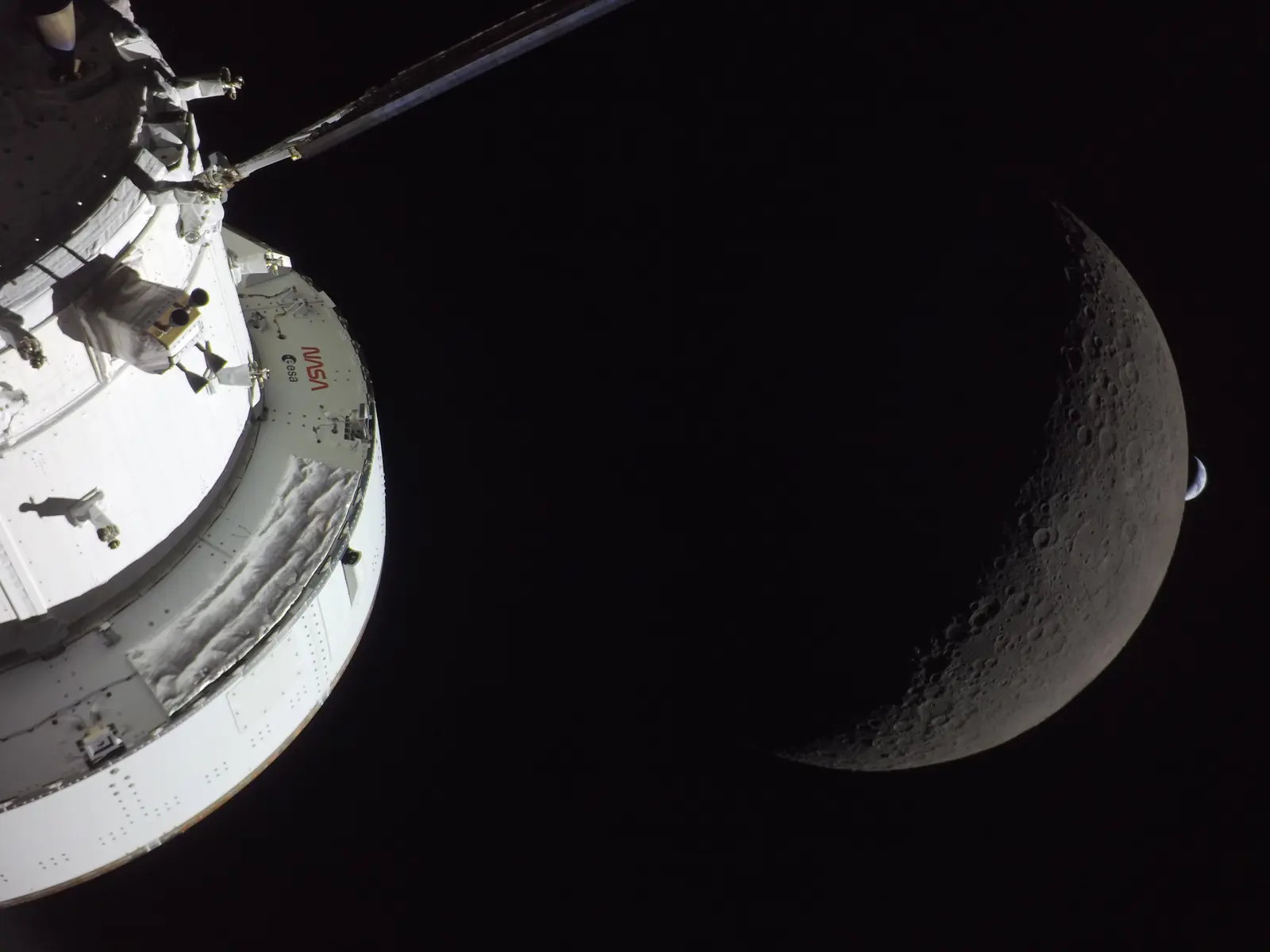
Artemis Program
OperationalReturning humans to the Moon — to stay
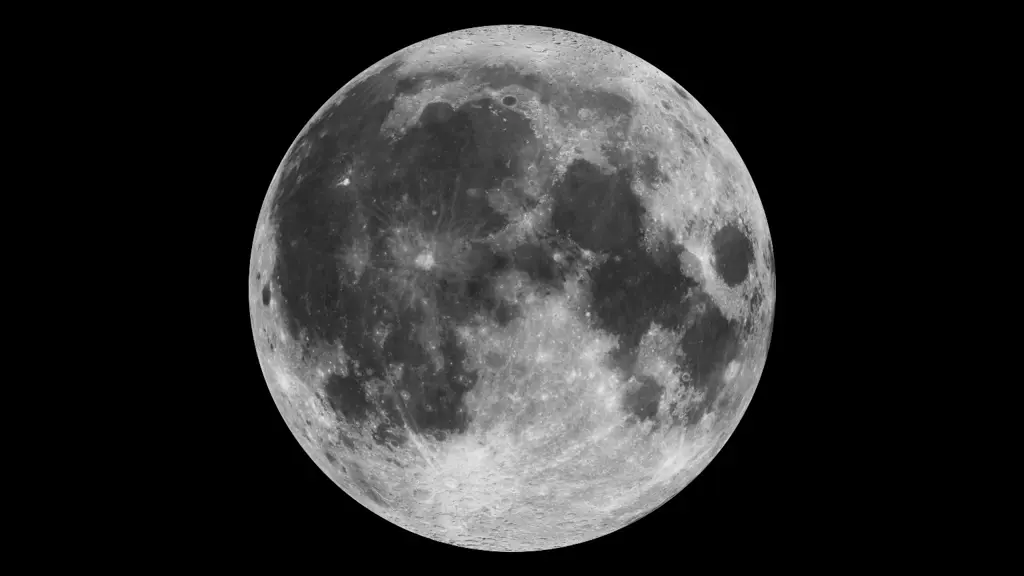
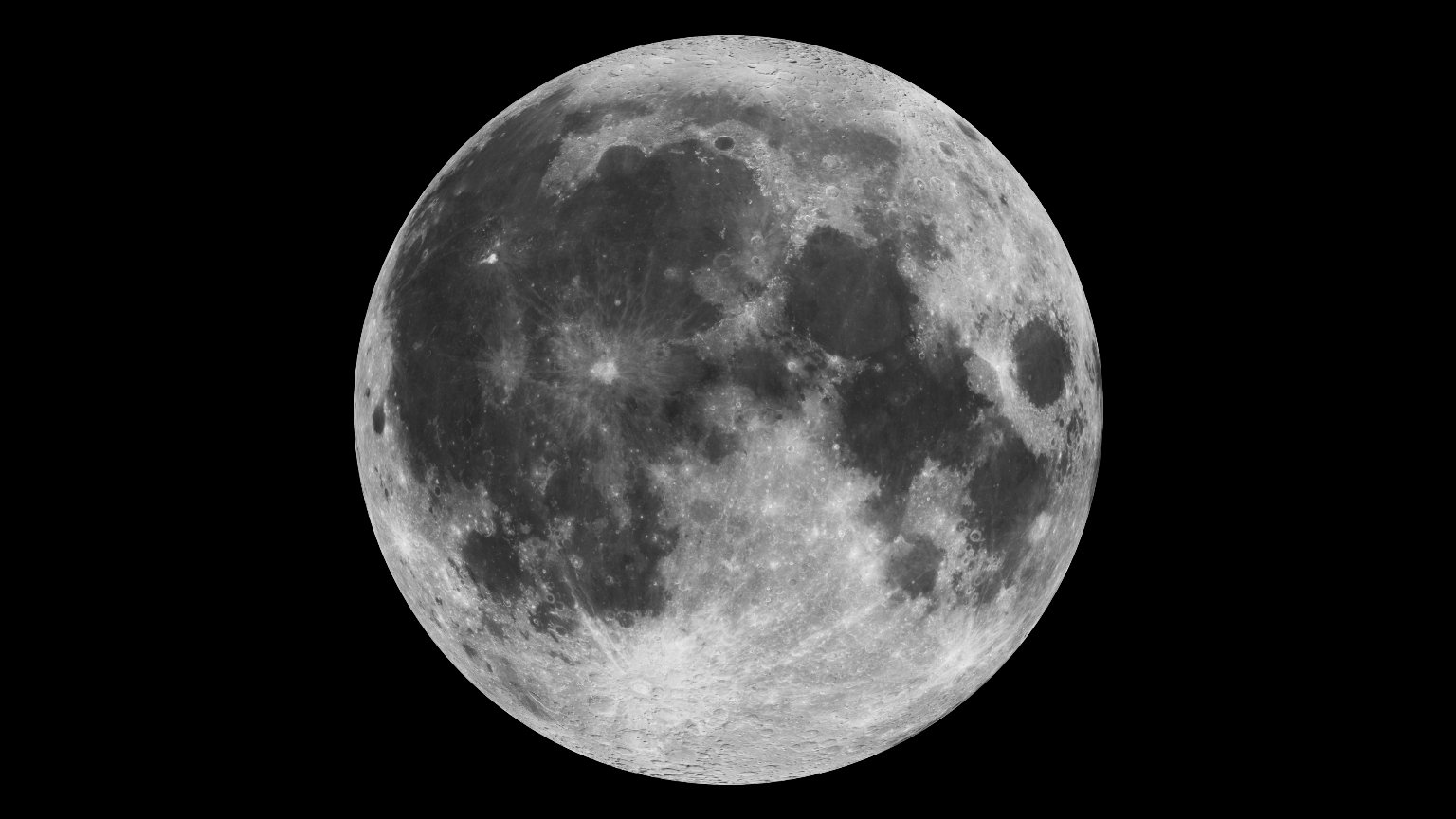
The Moon
Earth's only natural satellite — a world of craters, ancient volcanoes, and frozen water that shapes our tides, steadies our seasons, and beckons a new generation of explorers.
Sources
- Apollo 17: Mission Details — NASA
- Apollo 17 — Wikipedia
- Apollo 17 Mission — Lunar and Planetary Institute
- Apollo 17 | Britannica
- Apollo 17 — NASA Mission Page
- Apollo 17 | The Planetary Society
- Apollo 17 Fact Sheet — Spaceline
- 50 Years Ago: Apollo 17 Lands at Taurus-Littrow — NASA History
- The Geologic Investigation of the Taurus-Littrow Valley: Apollo 17 — USGS
- Apollo 17 at Taurus-Littrow: New Perspectives from the Geologist in the Field — PSRD
- Revealing the Moon's Taurus-Littrow Landslide via Integrated Analyses — AGU
- Apollo 17 Preliminary Science Report — NASA Technical Reports Server
- Apollo 17 Lunar Surface Experiments — LPI (PDF)
- NASA Names Crew for Apollo 17 — NASA History