Chandrayaan-3 (Vikram)
India's historic first soft landing near the lunar south pole, achieved on 23 August 2023.
Chandrayaan-3 (Vikram)
Chandrayaan-3 is an Indian Space Research Organisation (ISRO) mission comprising three elements: a propulsion module, the Vikram lander, and the Pragyan rover. Launched on 14 July 2023 aboard the LVM3 M4 rocket from the Satish Dhawan Space Centre at Sriharikota, the mission achieved a soft landing on the Moon on 23 August 2023 at approximately 18:04 IST (12:34 UTC). The landing site, located near 69.37° S, 32.35° E and later named Shiv Shakti Point, lies in the lunar south polar highlands — the first time any spacecraft had soft-landed in that region.
The mission made India the fourth country to achieve a soft landing on the Moon, and the first to do so near the south polar region. The Vikram lander is named for Dr. Vikram Sarabhai, regarded as the father of India's space programme. Both Vikram and the Pragyan rover were designed for a surface operational life of one lunar day, approximately 14 Earth days.
By the time the spacecraft entered sleep mode in early September 2023, all scientific instruments had returned data, yielding the first in-situ temperature profile of the lunar south polar regolith, the first direct confirmation of sulphur at the south pole, detailed elemental composition measurements, plasma environment data, and a potential detection of a lunar quake.
Key events
- 14 Jul 2023Launch
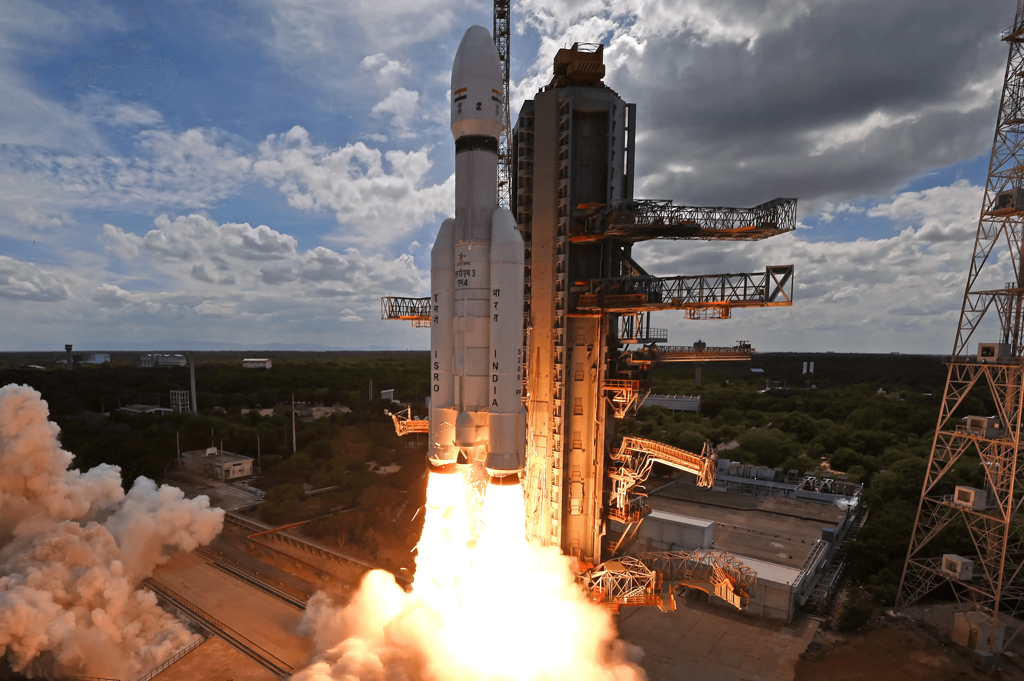
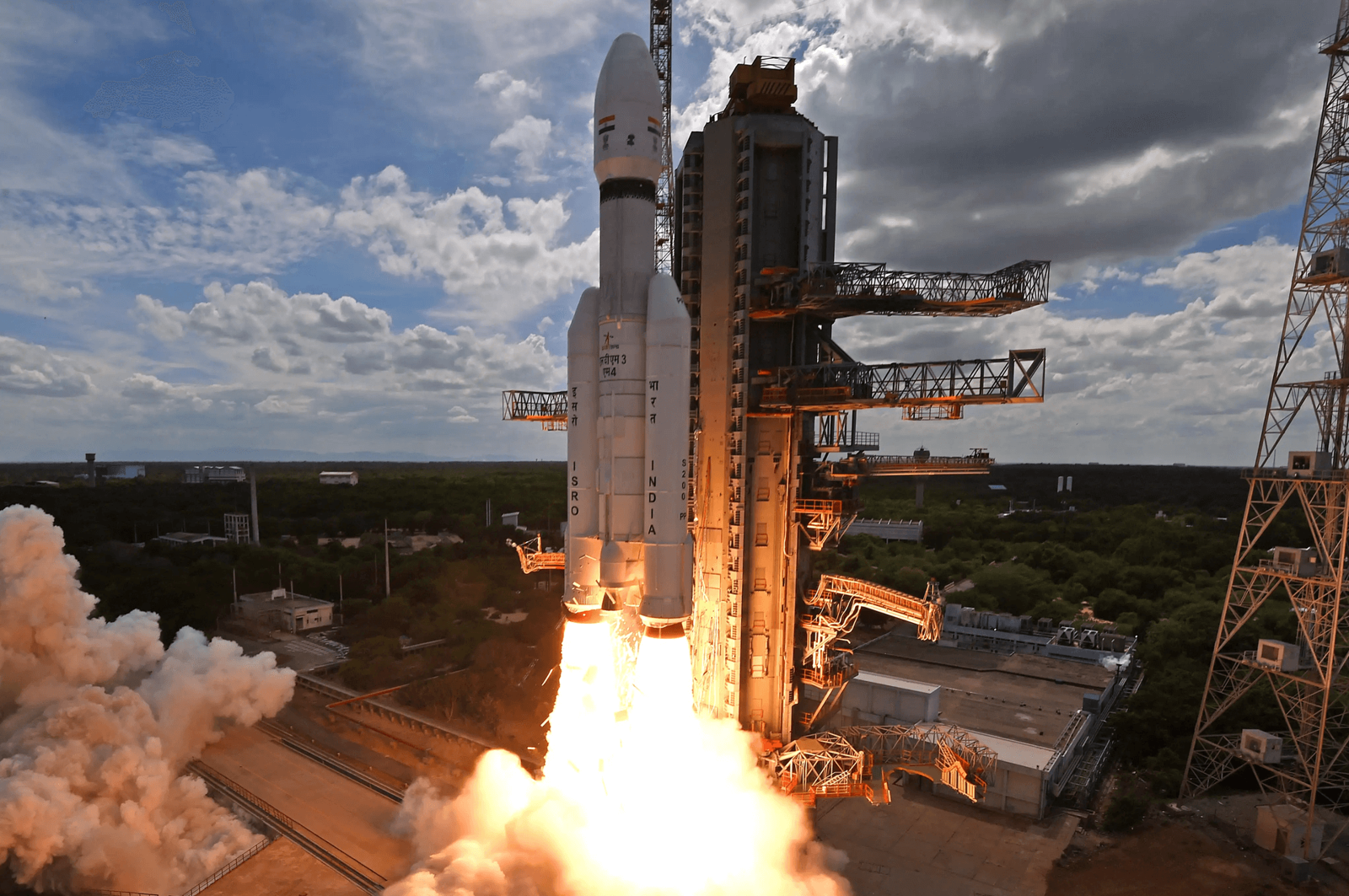
Chandrayaan-3 lifted off at 14:35 IST (09:05 UTC) aboard LVM3 M4 from the Second Launch Pad, SDSC-SHAR, Sriharikota.
- 1 Aug 2023Trans-lunar injection
A burn placed Chandrayaan-3 on a trajectory toward the Moon in a 288 km × 369,328 km orbit.
- 5 Aug 2023Lunar orbit insertion
The spacecraft was inserted into the Moon's sphere of influence and captured into lunar orbit.
- 16 Aug 2023Final composite orbit
The propulsion module and lander together reached a 113 × 157 km lunar orbit.
- 17 Aug 2023Lander separation
The Vikram lander module separated from the propulsion module to begin its independent approach phase.
- 19 Aug 2023First deboost
The lander module performed its first deboost, placing itself in a 113 × 157 km orbit ahead of the final powered descent.
- 23 Aug 2023Soft landing
Powered descent began at approximately 17:45 IST. Vikram touched down at about 18:04 IST near 69.37° S, 32.35° E — the first soft landing near the lunar south pole.
- 24 Aug 2023Rover deployment
The Pragyan rover rolled down Vikram's ramp and began surface operations.
- 2 Sep 2023Pragyan enters sleep mode
The rover was placed in sleep mode with its batteries charged and solar panels oriented for a possible reawakening after the lunar night.
- 4 Sep 2023Vikram enters sleep mode
The lander entered sleep mode. ISRO noted an attempted wake-up was planned around 22 September 2023. All instruments had functioned correctly during the mission.
Vikram lander instruments
- Chandra's Surface Thermophysical Experiment
Measures temperature and thermal properties of the lunar regolith at the south polar landing site using a probe inserted up to 10 cm into the surface, producing the first temperature–depth profile from this region.
- Radio Anatomy of Moon Bound Hypersensitive Ionosphere and Atmosphere – Langmuir Probe
Measures near-surface plasma density (ions and electrons) above the lunar surface and tracks its variation with time due to solar radiation and charged particles.
- Instrument for Lunar Seismic Activity
Monitors seismic activity and ground vibrations around the landing site to help characterise lunar crust and mantle structure. Detected a possible lunar quake during surface operations.
- Laser Retroreflector Array (NASA-provided passive payload)
Passive laser reflector mounted on the lander, enabling future laser-ranging measurements from lunar orbit or Earth.
Pragyan rover instruments
- Alpha Particle X-ray Spectrometer
Built by the Physical Research Laboratory (PRL). Uses X-ray fluorescence and particle-induced X-ray emission to measure elemental composition of lunar soil and rocks at rover stops. Detected Si, Mg, Al, Fe, Ca, Mn, Cr, Ti, Ni, K, Na, S and other elements at 23 measurement locations near Shiv Shakti Point.
- Laser-Induced Breakdown Spectroscope
Fires laser pulses at the lunar surface to generate plasma, then analyses the emitted spectrum to determine chemical and elemental composition of the near-surface regolith. Independently confirmed sulphur and other elements at the south polar landing site.
Key discoveries
Chandrayaan-3 touched down at ~69° S on 23 August 2023, making India the fourth country to achieve a lunar soft landing and the first to do so in the south polar region. The site was named Shiv Shakti Point.
LIBS on Pragyan unambiguously detected sulphur in the lunar regolith — the first in-situ confirmation of sulphur at a high-latitude south polar site. APXS independently measured its abundance alongside other major elements.
ChaSTE produced the first direct measurement of how temperature varies with depth in the top ~10 cm of regolith at the lunar south pole, revealing strong depth-dependent gradients and providing data on thermal conductivity relevant to volatile stability and future habitat design.
APXS measurements at 23 locations near Shiv Shakti Point found a fairly uniform elemental composition including Si, Mg, Al, Fe, Ca, Mn, Cr, Ti, Ni, K and Na. Results indicate magnesium-rich minerals and anorthositic material consistent with the Lunar Magma Ocean hypothesis, with contributions from deep material excavated by the South Pole–Aitken basin.
RAMBHA-LP measurements showed that the lunar plasma environment above the south polar surface has low densities of electrons and ions, with temporal variations tracked throughout surface operations — contributing to models of surface charging and dust dynamics at high latitudes.
ILSA recorded ground motion consistent with a possible lunar quake, providing the first seismic data from the south polar region and contributing to efforts to characterise crust and mantle structure beneath the landing area.
Analysis using Chandrayaan-3 navigation camera images and Chandrayaan-2 Orbiter data revealed that Vikram landed within a buried impact crater approximately 160 km in diameter and ~4.4 km deep — likely older than the South Pole–Aitken basin itself. The site's regolith contains some of the most deeply excavated material on the Moon, including primitive mantle-derived ejecta from the SPA impact.
APXS measurements at Shiv Shakti Point detected volatile elements within what is interpreted as primitive lunar mantle material delivered by South Pole–Aitken basin ejecta, making this site a valuable locality for studying early lunar differentiation not well represented in existing sample collections.
Landing site: Shiv Shakti Point
The Chandrayaan-3 landing site is located at approximately 69.367621° S, 32.348126° E in the lunar south polar highlands, roughly 350 km from the rim of the South Pole–Aitken (SPA) basin — the largest and one of the oldest impact basins in the Solar System. ISRO and the International Astronomical Union named the site Shiv Shakti Point (also described as Statio Shiv Shakti).
Analysis of orbital imagery established that the site lies within a heavily degraded, buried impact crater approximately 160 km across and originally about 4.4 km deep. This ancient structure, likely predating the SPA basin itself, accumulated ejecta from multiple major impact events over billions of years: approximately 1,400 m from the SPA impact alone, a further ~580 m from 11 other large basins, and additional layers from complex craters and local secondary impacts. As a result, the regolith sampled by Pragyan includes some of the most deeply excavated material on the Moon, offering a rare window into primitive lunar mantle composition.
Vikram lander: technical design
Vikram is a bi-propellant lander using monomethylhydrazine (MMH) and mixed oxides of nitrogen (MON3) as propellants. Four throttleable 800 N engines handle the primary powered descent, while eight 58 N attitude thrusters manage orientation. The guidance system incorporates a laser-gyro inertial reference unit, an accelerometer package, powered-descent guidance software, and a hazard detection and avoidance camera with associated algorithms. The landing leg mechanism is designed to accommodate a touchdown vertical velocity of no more than 2 m/s, a horizontal velocity of no more than 0.5 m/s, and a surface slope of up to 12°.
The lander body measures approximately 2,000 × 2,000 × 1,166 mm and has a total mass of about 1,752 kg including the 26 kg Pragyan rover. Solar panels provide up to approximately 738 W under worst-case illumination conditions, supplemented by battery storage for eclipse passages. Communications are maintained with ISRO's Indian Deep Space Network (IDSN), with the Chandrayaan-2 orbiter serving as a relay, and with the Pragyan rover on the surface.
Frequently asked questions
Related
The Moon
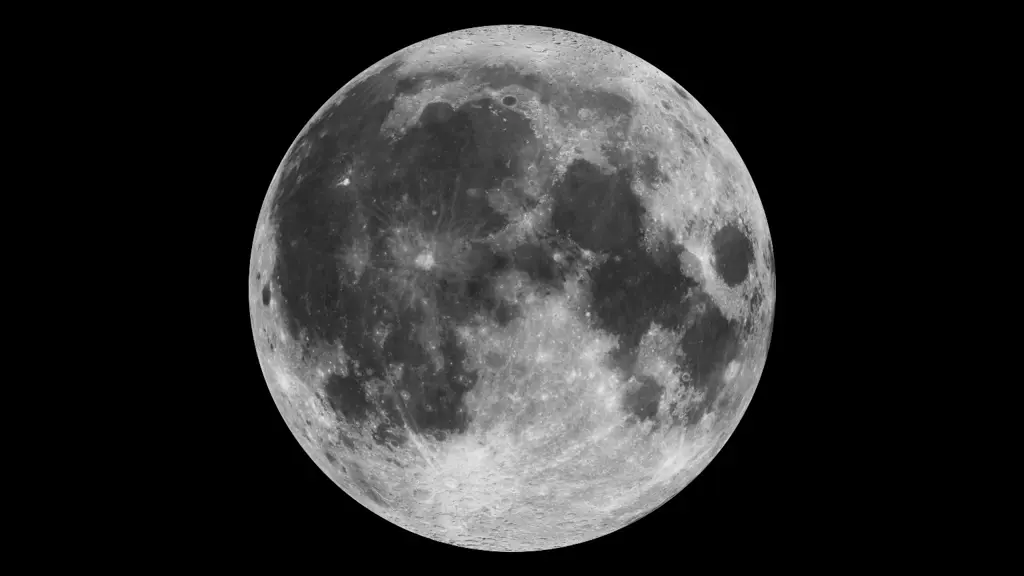
Earth's only natural satellite — a world of craters, ancient volcanoes, and frozen water that shapes our tides, steadies our seasons, and beckons a new generation of explorers.
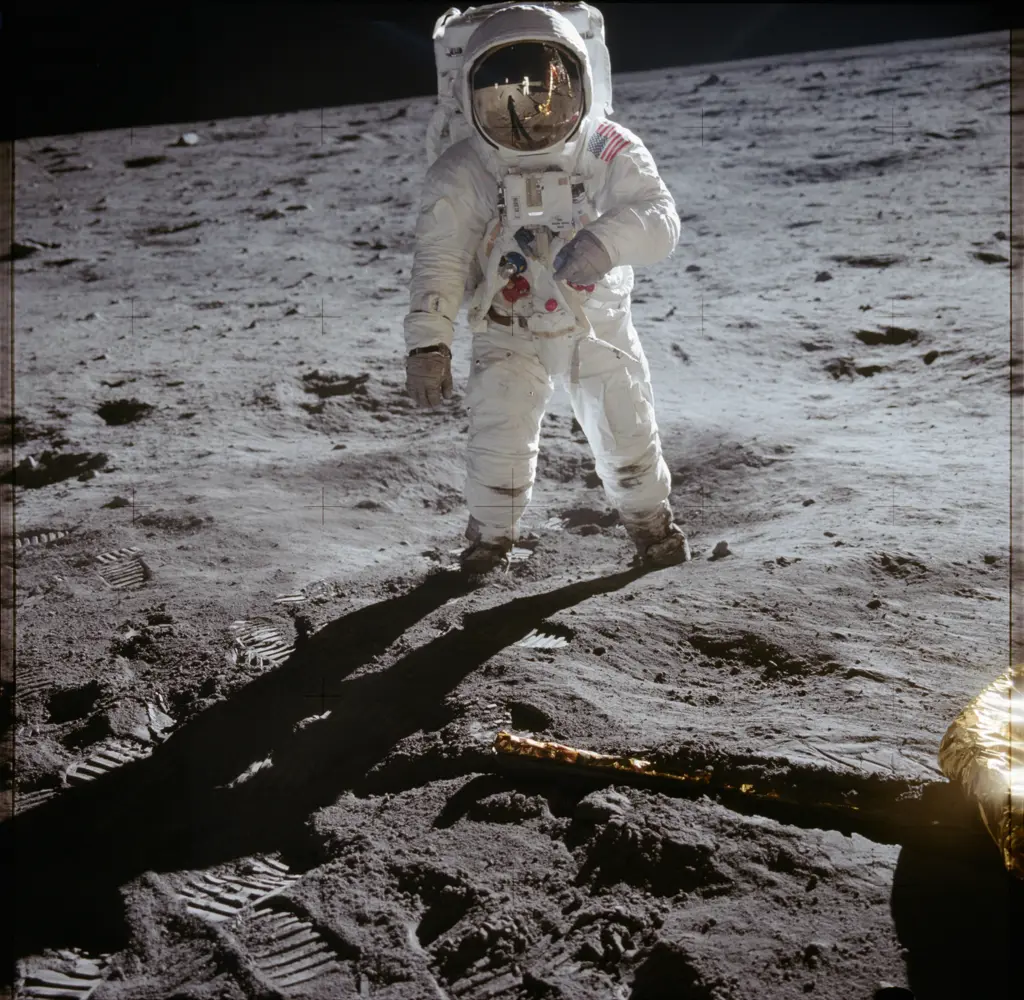
Apollo Program
RetiredLanding humans on the Moon, 1969–1972
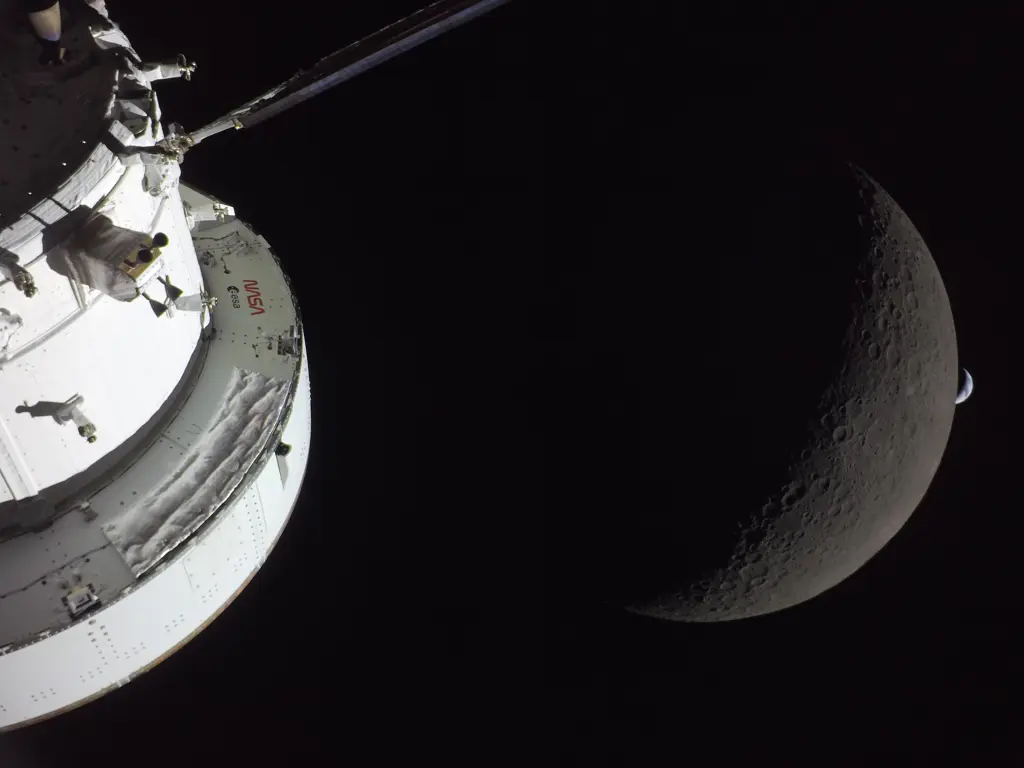
Artemis Program
OperationalReturning humans to the Moon — to stay
Sources
- Chandrayaan-3 — ISRO
- Chandrayaan-3 Details — ISRO
- Chandrayaan programme — Wikipedia
- Chandrayaan-3 — Wikipedia
- Chandrayaan-3 — eoPortal
- Chandrayaan-3 — NASA Science
- Chandrayaan-3, India's Moon lander and rover — The Planetary Society
- Chandrayaan-3 Completes Two Years — Newsonair
- Chandrayaan-3 Landing Site (Statio Shiv Shakti) — Lunar Registry
- An insight into India's Moon mission – Chandrayaan-3 — ScienceDirect
- Pragyan (Chandrayaan-3) — Wikipedia
- PRL-built APXS on Pragyan Rover of Chandrayaan-3 — ISRO (PDF)
- New Discoveries from Chandrayaan-3 Rover Using LIBS and APXS — Spectroscopy Online
- Discovery of a Buried Crater on the Moon — ISRO
- Chandrayaan-3 Propulsion Module moved from Lunar orbit to Earth orbit — ISRO
- Chandrayaan-3 Landing Site — Lunar Reconnaissance Orbiter Camera
- Chandrayaan-3 Mission Detailed Timeline — Times of India