Luna 25
Russia's first lunar mission since 1976 — and its last before crashing into the Moon.
Luna 25
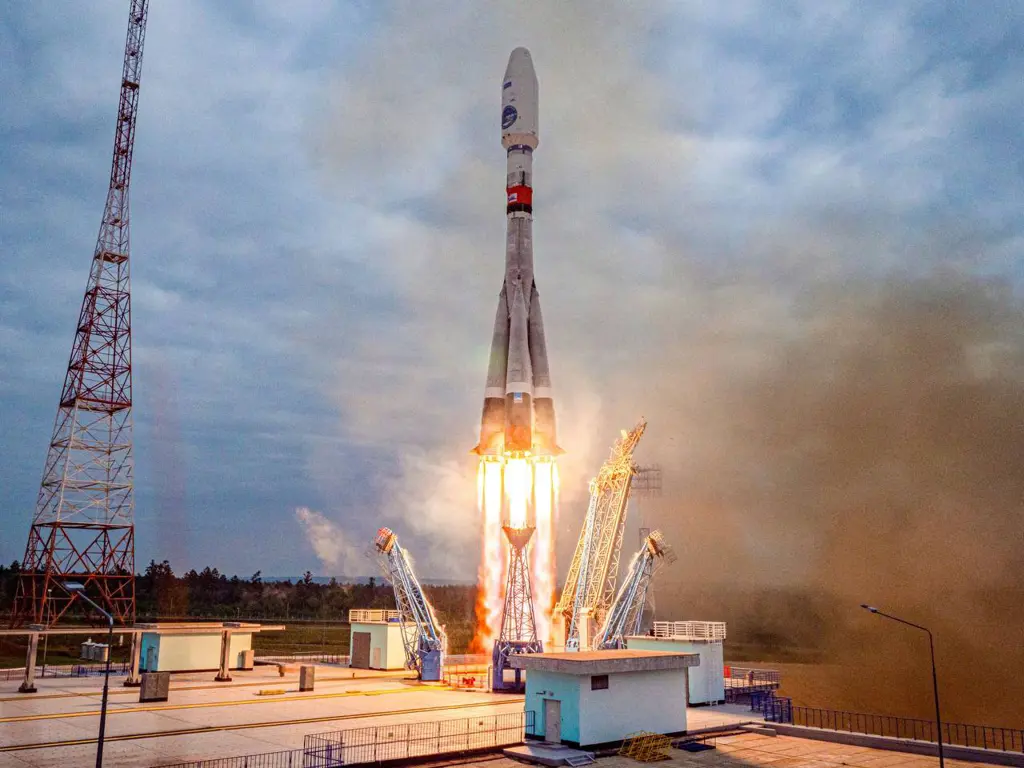
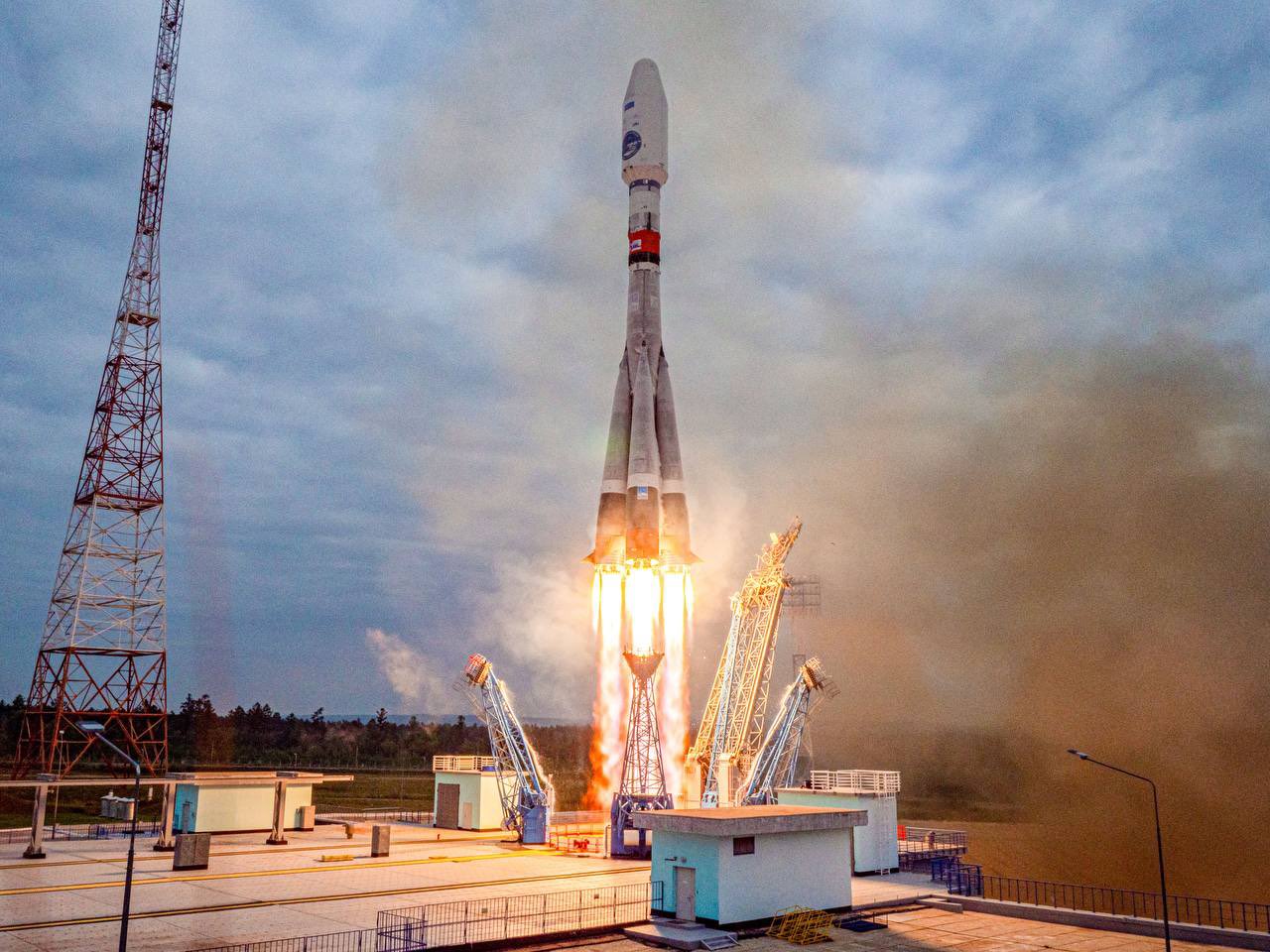
Luna 25, also known as Luna-Glob, was a Russian robotic lander designed to soft-land near the south pole of the Moon and conduct at least one year of surface science. Operated by Roscosmos and built by NPO Lavochkin, it was launched on 10 August 2023 on a Soyuz-2.1b/Fregat rocket from Vostochny Cosmodrome — Russia's first lunar mission since the Soviet-era Luna 24 in 1976.
The spacecraft successfully entered lunar orbit on 16 August 2023, but on 19 August an onboard control system failure caused the pre-landing engine burn to last 127 seconds rather than the planned 84 seconds. The resulting trajectory intersected the lunar surface, and contact was lost at 14:57 Moscow Time. Roscosmos confirmed the crash on 20 August 2023, ending the mission before any scientific data could be collected from the surface.
The loss was a significant setback for Russia's renewed lunar ambitions. Luna 25 had been intended as the first step in a phased program leading to more capable landers (Luna-27) and eventually a sample-return mission (Luna-28). It was also the first attempt by any nation to soft-land in the lunar south polar region, a zone of intense scientific interest for its suspected water-ice deposits.
Background and program history
Luna 25 traces its origins to the Luna-Glob project, a post-Soviet concept that evolved through multiple configurations over more than two decades — initially involving orbiters, impact penetrators, and combined orbiter/lander designs before settling on a lander-only mission focused on polar landing technology and surface science. Russia had not attempted a lunar mission since Luna 24 returned samples from the Moon in 1976, a gap of 47 years.
The project suffered repeated delays. Early plans targeted a launch in 2018–2019; the baseline later shifted to 2022, then to October 2021, and finally to August 2023, with software issues cited among the reasons for the last postponement. The mission was explicitly positioned as the opening step of a new three-mission Russian lunar roadmap: Luna 25 for site characterization and technology demonstration, Luna 27 for more advanced drilling and analysis, and Luna 28 for sample return.
A notable late change was the removal of ESA's Pilot-D navigation camera, which had been integrated into the payload. Following Russia's 2022 invasion of Ukraine, international sanctions led to the instrument's exclusion from the mission.
Spacecraft design
Luna 25 was an uncrewed polar lander built around two main sections: a landing platform housing the propulsion system and four-legged landing gear, and a non-pressurized instrument container carrying the solar panels, radiators, antennas, TV cameras, power systems, and scientific instruments. Reuters described the spacecraft as comparable in size to a small automobile. The scientific payload totalled approximately 30 kg spread across nine instruments.
Power was provided by solar panels mounted on the instrument container, supplemented by onboard batteries and supported by a thermal control system using radiators. The descent and landing system included velocity and range meters for autonomous guidance during the final approach.
A robotic arm approximately 1.6 m in length formed a central element of the science operations concept. Equipped with a scoop and sample acquisition tool, it was designed to excavate regolith to depths of 20–30 cm and collect small samples for delivery to an internal laser spectrometer.
Instruments
- Neutron and Gamma-Ray Spectrometer
Detect near-surface water and other volatiles using nuclear methods. Measured neutron and gamma-ray fluxes from the regolith to infer hydrogen content (a proxy for water ice) and bulk elemental composition to depths of several tens of centimetres.
- Laser Mass Spectrometer
High-precision elemental and isotopic analysis of regolith samples. Evaporated tiny samples delivered by the robotic arm and analysed the resulting plasma to determine detailed chemical and isotopic composition.
- Lunar Robotic Arm
Excavated regolith at multiple points around the lander to 20–30 cm depth, collecting ~1–2 cm³ samples and delivering them to LAZMA-LR, while also positioning cameras toward surface targets.
- Plasma, Dust, and Charged-Particle Instruments
Studied the dust and plasma components of the lunar polar exosphere, characterising the near-surface ion and electron environment, dust flux and dynamics, and electromagnetic conditions at high southern latitudes.
- Imaging System
Provided panoramic and close-up imagery of the landing site and surrounding terrain, supporting robotic arm operations and geological context for regolith sampling.
- Regolith Physical Properties Package
Characterised the mechanical and physical properties of the soil at the landing site, including density and cohesion, working in conjunction with the manipulator arm.
Mission timeline
- 10 Aug 2023Launch
Luna 25 lifted off at 23:10 UTC from Vostochny Cosmodrome on a Soyuz-2.1b/Fregat rocket, beginning Russia's first lunar mission since 1976.
- 14 Aug 2023Second trajectory correction
A 24.3-second propulsion burn at 06:40 Moscow Time refined the spacecraft's course toward the Moon.
- 16 Aug 2023Lunar orbit insertion
Luna 25 entered an initial elliptical lunar orbit following two engine firings starting at 11:57 Moscow Time. The orbit was subsequently circularised to approximately 100 km altitude.
- 18 Aug 2023Orbit correction manoeuvre
A 40-second engine firing at 09:20 Moscow Time adjusted the orbit ahead of the pre-landing lowering burn.
- 19 Aug 2023Pre-landing burn failure and loss of contact
At 14:10 Moscow Time, thrusters fired to lower the perilune in preparation for landing on 21 August. The engine ran for 127 seconds instead of the planned 84 seconds. Contact was lost at 14:57 Moscow Time. An unofficial source gives the impact time as approximately 15:01 Moscow Time.
- 19–20 Aug 2023Rescue attempts fail
Roscosmos made repeated attempts to re-establish contact on 19 and 20 August. All attempts were unsuccessful. Roscosmos officially confirmed on 20 August that Luna 25 had crashed into the Moon.
- 24 Aug 2023NASA LRO images likely crash site
Using estimated impact coordinates provided by Roscosmos, NASA's Lunar Reconnaissance Orbiter imaged the area and identified a new bright crater approximately 10 m wide that was not present in June 2022 imagery.
- 3 Oct 2023Roscosmos investigation findings announced
Roscosmos reported that the most likely cause of the crash was abnormal operation of the onboard control system due to the failure of the accelerometer unit in the BIUS-L device, which sent zero signals, preventing the correct engine shutdown.
Failure analysis
On 3 October 2023, Roscosmos announced the results of its preliminary investigation into the Luna 25 crash. The most likely cause identified was the failure of the accelerometer unit within the BIUS-L (Lunar Angular Velocity Measurement Unit) device to activate. Because the unit sent zero signals to the onboard flight control system (BKU) during the orbit-lowering burn, the control system had no velocity data with which to detect when the required change in velocity had been reached.
Unable to trigger a velocity-based engine cutoff, the control system allowed the propulsion system to continue firing until a pre-set time limit was reached. The engine ran for 127 seconds rather than the planned 84 seconds — an overrun of roughly 51 percent. This excess delta-v drove the spacecraft's perilune below the lunar surface, placing Luna 25 on what Roscosmos described as an 'undesigned open orbit' that intersected the Moon. Contact was lost moments later.
Roscosmos characterised the finding as the 'most likely' cause rather than a fully closed root-cause determination, and stated that recommendations had been prepared for application to future lunar missions. One suggested contributing factor was a possible command-stream issue in which commands with differing implementation priorities interfered with the activation of the BIUS-L unit.
Likely crash site
Using impact coordinates estimated by Roscosmos, NASA's Lunar Reconnaissance Orbiter (LRO) imaged the target region on 24 August 2023 and compared the result with earlier LRO imagery from June 2022. The comparison revealed a new, bright crater approximately 10 m wide on the inner rim of the Pontécoulant G crater, at approximately 57.865°S, 61.360°E — a location that did not exist in the 2022 imagery.
NASA's LRO team concluded that the new crater was likely formed by Luna 25 rather than a natural impactor, given its proximity to the estimated impact point and the absence of any other known artificial impact in the area during the relevant period. The site lies approximately 400 km short of the intended landing area near Boguslawsky crater at 69.545°S, 43.544°E. As of the available reporting, the association with Luna 25 is described as 'likely' rather than formally confirmed by a joint Roscosmos–NASA statement.
What the mission represented
Luna 25 was the first Russian lunar spacecraft since Luna 24 in 1976 and the first domestically produced Moon probe of the modern Russian state, launched after a 47-year hiatus in national lunar exploration.
No country had previously achieved a soft landing in the lunar south polar region. Luna 25 targeted an area near Boguslawsky crater at ~69.5°S — a zone of high scientific interest for suspected permanently shadowed water-ice deposits.
Luna 25 was designed as the first step in a three-mission sequence: Luna 25 (site characterisation and technology demonstration), Luna 27 (advanced drilling and analysis), and Luna 28 (sample return). Its loss set back the entire downstream program.
Beyond science, the mission aimed to validate precision polar landing, a robotic arm for regolith excavation, and the systems needed for autonomous surface operations in high-latitude terrain — capabilities Russia had not exercised since the Soviet era.
The ADRON-LR and LAZMA-LR instruments were specifically selected to detect and characterise near-surface volatile compounds, especially water ice, in polar regolith — a resource relevant to future human and robotic lunar infrastructure.
Frequently asked questions
Related
The Moon
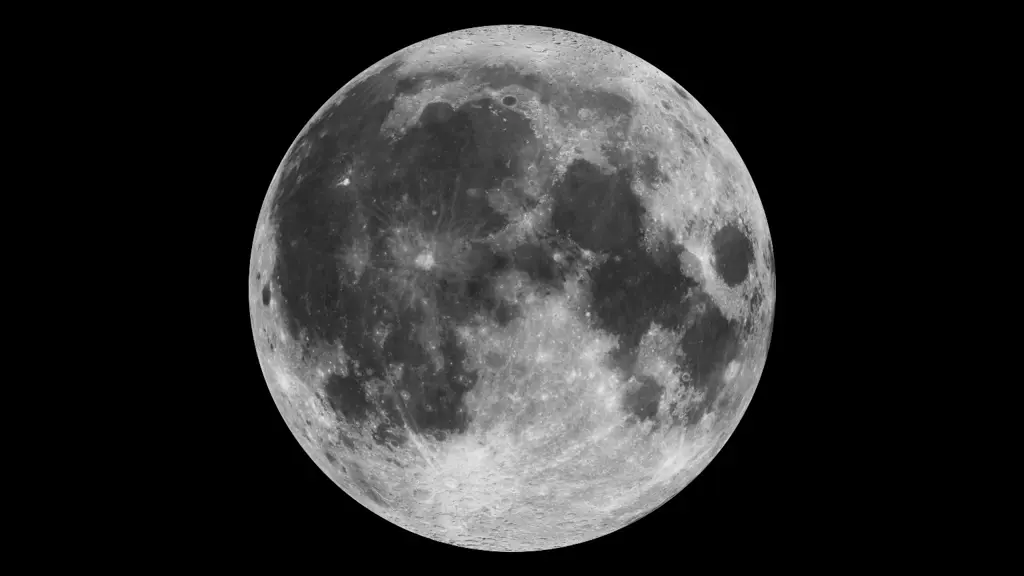
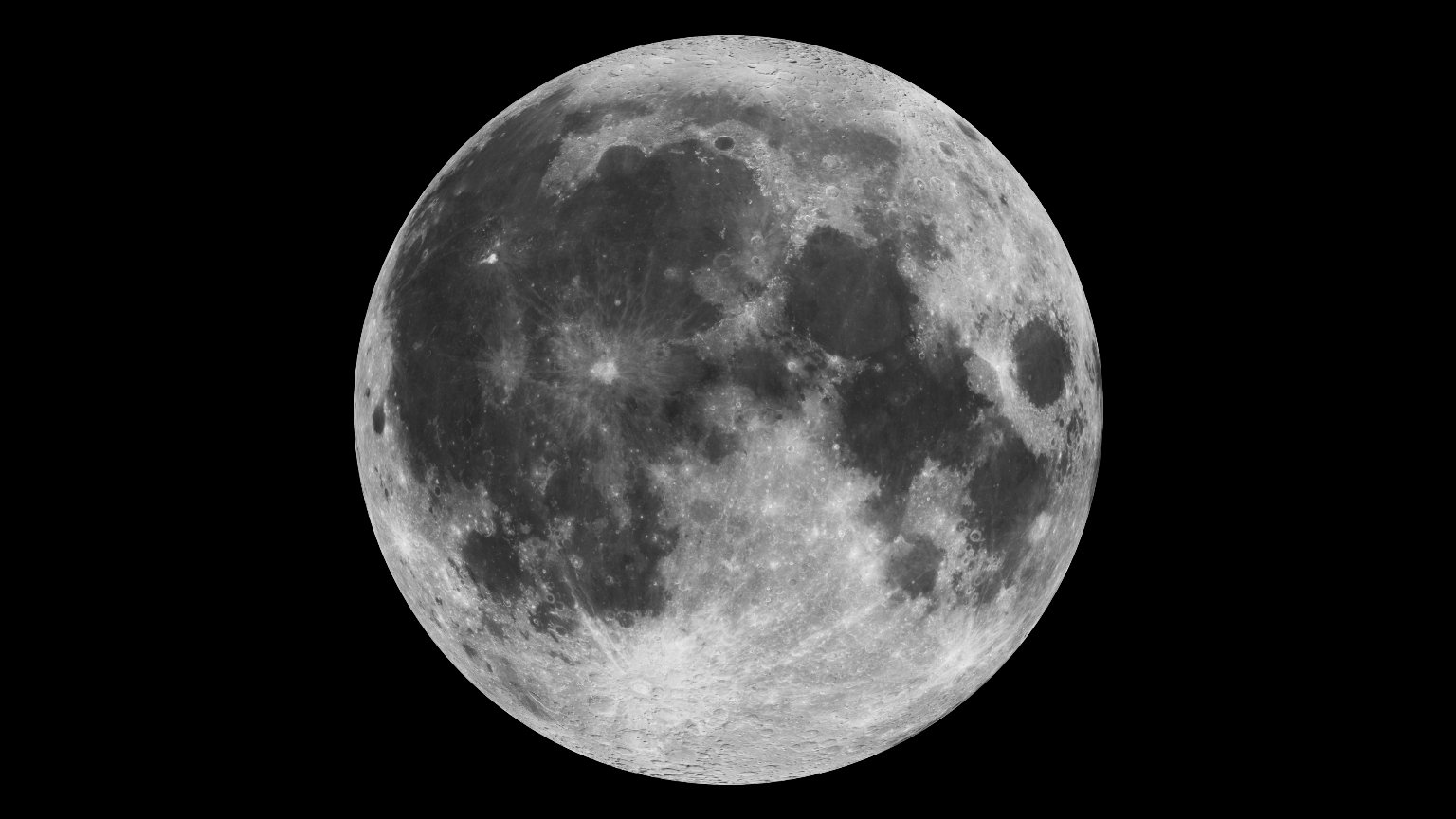
Earth's only natural satellite — a world of craters, ancient volcanoes, and frozen water that shapes our tides, steadies our seasons, and beckons a new generation of explorers.
Apollo Program
RetiredLanding humans on the Moon, 1969–1972
Artemis Program
OperationalReturning humans to the Moon — to stay
Perseverance Rover
OperationalHunting for ancient life in Jezero Crater
Sources
- Luna 25 — Wikipedia
- Russia will launch Luna-25, its 1st moon mission since 1976 — Space.com
- Luna 25 (Luna-Glob Lander) — Gunter's Space Page
- Russia's Luna-25 spacecraft enters lunar orbit — Reuters
- Luna 25 | Description, Launch, & Facts — Britannica
- Russia's Luna-25 Lander Has Crashed into the Moon — Scientific American
- Luna-Glob mission lifts off — RussianSpaceWeb.com
- Russia Traces Luna-25 Crash to Onboard Control System Failure — Space Policy Online
- Luna 25 crash most likely caused by abnormal functioning — Interfax
- Russian Moon lander crash — what happened, and what's next? — Nature
- Russia launches first Moon mission in half a century — Nature
- NASA moon orbiter spots crash site of Russia's failed Luna-25 — Space.com
- NASA's LRO Spots Likely Luna-25 Crash Site — Space Policy Online
- Russia's Luna-25 crash site evidence found in NASA moon scan — USA Today
- Russia's Luna-25 Crash Site Likely Spotted — Leonard David
- Russia's Luna-25 spacecraft crashes into Moon — BBC
- The Luna-Glob lander targets Moon's South Pole region — RussianSpaceWeb.com
- MISSION OF LUNA-25, AS THE FIRST STEP OF RUSSIAN LUNAR EXPLORATION [PDF] — USRA/LPSC