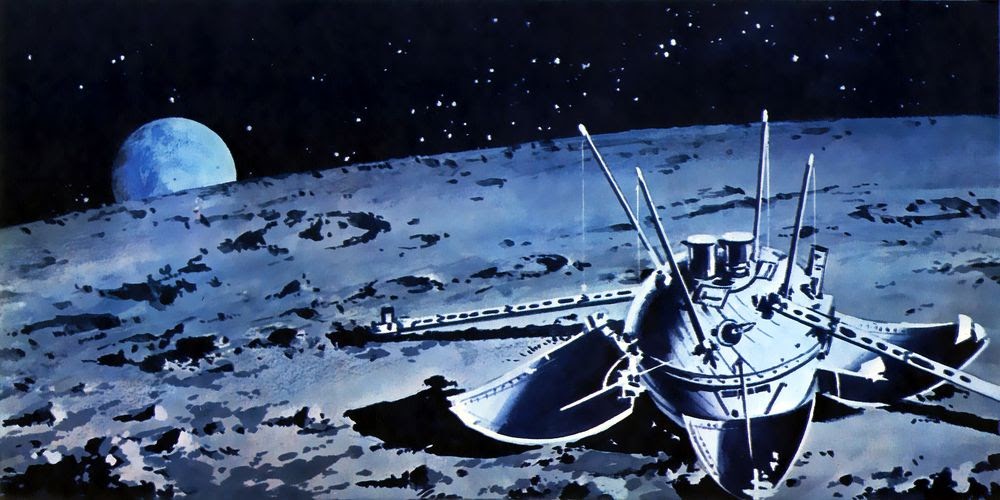
Luna 9
First soft landing on the Moon — and the first photographs ever taken from another world's surface.
Luna 9
Luna 9 was a Soviet robotic spacecraft and the first in history to achieve a soft landing on the Moon, and to transmit photographic images from the lunar surface. It lifted off on 31 January 1966 from Baikonur Cosmodrome and touched down on 3 February 1966 in Oceanus Procellarum (the Ocean of Storms), ending a long series of Soviet soft-landing attempts that had begun in January 1963.
The mission was part of the Soviet Luna programme and carried the internal designation Ye-6 No.13. Luna 9 was the twelfth Soviet attempt at a lunar soft landing; all earlier Ye-6 series missions, including Luna 4 through 8 and several unpublicised failures, had not achieved that goal. Its success made it the first human-made spacecraft to soft-land on any celestial body other than Earth.
By returning panoramic images showing nearby rocks and the surrounding terrain, Luna 9 also resolved a long-standing scientific uncertainty: the lunar surface was firm enough to support the weight of a lander, rather than being buried under a deep, unstable layer of dust. That result had direct implications for the planning of later robotic and crewed missions.
Spacecraft Design
The Luna 9 spacecraft stood approximately 2.7 m tall and comprised two main sections: a braking and propulsion unit responsible for descent and landing, and a separate ball-shaped lander capsule. The total mass at launch was about 1,538 kg; the lander capsule itself weighed roughly 99 kg and measured approximately 58 cm across.
The lander was a hermetically sealed sphere containing radio equipment, telemetry systems, a program timer, heat-control systems, scientific instruments, power sources, and a television system. Its design was deliberately simple, with subsystems kept to minimum complexity consistent with the mission objectives.
During descent, four outrigger vernier engines provided braking and attitude control. The main engine was shut down at low altitude, and final descent continued under vernier thrust. Shortly before impact, the lander capsule separated from the propulsion section and struck the surface inside an inflatable landing bag, which cushioned it against the shock of touchdown. After the spacecraft came to rest, petal-like panels opened to stabilise the capsule and expose its antenna and camera for transmission.
The only dedicated scientific instrument aboard the lander was a radiation detector. The television system was the primary payload, designed to acquire and transmit panoramic images of the landing site.
Flight Chronology
- 31 Jan 1966Launch
Lifted off from Baikonur Cosmodrome Site 31/6 at 11:41:37 UTC aboard a Molniya-M 8K78M rocket.
- 3 Feb 1966Soft landing
Touched down in Oceanus Procellarum at 18:45:30 UTC — the first soft landing on the Moon by any spacecraft.
- 3–5 Feb 1966Surface operations
Transmitted seven radio sessions totalling 8 hours 5 minutes, returning panoramic images as the Sun rose from about 7° to 27° elevation.
- 3 Feb 1966Jodrell Bank interception
Jodrell Bank Observatory received Luna 9's transmissions and, using a standard facsimile receiver borrowed from the Daily Express, decoded and published the surface images before an official Soviet release.
- ~6 Feb 1966End of mission
Mission concluded after approximately 6 days, 11 hours, and 10 minutes of operations.
Key Findings
Luna 9's successful soft landing and the absence of any catastrophic sinking into the regolith demonstrated that the lunar surface could bear the weight of a lander, countering earlier fears of a deep, unstable dust layer.
The panoramic images were the first ever taken from the Moon's surface, revealing a relatively level plain strewn with nearby rocks. The horizon was approximately 1.4–1.5 km away from the landing site.
Features as small as about 1–2 mm near the camera could be distinguished, allowing close inspection of surface texture and small rocks.
Multiple images taken as the Sun rose from roughly 7° to 27° elevation provided changing shadow patterns, helping scientists infer local topography and estimate the shapes of rocks and craters.
The onboard radiation detector recorded approximately 30 millirads per day (0.3 mGy/day) at the surface, dominated by cosmic rays. Soviet authorities stated this was well within acceptable limits for human beings.
The Jodrell Bank Episode
When Luna 9 began transmitting from the lunar surface on 3 February 1966, Jodrell Bank Observatory in England was tracking the spacecraft and received the signal. Staff at the observatory recognised that the transmission format was compatible with the standard facsimile equipment used by newspapers to transmit pictures. A suitable receiver was borrowed from the Daily Express, and Jodrell Bank decoded and printed the images.
The decoded pictures were published in the British press before the Soviet authorities had made an official release, effectively bypassing Soviet information controls. The Soviet Academy of Sciences complained about the hurried publication, and Jodrell Bank's own records describe an exchange of harsh words with Soviet authorities. The version produced at Jodrell Bank was also slightly distorted, because staff had guessed the image aspect ratio incorrectly. Despite these tensions, the episode ensured that Luna 9's surface photographs became widely known worldwide almost immediately.
Historical Significance
Luna 9 was the first mission built by the Lavochkin design bureau to succeed in deep space; Lavochkin went on to design almost all subsequent Soviet and Russian lunar and planetary spacecraft. Its success after eleven failed soft-landing attempts underscored the difficulty of the technical challenge and the scale of the Soviet investment in the Luna programme.
In the context of the Space Race, Luna 9 preceded the American Surveyor 1 soft lander by approximately four months, giving the Soviet Union the first soft lunar landing and the first surface images. U.S. analysts viewed the achievement as a significant milestone and noted that it provided a powerful incentive for the United States to press ahead with the Apollo programme. Later U.S. documents described the success of Luna 9 as contributing to optimism about future crewed lunar landings in both superpowers.
Scientifically, the mission provided the first ground-truth visual context for lunar geology at a specific site in Oceanus Procellarum, supporting interpretation of orbital imagery and informing subsequent landing-site selection. It validated engineering models for terminal descent and impact protection, including the use of an airbag-style landing system on a low-gravity body, and confirmed that telemetry and imaging systems could survive landing and operate on the lunar surface across multiple communication passes.
Landing Site
Luna 9 landed on the western near side of the Moon in Oceanus Procellarum (Ocean of Storms). The long-cited historical coordinates place the landing site at approximately 7°08′N, 64°22′W (about 7.13°N, 64.37°W). The exact location has not been conclusively confirmed, and competing candidate sites remain under discussion. A 2026 analysis using novel methods reported a likely location at approximately 7°02′N, 64°20′W, still within Oceanus Procellarum.
Luna 9 FAQ
Related
The Moon
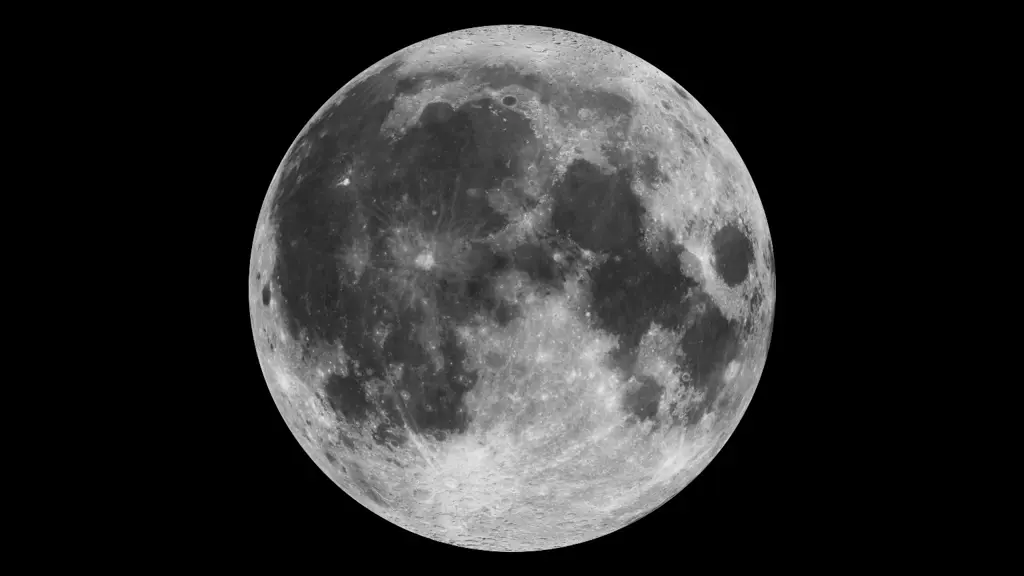
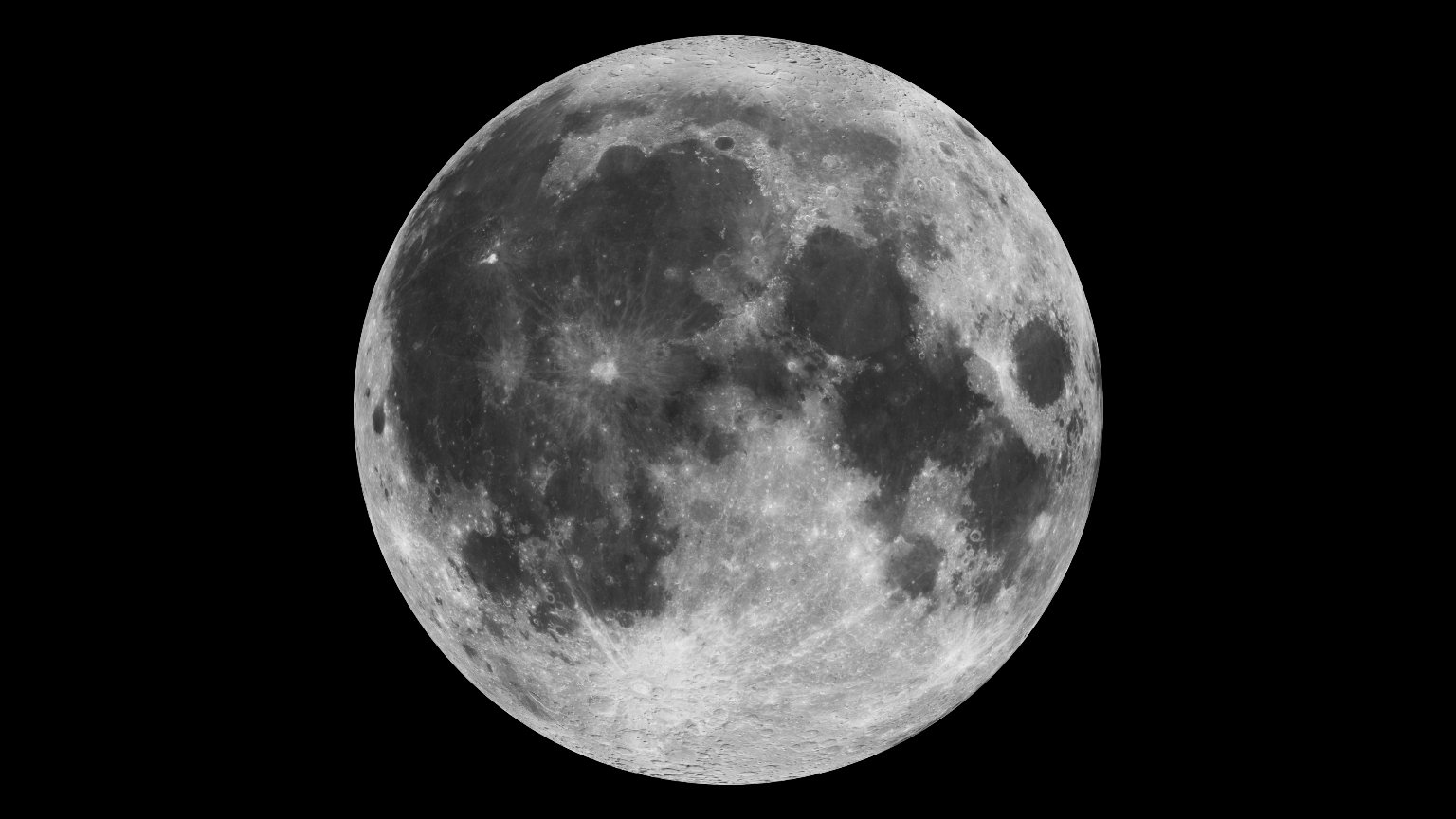
Earth's only natural satellite — a world of craters, ancient volcanoes, and frozen water that shapes our tides, steadies our seasons, and beckons a new generation of explorers.
Apollo Program
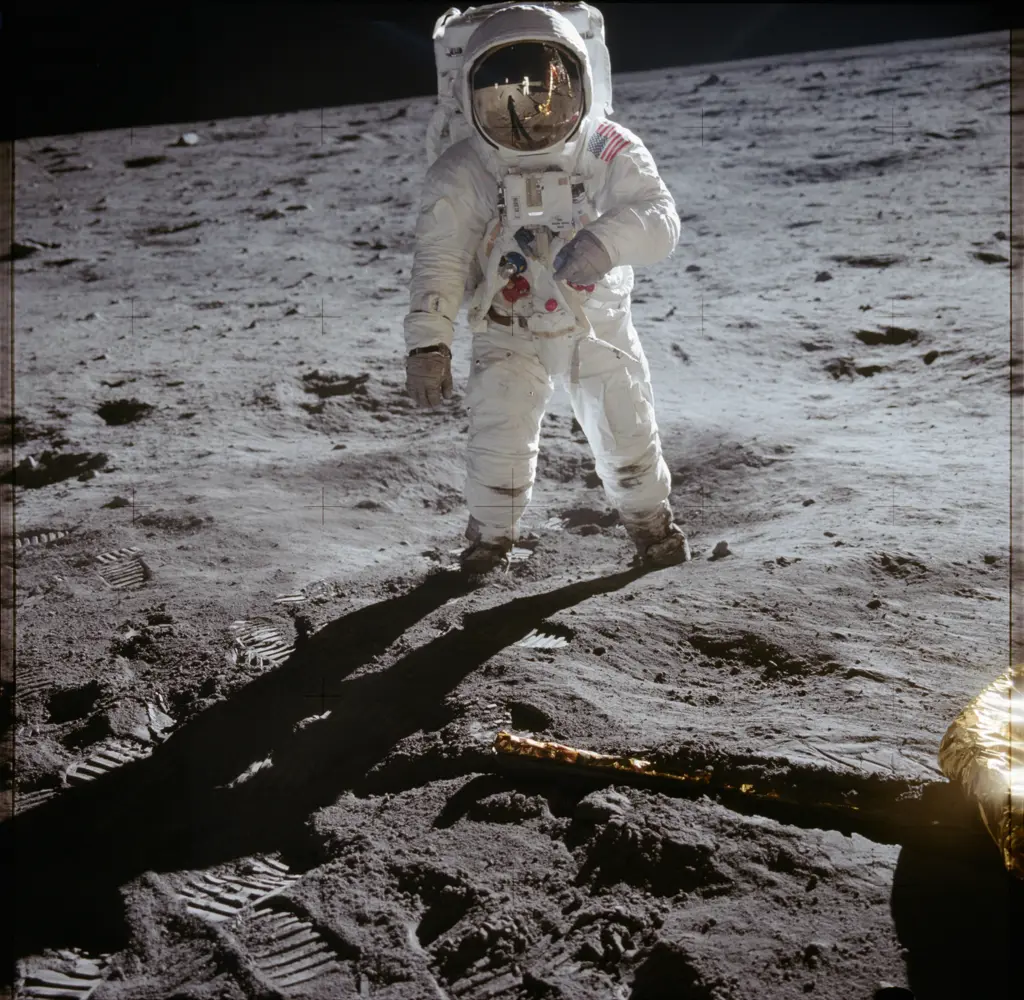
RetiredLanding humans on the Moon, 1969–1972
Artemis Program
OperationalReturning humans to the Moon — to stay
Sources
- Luna 9 – Wikipedia
- Possible identification of the Luna 9 Moon landing site – Nature
- Preliminary Analysis of Luna 9 (NSA PDF)
- Luna 9: Lunar Landing – For All Moonkind Moon Registry
- Lost Soviet Luna 9 Moon Lander May Have Been Found – New York Times
- Preliminary Analysis of Luna-9 Photography (NSA PDF)
- Luna 9 – ESA Lunar Exploration
- Soviet probe makes world's first soft landing on the Moon – RussianSpaceWeb
- Jodrell Bank's role in early space tracking activities – Part 2
- Scooping the Soviets – Smithsonian Magazine
- Scientists Say They May Have Found a Long-Lost Lunar Lander – Smithsonian Magazine