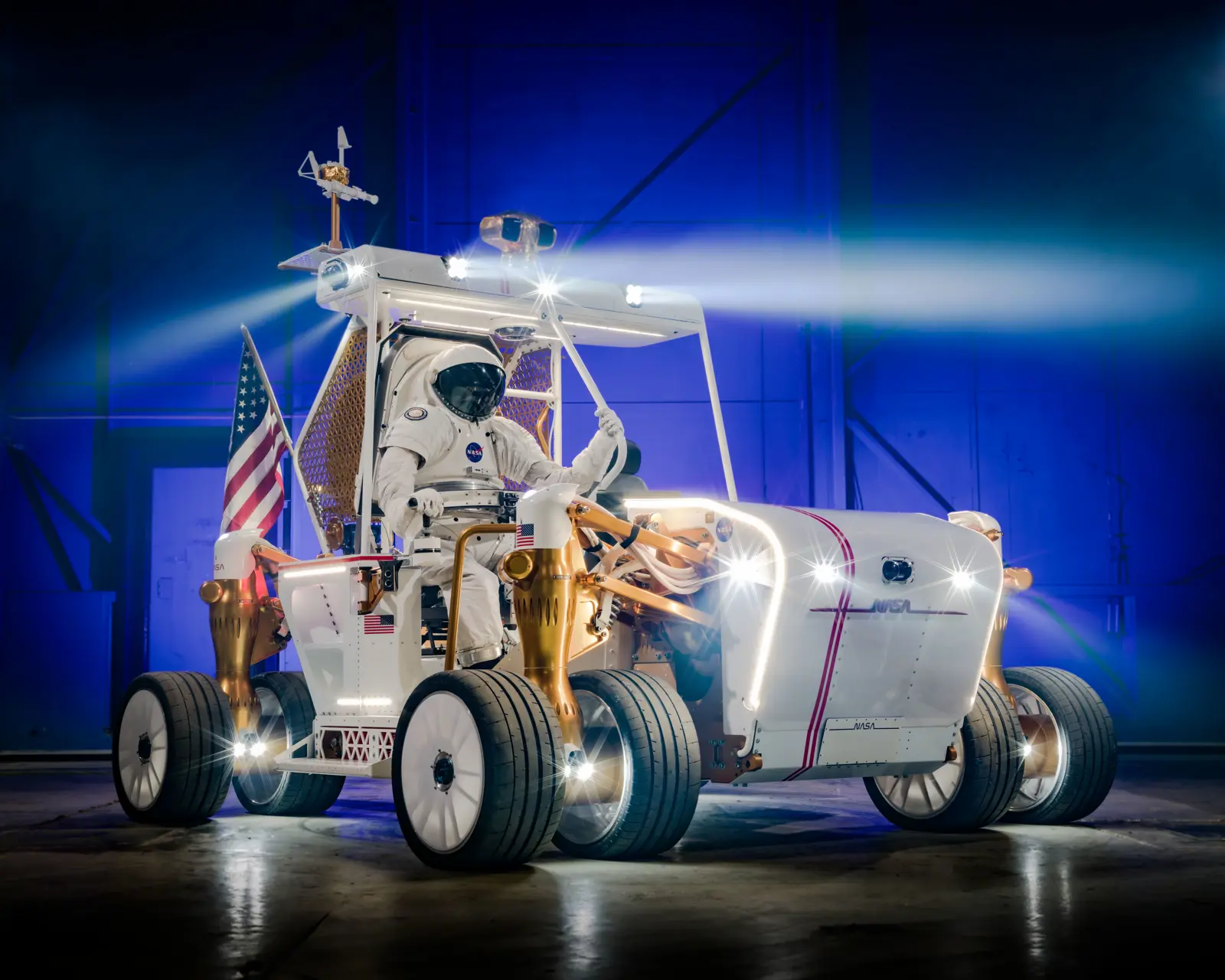
Lunar Terrain Vehicles
From Apollo's moon buggy to Artemis's autonomous electric rovers — humanity's quest for surface mobility on the Moon.
Lunar Terrain Vehicles
A lunar terrain vehicle (LTV) is a wheeled surface vehicle designed to transport astronauts, scientific equipment, and cargo across the Moon's surface, extending the range and productivity of lunar missions far beyond what is achievable on foot. The concept dates to the Apollo era, when NASA flew the Apollo Program's Lunar Roving Vehicle (LRV) on three missions between 1971 and 1972. The Soviet Union independently operated two Lunokhod teleoperated rovers in 1970 and 1973. Decades later, as NASA's Artemis Program targets a sustained human presence near the lunar south pole, a new generation of crewed and autonomous LTVs is being developed by commercial partners under a landmark rover-as-a-service procurement.
NASA's Lunar Terrain Vehicle Services (LTVS) contract, with a maximum potential value of US$4.6 billion covering roughly 15 years through approximately 2039, is structured as an indefinite-delivery/indefinite-quantity (IDIQ) agreement. Rather than purchasing a government-owned rover, NASA acquires end-to-end services: development, lunar delivery, and surface operations. Three companies — Lunar Outpost, Venturi Astrolab, and Intuitive Machines — received Phase 1 feasibility task orders in April 2024. Subsequent awards selected Lunar Outpost and Venturi Astrolab to build Phase 1 rovers, with Blue Origin contracted to deliver them to the surface aboard its Blue Moon Mark 1 lander.
Alongside the crewed LTV program, Lunar Outpost operates a parallel family of small robotic prospecting rovers called MAPP (Mobile Autonomous Prospecting Platform), which flew to the lunar surface on the Intuitive Machines IM-2 mission and is intended to support resource mapping, science, and communications demonstrations.
Program Framework and Procurement
NASA structured the LTVS procurement in three phases. Phase 1 comprises approximately 12-month feasibility studies intended to bring competing designs to preliminary design review (PDR) level maturity. Phase 2 is a demonstration mission: NASA will issue a request for task order proposals to eligible providers who will develop, deliver, and demonstrate an LTV on the Moon, validating performance and safety ahead of the first crewed use on Artemis V. NASA anticipated awarding only one provider for the demonstration task order. Follow-on annual service task orders will support unpressurized rover capabilities for moonwalking and science through approximately 2039. The contract also includes on-ramp provisions allowing additional companies to compete in later phases.
On 3 April 2024, NASA selected Intuitive Machines, Lunar Outpost, and Venturi Astrolab for Phase 1 feasibility task orders. Each company received a 12-month award to mature its rover design. Testing of all three commercially owned and developed LTVs subsequently began at Johnson Space Center, focusing on mobility, control, and integration with NASA extravehicular activity (EVA) operations in a terrestrial analogue setting.
NASA has not publicly issued a single fixed engineering specification sheet common to all vendors. Instead, it specifies performance and safety requirements — including crewed and autonomous operation, advanced power management for the low-sunlight polar environment, autonomous navigation and hazard avoidance, and state-of-the-art communications — and each company proposes a rover design meeting or exceeding those thresholds. The overarching operational requirement is that LTVs must function both with astronauts aboard and independently, enabling continuous exploration of the lunar south pole between crewed visits.
Phase 1 Rover Builders
Subsequent task order awards selected two companies to build Phase 1 rovers. Lunar Outpost, headquartered in Golden, Colorado, received approximately $220 million for its Pegasus rover. Venturi Astrolab, based in Hawthorne, California, received approximately $219 million for its Crewed Lunar Vehicle (CLV-1), derived from the company's earlier FLEX (Flexible Logistics and Exploration) architecture. Both awards are firm-fixed-price and performance-based milestone contracts, with the goal of fielding crewed and uncrewed mobility systems by approximately 2028.
Intuitive Machines, based in Houston, Texas, competed with its MOON RACER concept during the Phase 1 feasibility period. Intuitive Machines brings lunar lander heritage from its IM-1 and IM-2 Nova-C missions, providing an end-to-end delivery and operations capability, though it was not among the Phase 1 rover builder awardees. Additional industrial partners cited across the competing teams include AVL, Boeing, Michelin, and Northrop Grumman.
Phase 1 Teams
- Lunar Outpost — Pegasus LTV
Prime contractor for $220M Phase 1 rover build. Pegasus is a lighter, mission-ready evolution of Lunar Outpost's Eagle rover, designed for crewed and autonomous operation. Industrial team includes Lockheed Martin, General Motors, Goodyear Tire & Rubber, and MDA Space.
- Venturi Astrolab — Crewed Lunar Vehicle (CLV-1)
Prime contractor for $219M Phase 1 rover build. CLV-1 is derived from Astrolab's FLEX rover architecture. Partners include Interlune (payload integration for helium-3 prospecting), Axiom Space, and Odyssey Space Research.
- Intuitive Machines — MOON RACER
Phase 1 feasibility study awardee. MOON RACER leverages Intuitive Machines' lunar lander end-to-end delivery experience from IM-1 and subsequent missions.
- Blue Origin — Blue Moon Mark 1 Lander (Delivery)
LTV delivery provider under separate CLPS Moon Base task order. Blue Origin's Blue Moon Mark 1 (Endurance) cargo lander will transport both Phase 1 LTVs to the lunar south pole region. Initial contract: $188M, with options totaling $280.4M for two task orders.
Rover Specifications: Pegasus and CLV-1
Both Phase 1 rovers share a common NASA-driven performance envelope. Each has a mass of a little less than one metric ton, is stowed in a folded configuration to fit within Blue Origin's Blue Moon Mark 1 lander (which can carry up to approximately 3,000 kg to the lunar surface), and is designed to carry up to two suited astronauts. Nominal crewed traverses cover approximately 10 km at speeds up to about 10 km/h (roughly 6 mph). In uncrewed or autonomous mode, both rovers are designed for excursions of up to approximately 200 km from their delivery point. The south polar operating environment demands that rovers handle permanently shadowed regions, rugged terrain, regolith dust, and extreme thermal conditions.
The Pegasus rover, under contract to Lunar Outpost, is described by NASA as designed to operate for up to a year on the lunar surface. It supports manual, autonomous, and teleoperated driving modes and is capable of speeds exceeding 9 mph (approximately 14–15 km/h). Pegasus draws on Apollo-heritage design concepts and on prototype and flight experience from Lunar Outpost's earlier Eagle rover and MAPP robotic platform family. Its design features a flight deck-forward configuration for improved terrain visibility, a reconfigurable cargo bed, and a robotic arm. A key thermal technology allows Pegasus to operate — not merely survive — during the approximately two-week lunar night, when surface temperatures fall to around –173 °C (–280 °F), extending operational life from days to potentially many years.
Venturi Astrolab's CLV-1 is similarly rated for crewed traverses of approximately 10 km and autonomous excursions of up to about 200 km. It supports remote teleoperation from Earth and autonomous navigation. One CLV-1 variant is configured with an Interlune imaging system intended to search for helium-3 deposits during robotic sorties. NASA characterizes the Artemis-era LTV class as a combination of Apollo-style crewed mobility and Mars-rover-like autonomy and endurance.
Blue Origin: Delivery Architecture
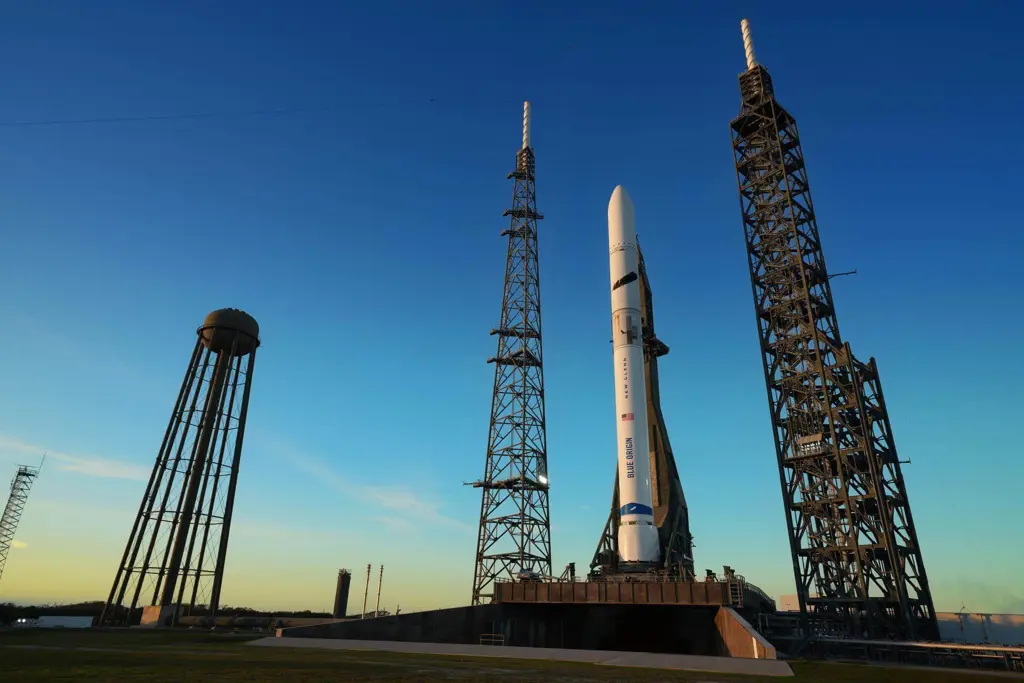
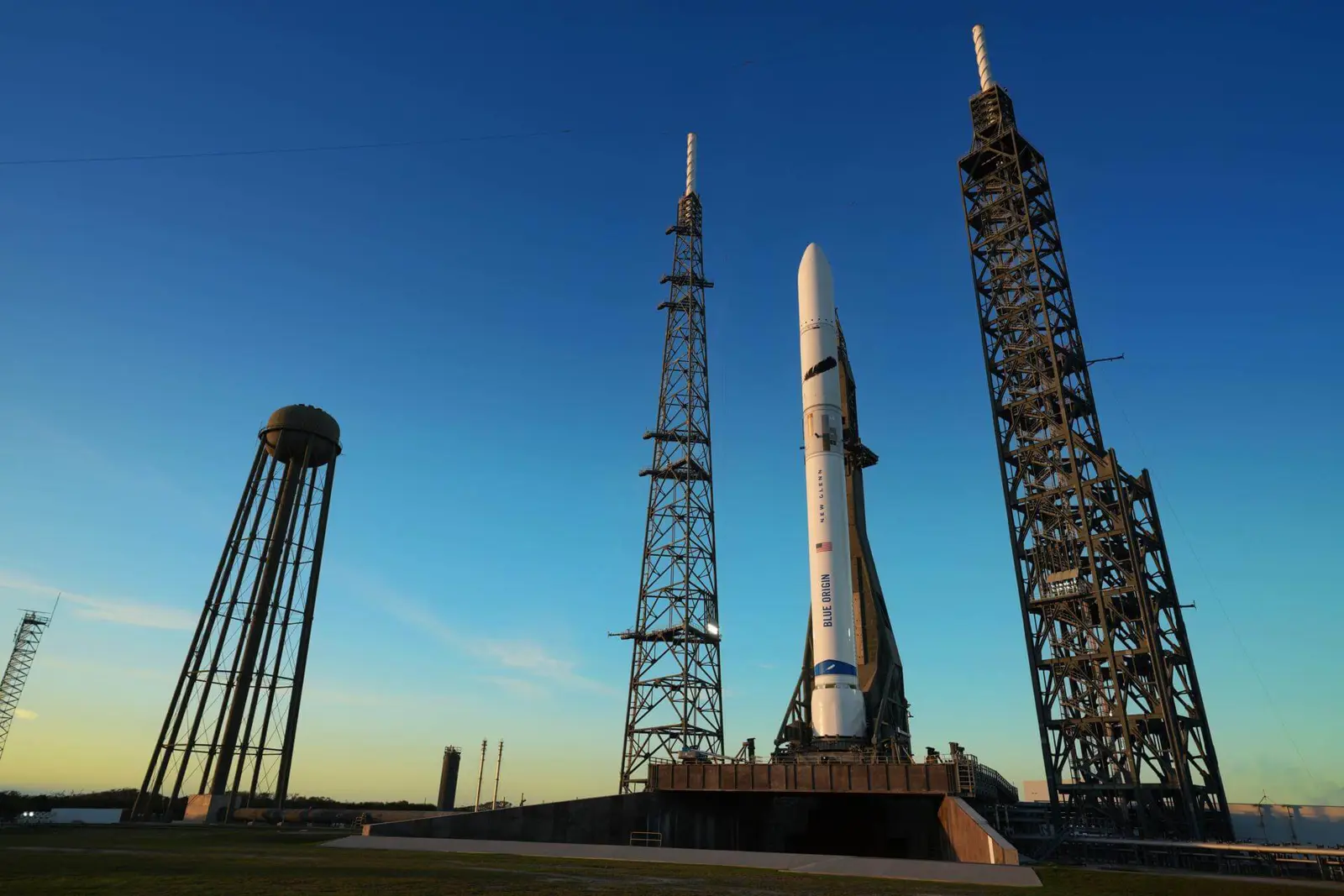
Blue Origin is not constructing an LTV; its role is to deliver the Lunar Outpost and Venturi Astrolab rovers to the lunar surface. The delivery vehicle is the Blue Moon Mark 1, an autonomous cargo lander approximately 8.05 m tall and 3.08 m in diameter, with a fueled mass of about 21,350 kg. Its single BE-7 engine burns liquid oxygen and liquid hydrogen, producing up to approximately 44 kN of thrust. Launched in the fairing of Blue Origin's New Glenn rocket, the Mark 1 can deliver up to approximately 3,000 kg of cargo anywhere on the lunar surface, sufficient to accommodate both LTVs (each under one metric ton) along with associated equipment.
Blue Origin holds a $188 million initial contract to ready the lander and mission integration for LTV delivery, with an option period worth a further $280.4 million for two task orders. The delivery is structured under the Commercial Lunar Payload Services (CLPS) 1.0 IDIQ framework as a CX-2 task order. The first LTV delivery is targeted ahead of Artemis IV, currently expected around 2028, so that rovers are already present on the surface for the crewed landing. The Moon Base I mission — an uncrewed demonstration using Blue Moon Mark 1 Endurance — was targeting a launch no earlier than fall 2026, with a landing at Shackleton Connecting Ridge near the lunar south pole, to reduce risk and demonstrate surface systems ahead of crewed Artemis landings.
LTVS Timeline
- Apr 3, 2024Phase 1 feasibility task orders awarded
NASA selected Intuitive Machines (MOON RACER), Lunar Outpost (Eagle/Lunar Dawn), and Venturi Astrolab (FLEX) for 12-month feasibility studies to reach preliminary design review maturity.
- Apr 2024Lunar Dawn LTVS contract announced
Lunar Dawn team, led by Lunar Outpost with Lockheed Martin, General Motors, Goodyear, and MDA Space, announced award of an LTVS contract for rover development.
- 2024Terrestrial LTV testing begins
All three commercially owned and developed LTVs began testing at Johnson Space Center, focusing on mobility, control, and EVA integration in terrestrial analogue conditions.
- No earlier than Fall 2026Moon Base I (Blue Moon Mark 1 Endurance)
Planned uncrewed Blue Origin Blue Moon Mk.1 landing at Shackleton Connecting Ridge to demonstrate delivery systems and reduce risk ahead of crewed Artemis operations.
- ~2027VIPER rover delivery (Blue Moon Mk.1)
Blue Moon Mark 1 also planned to deliver NASA's VIPER rover, providing an intermediate demonstration of rover delivery before LTV deployment.
- ~2028Phase 1 LTV delivery target
Lunar Outpost Pegasus and Venturi Astrolab CLV-1 targeted for delivery to the lunar south pole region ahead of Artemis IV crewed landing.
- Artemis V (TBD)First crewed LTV operations
NASA intends to begin crewed astronaut operations with the LTV on Artemis V, following uncrewed surface demonstrations.
Lunar Outpost MAPP: Robotic Prospecting Rovers
Alongside its crewed LTV program, Lunar Outpost has developed the MAPP (Mobile Autonomous Prospecting Platform), a family of small robotic rovers designed for commercial resource prospecting and payload delivery on the Moon. MAPP is positioned as a precursor and technology feeder for Lunar Outpost's human-rated LTV work.
The baseline MAPP platform (M1 MAPP) has a total mass of approximately 10 kg — a 5 kg rover carrying a 5 kg payload — with overall dimensions of roughly 45 × 38 × 40 cm sized to fit within standard CLPS lander payload volumes. Its top speed is approximately 10 cm/s. Range is up to 8 km per mission, and the rover provides up to 35 W of peak payload power across five separate payload bays. The COLD-MAPP variant is a cryogenic, long-duration rover rated for up to 20 km of driving and capable of surviving one or more lunar nights, with a platform mass of 15 kg. The PSR-MAPP variant is optimized for exploration of Permanently Shadowed Regions using cryo-capable wheel drives and advanced vision-based navigation merged with lidar point-cloud data. At the large end of the family, the HL-MAPP (Heavy-Lift MAPP) is a 300 kg rover platform providing up to 80 kg of payload accommodation, 85 W of peak payload power, a mission duration of 150 Earth days, and a range of up to 35 km from its lander.
The Lunar Voyage 1 MAPP rover reached the lunar surface aboard Intuitive Machines' IM-2 Nova-C lander. Although the lander came to rest on its side in a crater, complicating deployment, MAPP collected data and demonstrated readiness to drive. The mission achieved Lunar Technology Readiness Level (TRL 9) for key rover subsystems and for Lunar Outpost's Stargate Mission Control Software, which maintained 99.998% uptime. Separately, NASA funded development of a Lunar Vertex MAPP rover for a mission to the Reiner Gamma magnetic anomaly through its PRISM program, carrying a vector magnetometer developed by Johns Hopkins APL and a multispectral microscope to investigate lunar swirls. MAPP has also been selected to provide mobility for Nokia's LTE/4G Lunar Surface Communications System in collaboration with Intuitive Machines and NASA, aimed at establishing the first cellular network on the Moon.
Apollo Lunar Roving Vehicle (1971–1972)
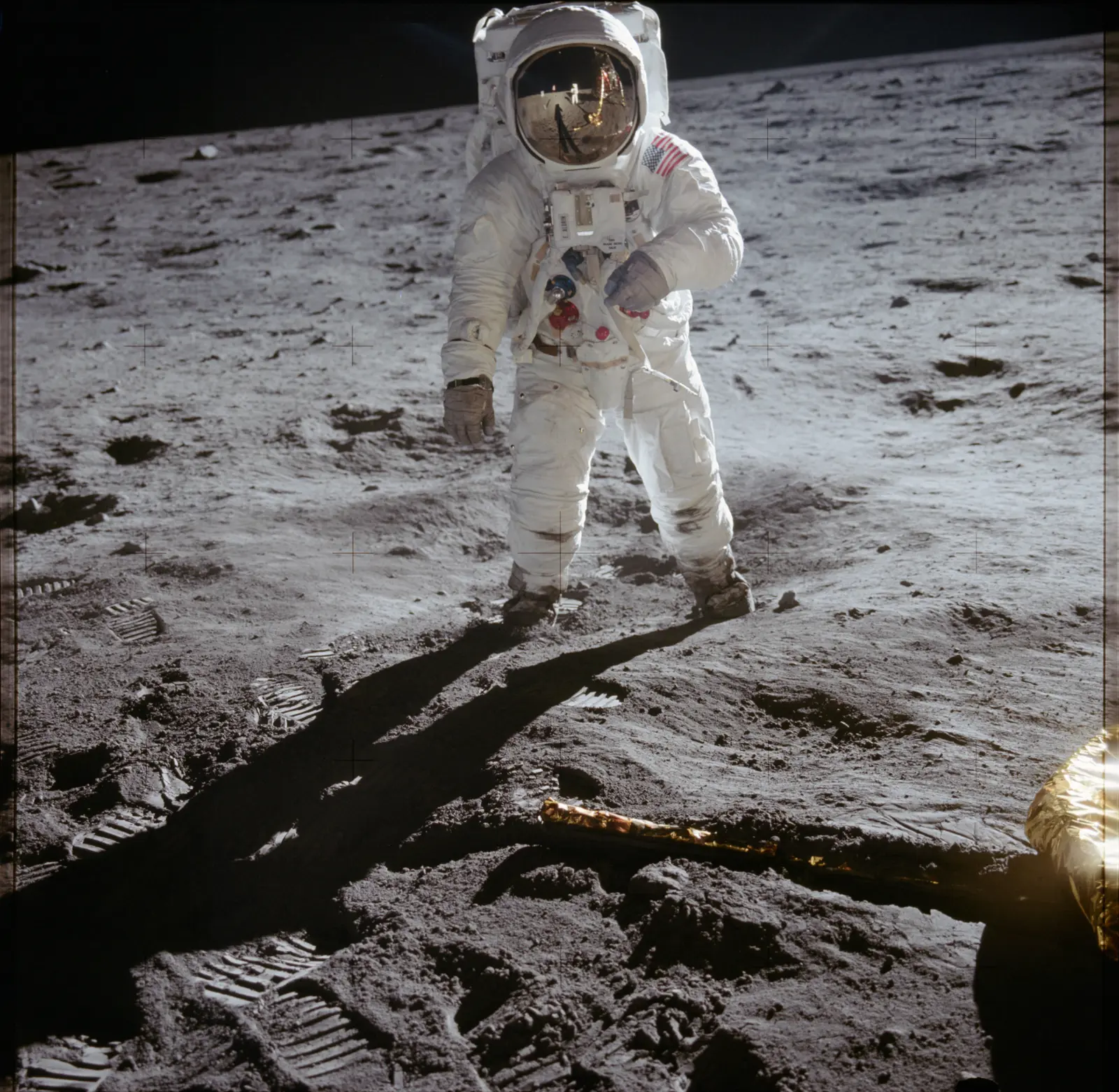
The first crewed lunar surface vehicle, the Apollo Lunar Roving Vehicle (LRV), was a battery-powered four-wheel electric rover used on Apollo 15, 16, and 17. It was designed to carry two astronauts in portable life-support suits along with scientific equipment and rock samples, extending their exploration range far beyond the landing site.
The LRV had a deployed mass of approximately 208–213 kg on the Moon and a total payload capacity of about 490 kg — more than twice its own mass — encompassing two suited astronauts, communications gear, scientific instruments, and lunar samples. The vehicle measured roughly 3.1 m in length and 1.8 m in width. Power came from two 36-volt silver-zinc batteries with 115 ampere-hours capacity each. Top speed reached approximately 14 km/h in tests and about 18 km/h on Apollo 17. The LRV was designed for a cumulative traverse distance of about 92 km during a lunar day, with a crew safety limit of approximately 9.7 km from the lunar module in the event of total vehicle failure. The design minimum operational time was 78 hours. Terrain capability included crossing obstacles of up to approximately 30 cm height, spanning crevasses of up to 70 cm, and climbing or descending slopes of up to about 25° when fully loaded.
Navigation relied on a directional gyro and incremental odometers, helping crews track distance, speed, and bearing back to the lunar module. On Apollo 15, the LRV traveled approximately 25 km over about 3 hours 2 minutes of driving, averaging roughly 9 km/h, and consumed less energy than predicted. Across three missions it proved the value of surface mobility for extending scientific return and laid the conceptual foundation for all subsequent crewed lunar rover programs.
Soviet Lunokhod Rovers (1970–1973)
The Soviet Union flew two Lunokhod teleoperated rovers, predating any crewed lunar rover. Both were large, heavy vehicles — approximately 756–840 kg — carried to the Moon by Luna spacecraft and driven remotely by a five-person team at the Deep Space Center near Moscow. Each had eight aluminum wire-mesh wheels of 51 cm diameter, with two-speed electric motors and independent suspension, allowing the rover to continue driving even if two wheels on each side were disabled. Lunokhod 1 could handle slopes of up to 45°. Operating speed was limited to approximately 1–2 km/h. Power came from a solar array on the underside of a hinged lid, rated at 180 W for Lunokhod 1; a polonium-210 radioisotope heater unit kept the interior warm during lunar nights when surface temperatures fell to around –150 °C.
Lunokhod 1 landed on 17 November 1970 and operated for approximately 322 days — far exceeding its planned three-lunar-day design life — covering 10.54 km and returning more than 20,000 television images and over 200 panoramas. It also carried a French-supplied laser retroreflector that has been used for Earth–Moon distance measurements via laser ranging. Lunokhod 2, which landed in January 1973, incorporated higher-resolution cameras and roughly twice the top speed of its predecessor. It traveled approximately 37 km over about four to five months of operation, a record for distance driven on another world that stood until NASA's Mars rover Opportunity surpassed it decades later. Navigation was entirely dependent on real-time video feeds; there was no onboard autonomous driving. The main advance from Lunokhod to modern rovers lies in software and autonomy rather than in basic mechanical or power design philosophy, which remains broadly similar.
Frequently Asked Questions
Related
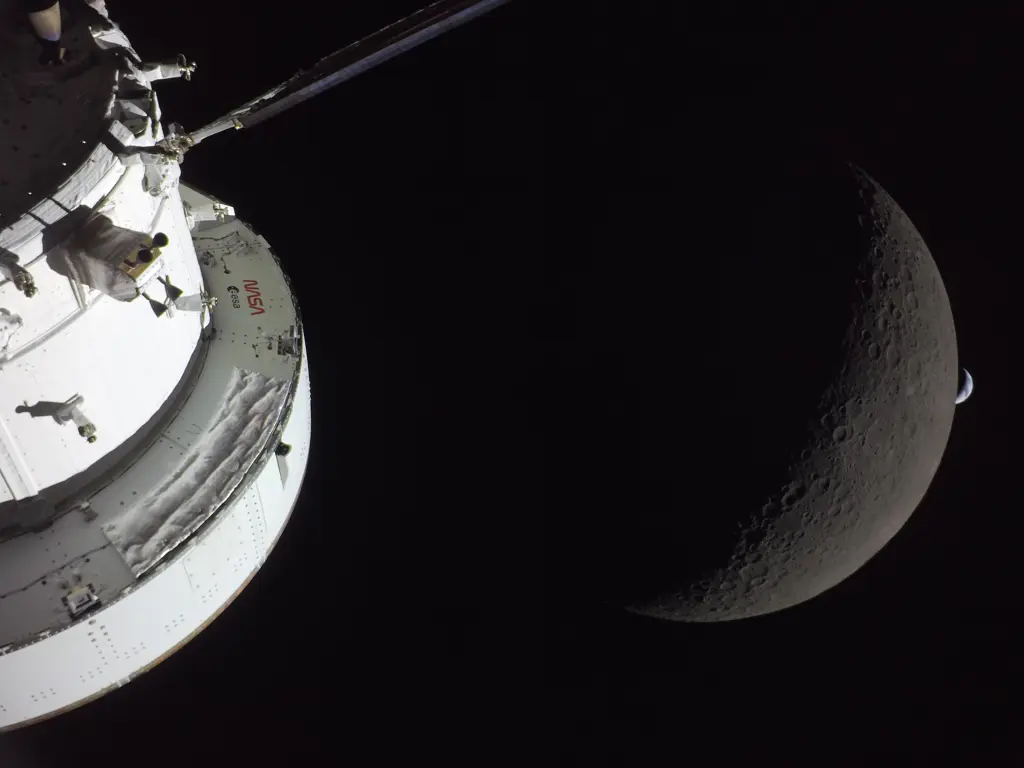
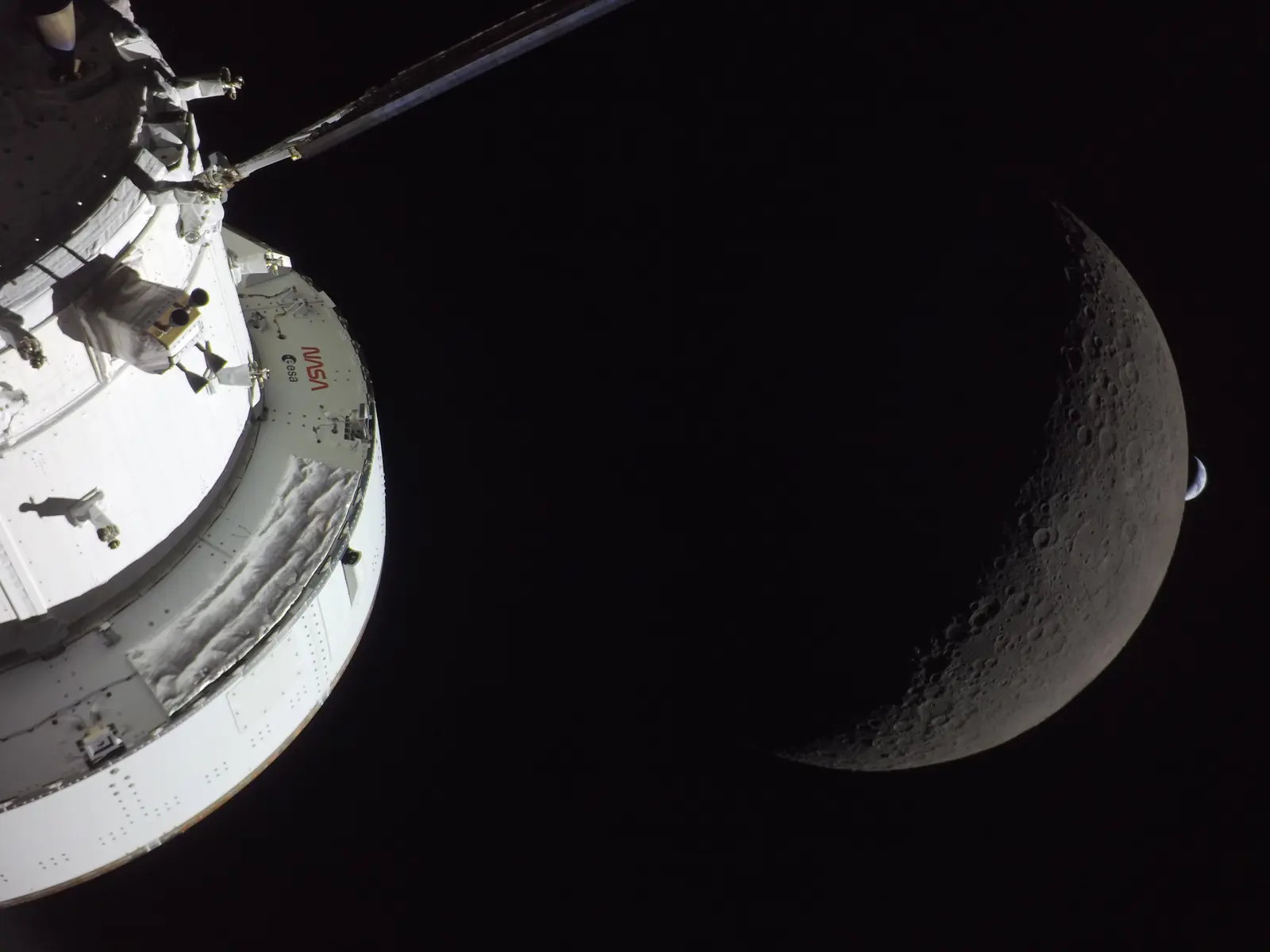
Artemis Program
OperationalReturning humans to the Moon — to stay
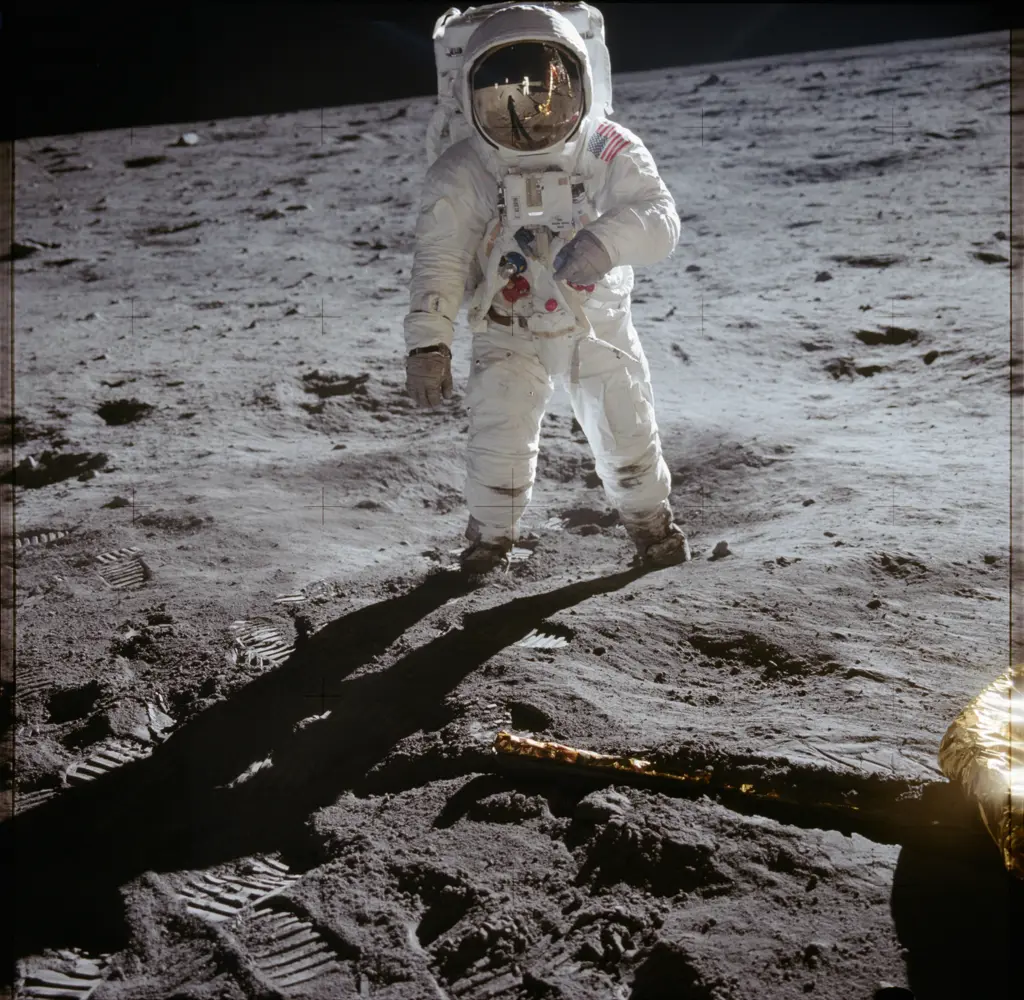
Apollo Program
RetiredLanding humans on the Moon, 1969–1972
New Glenn
OperationalBlue Origin's reusable heavy-lift rocket, named for astronaut John Glenn.
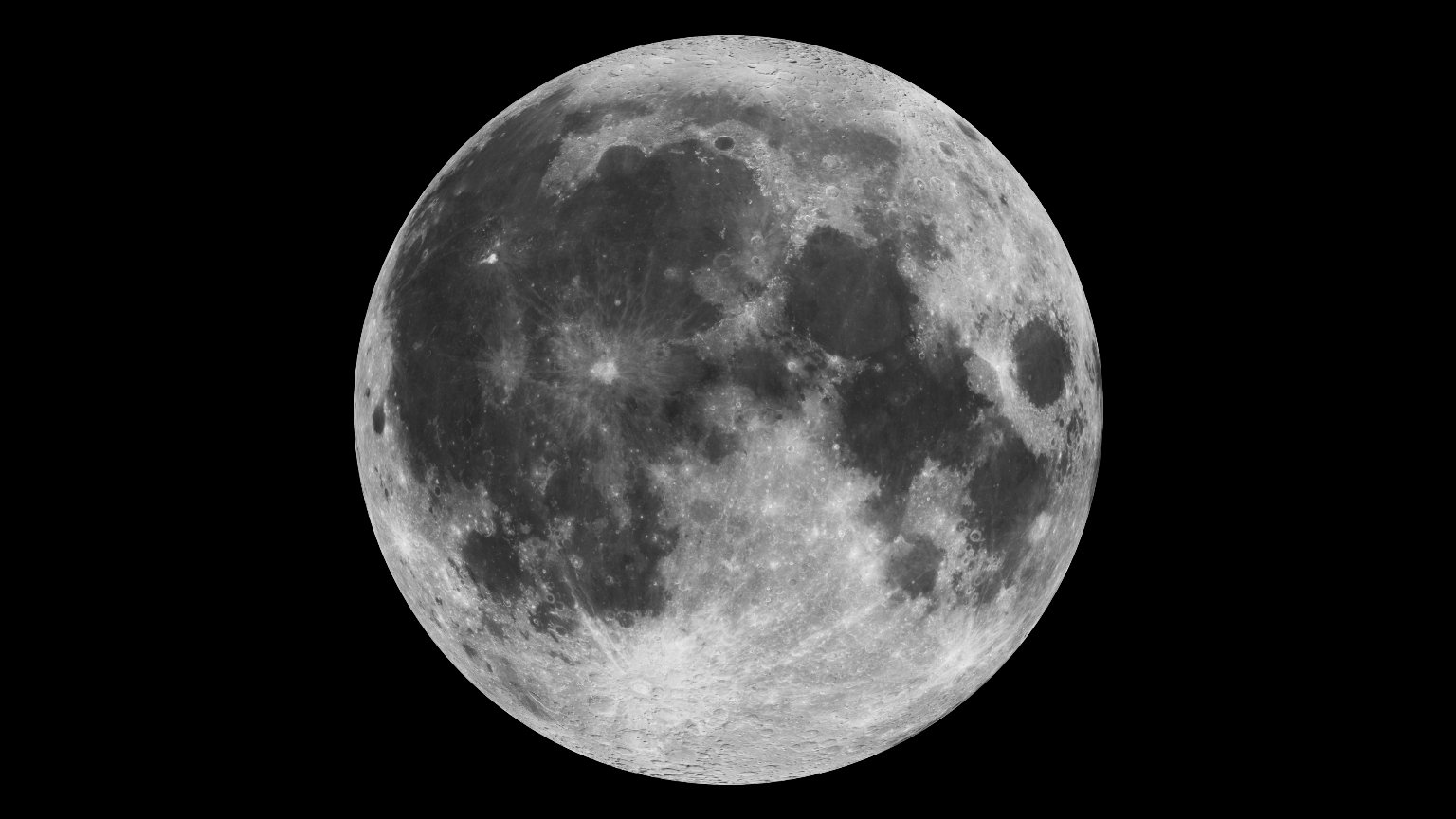
The Moon
Earth's only natural satellite — a world of craters, ancient volcanoes, and frozen water that shapes our tides, steadies our seasons, and beckons a new generation of explorers.
Sources
- NASA Picks Three Companies for Lunar Terrain Vehicle Feasibility Studies — SpacePolicyOnline
- Lunar Dawn Team Awarded NASA Lunar Terrain Vehicle Contract — PR Newswire
- NASA Selects Companies to Advance Moon Mobility for Artemis Missions — NASA
- Lunar Terrain Vehicle — NASA
- NASA Selects Lunar Outpost to Deliver Next-Gen Crewed Lunar Terrain Vehicle for Artemis Astronauts — Lunar Outpost
- NASA taps Blue Origin to deliver lunar rovers for Moon Base initiative — GeekWire
- NASA Provides Update on Moon Base Rovers, Landers, Missions — NASA
- NASA outlines nearly $1 billion investment into initial Moon Base missions — Spaceflight Now
- Eagle LTV — Lunar Outpost
- Blue Moon (spacecraft) — Wikipedia
- MAPP — Lunar Outpost
- The Lunar Outpost Mobile Autonomous Prospecting Platform (PDF) — USRA/LPI
- Lunar Voyage 1 Update — Lunar Outpost
- Apollo LRV — Astronautix
- Mobility Performance of the Lunar Roving Vehicle (PDF) — NASA/LPI
- Lunar Roving Vehicle — National Air and Space Museum
- Moonwalker: The Soviet Lunokhod Program — SpaceflightHistories
- Lunokhod 1 — Wikipedia
- Soviet Union Lunar Rovers — Lunar Reconnaissance Orbiter Camera