Moon Base II
Astrobotic's Griffin-1 lander delivering NASA and international payloads to Nobile Crater — the largest commercial cargo yet sent to the lunar surface.
Moon Base II
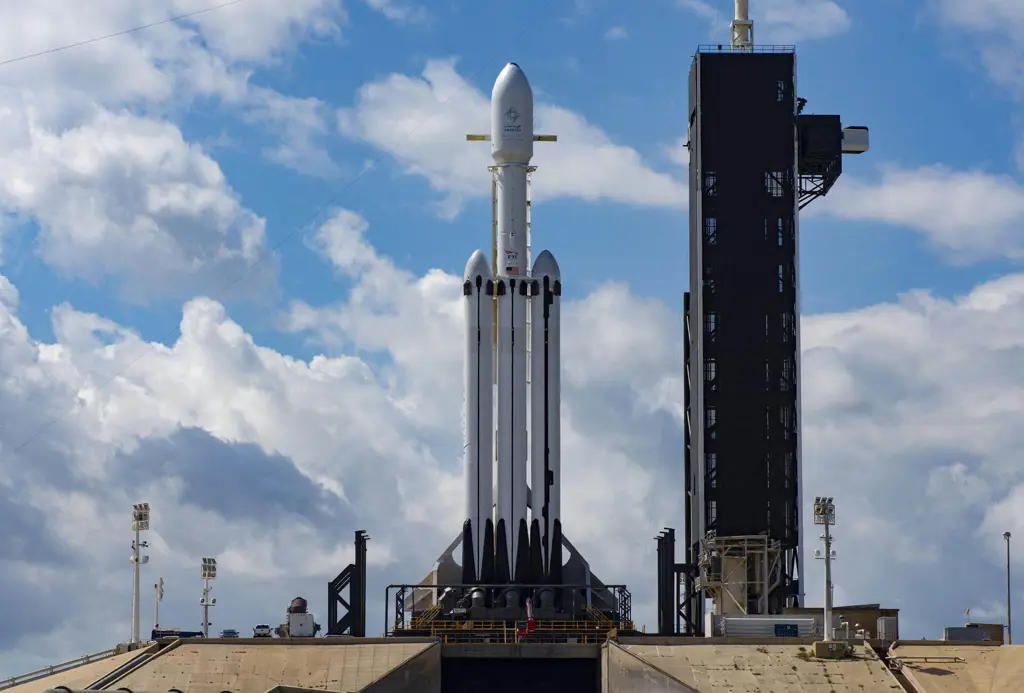
Moon Base II is a NASA Commercial Lunar Payload Services (CLPS) mission that will use Astrobotic Technology's Griffin-1 lander — also designated Griffin Mission One — to deliver a large cargo package to the Nobile Crater region near the lunar south pole. The mission is planned for launch no earlier than late 2026 aboard a SpaceX Falcon Heavy from Kennedy Space Center, Launch Complex 39A.
The mission was originally known as Griffin-1 under the CLPS program and has been rebranded by NASA as Moon Base II, the second task order within NASA's phased Moon Base initiative for establishing a sustained robotic and eventually human presence at the lunar south pole.
The centerpiece commercial payload is Venturi Astrolab's FLEX Lunar Innovation Platform (FLIP) rover, which NASA describes as the largest commercial payload sent to the lunar surface to date. In addition to FLIP, Griffin carries ten payloads from six nations, spanning precision geodesy, navigation technology, landing cameras, small rovers, and commemorative archives.
Program Context and Designation
CLPS, initiated in 2018, uses fixed-price contracts under which NASA purchases end-to-end lunar delivery services — including launch, lander, and surface operations — from commercial providers. The combined maximum contract value across all CLPS task orders is $2.6 billion through November 2028. Moon Base II is one task order within this framework, with Astrobotic serving as the commercial provider.
Within NASA's Moon Base initiative, Moon Base II sits alongside Moon Base I (Blue Origin Mark I Endurance lander targeting Shackleton Connecting Ridge) and Moon Base III (Intuitive Machines Nova-C, carrying the Lunar Vertex magnetic investigation). Together these missions constitute Phase One of the Moon Base concept, focused on robotic landers, large-payload delivery, and mobility demonstrations that precede more extensive power, habitation, and logistics deployments envisioned in Phase Two.
Griffin-1 is Astrobotic's second CLPS flight. The company's first mission, Peregrine Mission 1, failed to reach the Moon after its January 2024 launch. Griffin is the larger cargo lander that was originally selected to carry NASA's VIPER (Volatiles Investigating Polar Exploration Rover); following NASA's cancellation of VIPER in July 2024, the task order was restructured and Astrolab's FLIP rover was adopted as the new primary payload in February 2025.
Landing Site
Griffin-1 is targeted to land in the Nobile Crater region near Mons Mouton at the lunar south pole. Astrobotic's mission manifest lists the objective as "Nobile Region 2026." The south pole is of high strategic and scientific interest because permanently shadowed craters in the region harbor water ice within the regolith, while nearby sunlit ridges can provide extended solar power availability — conditions favorable for long-term resource utilization and a future sustained human presence.
Surface operations are expected to last approximately one lunar day, roughly ten days, after which extreme cold and the loss of solar power are expected to end nominal operations for solar-powered systems.
Griffin Lander
The Griffin lander is described as an infrastructure-class commercial lunar lander, larger than earlier CLPS scout vehicles such as the Peregrine. It measures approximately 2 m (about 6 ft) in height and 4.5 m (about 15 ft) across, with a bus structure manufactured from aluminum alloy. Four landing legs absorb touchdown shock and stabilize the vehicle on the surface.
The main deck uses a regular bolt-pattern isogrid layout for flexible mounting of multiple payloads. Dedicated adapter hardware and optional egress ramps support large payloads such as rovers. Alternative mounting locations on radiator panels and below-deck can accommodate payloads with special geometries.
Power is generated by triple-junction solar cells and stored in space-grade lithium-ion batteries, with a dedicated payload power bus providing approximately 1 W per kilogram of payload as a baseline. Payload data interfaces include wired RS-422 or SpaceWire connections and an optional WLAN modem for wireless links to deployed rovers. The communications system employs a high-power transponder with low, medium, and high-gain antennas to relay data between payloads and Earth.
For descent, Griffin uses Doppler LiDAR and Astrobotic's terrain relative navigation (TRN) system for precision approach, achieving a landing accuracy of approximately 100 m. An optional scanning LiDAR provides real-time hazard detection down to features of roughly 15 cm. Lunar surface delivery is priced at approximately $1.2 million per kilogram.
Payloads
- FLEX Lunar Innovation Platform (FLIP) Rover — Venturi Astrolab (USA)
Primary payload and centerpiece of Moon Base II. A large commercial logistics rover demonstrating mobility, autonomous cargo offloading, and logistics patterns relevant to NASA's future Lunar Terrain Vehicle. Carries four NASA-partnered payloads and six additional payloads. Designed to travel multiple kilometers, reach a hibernation site, and survive at least one lunar night.
- METAL Instrument — NASA Ames Research Center (USA)
Multicolor camera plus radiometer carried on the FLIP rover; designed to estimate helium-3 concentrations in lunar regolith.
- Laser Retroreflector Array — NASA Goddard Space Flight Center (USA)
Small laser retroreflector enabling precision tracking of rover position and serving as a permanent geodetic location marker on the lunar surface.
- Lunar Dust Level Sensor & Effects on Surfaces — NASA Johnson Space Center (USA)
Studies how lunar dust affects radiators, solar arrays, and other critical surface hardware.
- Lunar LiDAR Demonstration — NASA Marshall Space Flight Center (USA)
Tests radiation-hardened LiDAR for high-resolution terrain mapping, navigation, and hazard avoidance.
- LandCam-X — ESA / OIP (Belgium) & LLS (France)
Optical landing camera system to validate future landing precision and navigation technologies in the lunar environment.
- BEACON — Mission Control Space Services & Astrobotic (Canada / USA)
CubeRover-based payload demonstrating small rover and navigation technologies on the lunar surface.
- CubeRover — Astrobotic (USA)
Very small four-wheeled solar-powered rover approximately the size of a shoebox; rides as a payload and is associated with the BEACON navigation demonstration.
- Galactic Library to Preserve Humanity — NanoFiche (USA)
Miniaturized cultural archive of literature and art stored on nano-scale nanofiche media, intended as a time capsule on the lunar surface.
- MoonBox — Astrobotic (USA / Japan collaboration)
Capsule delivering personal items and microSD card data submitted by individuals and organizations as a commercial commemorative payload service.
- Moon Pi — Stand Up Maths (Australia / worldwide)
Mathematics and outreach-oriented time capsule payload associated with the Stand Up Maths community.
- Time Capsule — Nippon Travel Agency (Japan)
Symbolic educational and cultural payload including messages collected from children in Japan, sent to the Moon.
Mission Timeline
- 2018CLPS Program Initiated
NASA establishes the Commercial Lunar Payload Services program, issuing fixed-price contracts for commercial lunar delivery services.
- 2020VIPER Contract Awarded
NASA awards Astrobotic a CLPS contract to deliver the VIPER polar exploration rover to the lunar south pole using the Griffin lander.
- Jan 2024Peregrine Mission 1 Fails
Astrobotic's first CLPS mission, Peregrine Mission 1, fails to reach the Moon following its January 2024 launch.
- Jul 2024VIPER Cancelled; CLPS Task Order Retained
NASA cancels the VIPER rover program. Astrobotic retains the Griffin CLPS task order and begins planning for a restructured mission.
- Oct 1, 2024DSN Communications Test Completed
Astrobotic announces successful end-to-end communications testing between Griffin and NASA's Deep Space Network, exercising flight avionics and ground software via stations in Canberra, Madrid, and Goldstone.
- Feb 2025FLIP Rover Adopted as Primary Payload
Venturi Astrolab's FLEX Lunar Innovation Platform (FLIP) rover is selected as the new primary payload for Griffin-1, replacing VIPER. Astrolab reports FLIP undergoing developmental thermal-vacuum testing.
- Oct 24, 2025Launch Delayed to NET July 2026
Astrobotic formally announces that Griffin-1 is now targeted for launch no earlier than July 2026. The lander is still under construction with engine qualification testing underway and core structure integration nearly complete.
- NET Nov 2026Launch (Planned)
Griffin-1 is scheduled for launch on a SpaceX Falcon Heavy from Kennedy Space Center, LC-39A, with current references converging on no earlier than November 2026.
- 2026Lunar Landing (Planned)
Griffin-1 is planned to land in the Nobile Crater region at the lunar south pole following a transit time of 10.5–25.5 days from Earth.
Moon Base Phase One and Future Phases
NASA's Moon Base concept envisions a phased development of sustained presence at the lunar south pole. Phase One, which includes Moon Base II, focuses on robotic landers and mobility demonstrations. Griffin-1's specific role within Phase One is to provide a large-lander capability demonstration under CLPS, deliver early science and technology payloads for resource prospecting, dust environment characterization, navigation, and logistics, and demonstrate commercial lunar landing and mobility capabilities.
Phase Two, not part of Griffin-1's scope, envisions expansion to larger power systems including solar and initial nuclear surface power (fission or radioisotope), upgraded Lunar Terrain Vehicle Gen 2 rovers and industry logistics vehicles, possible MoonFall drones, and early habitation modules. Phase Two aims to deliver up to 60 tons of cargo via as many as 24 landings using multiple classes of cargo landers.
NASA has also discussed a CLPS flight rate goal of up to approximately ten missions per year beginning around 2027, indicating Moon Base II is part of a substantially expanding commercial lunar delivery cadence.
Frequently Asked Questions
Related
Artemis Program
OperationalReturning humans to the Moon — to stay
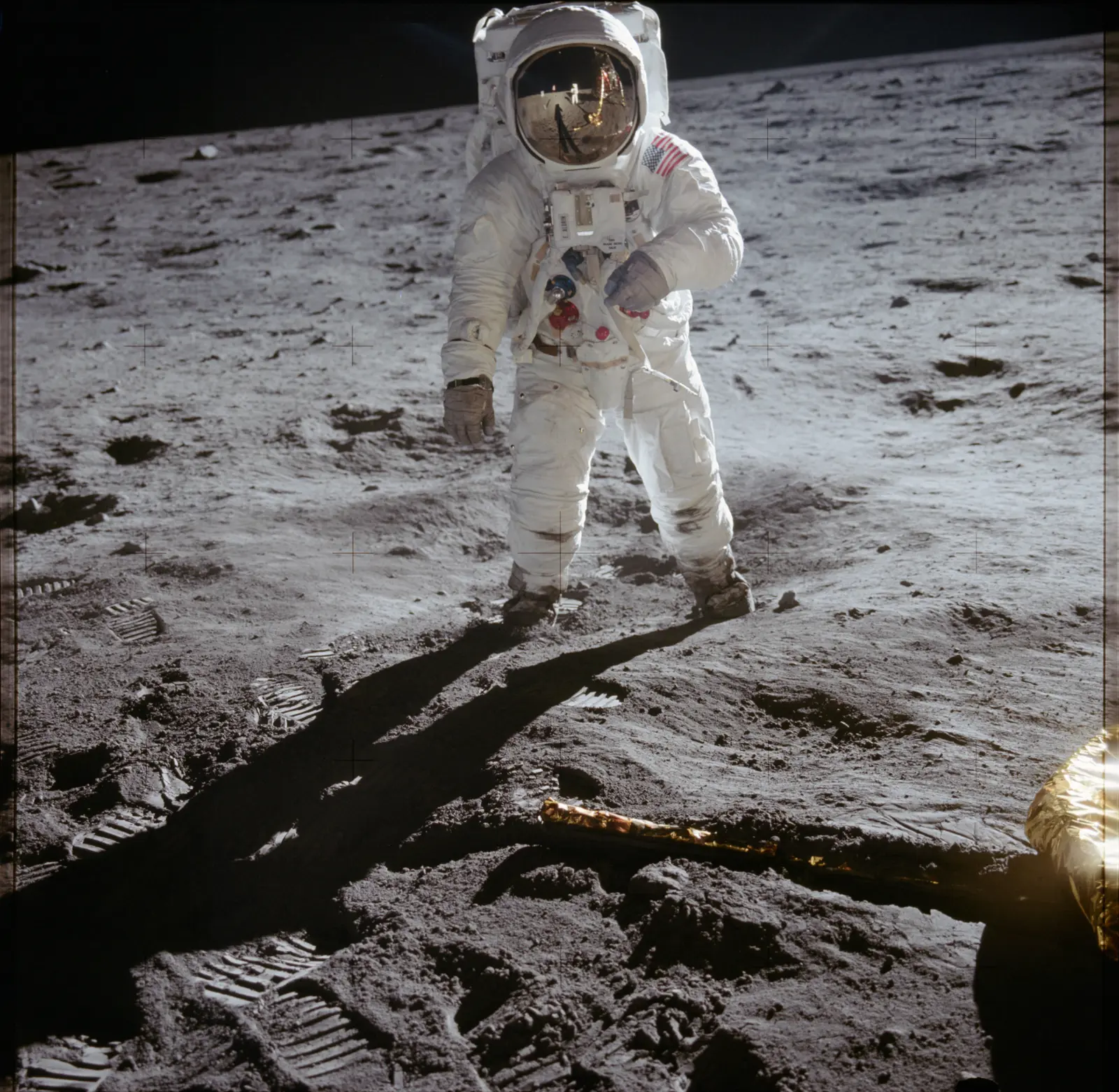
Apollo Program
RetiredLanding humans on the Moon, 1969–1972
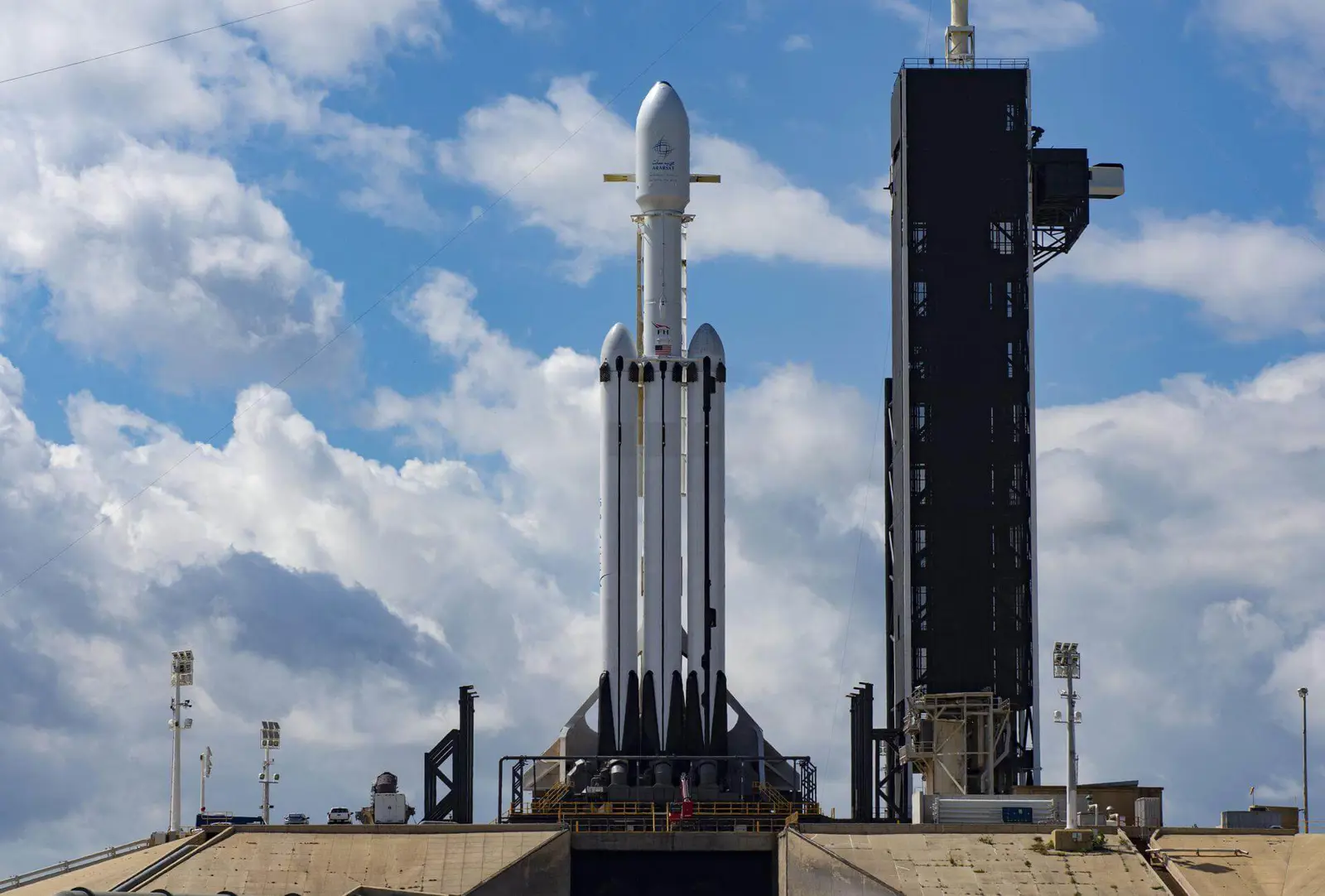
Falcon Heavy
OperationalThree Falcon 9 cores strapped together — one of the most powerful operational rockets flying.
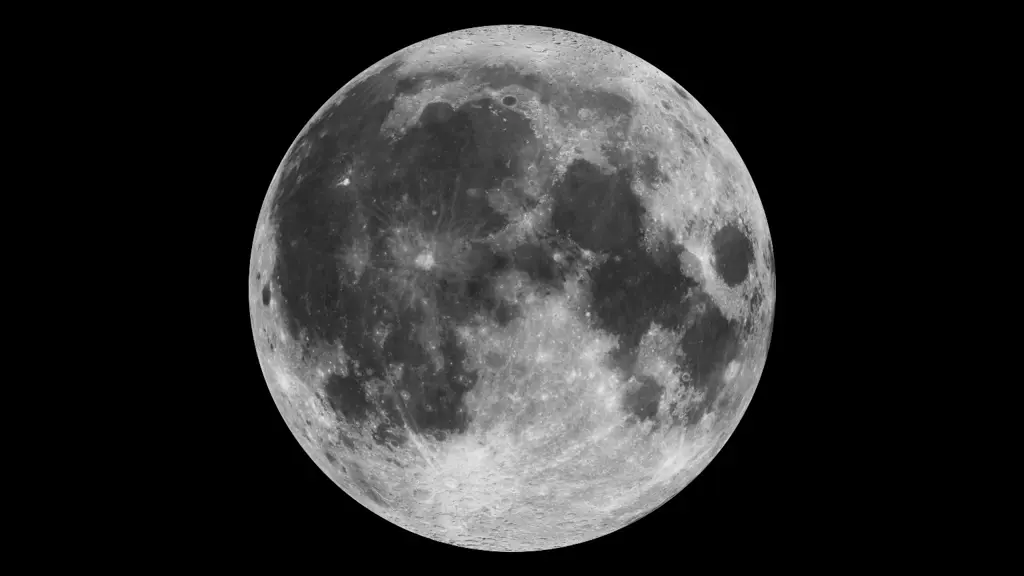
The Moon
Earth's only natural satellite — a world of craters, ancient volcanoes, and frozen water that shapes our tides, steadies our seasons, and beckons a new generation of explorers.
Sources
- Astrobotic Unveils Griffin 'Moon Base II' Lander — Space Policy Online
- Astrobotic's Griffin Lander Takes Its Next Giant Leap Toward the Moon — PghTech
- Moon Base Phases — NASA
- Moon Base — NASA
- Astrobotic Unveils Griffin-1 Lander Ahead of Historic NASA Moon Base II Mission — SatNews
- Moon Manifest — Astrobotic Technology
- Astrobotic unveils Griffin-1 lunar lander for NASA Moon Base mission — Space.com
- Griffin Lander — Astrobotic Technology
- Griffin Mission One — Wikipedia
- Astrobotic delays Griffin-1 Moon mission to NET July 2026 — Spaceflight Now
- Griffin Mission One Ground Testing with NASA's Deep Space Network — Astrobotic
- NASA Awards Initial Moon Base Rover and Lander Contracts — Space Policy Online
- NASA Provides Update on Moon Base Rovers, Landers, Missions — NASA
- CLPS Flight: Astrobotic Griffin Mission One — NASA
- Commercial Lunar Payload Services — NASA
- Griffin-1 Lunar Lander Unveiled Ahead of Environmental Testing — Astrobotic