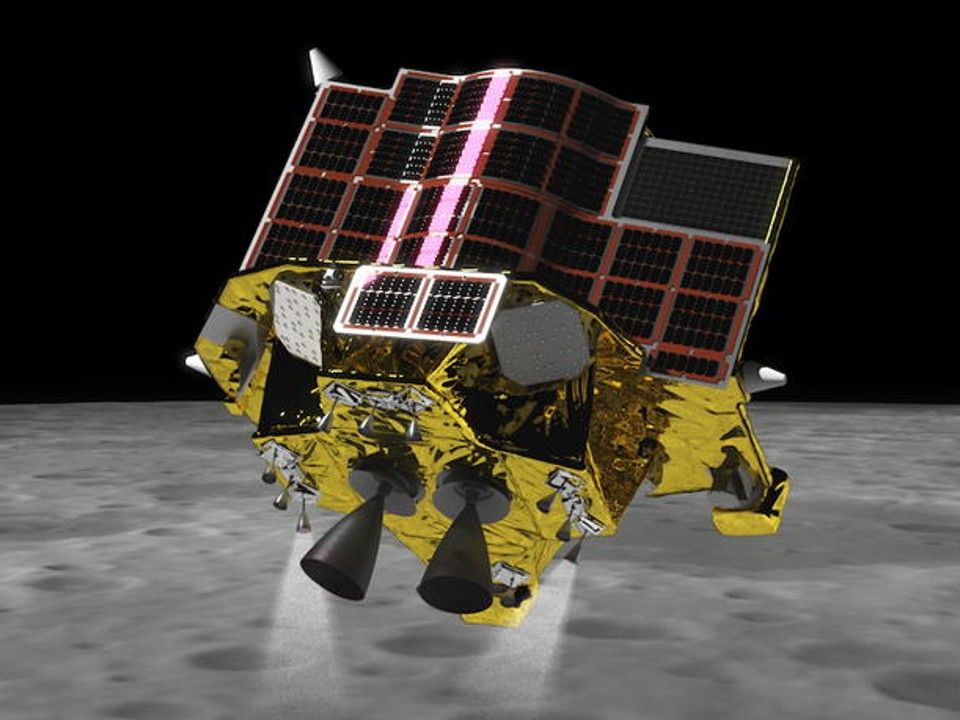
SLIM
'Moon Sniper' — Japan's precision lunar lander, the first spacecraft to demonstrate 10-metre-class pinpoint landing on the Moon.
Smart Lander for Investigating Moon
SLIM (Smart Lander for Investigating Moon) is a JAXA lunar lander designed to demonstrate high-precision, lightweight landing technology on the Moon. Nicknamed 'Moon Sniper', its primary objective was to land within 100 metres of a designated point — an order-of-magnitude improvement over the kilometre-scale accuracy typical of earlier lunar missions.
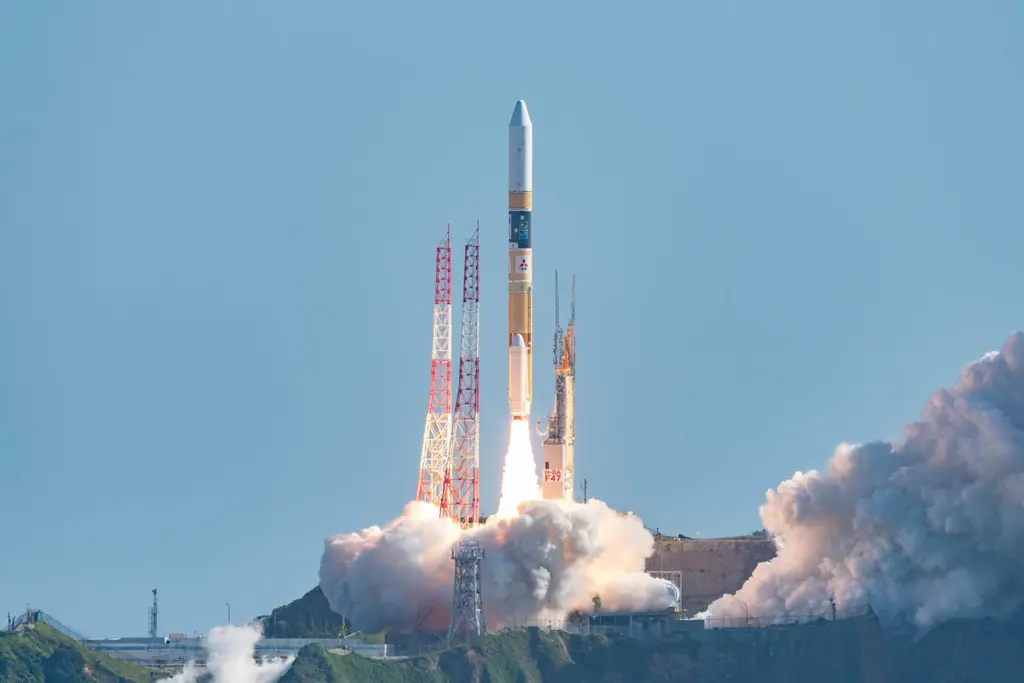
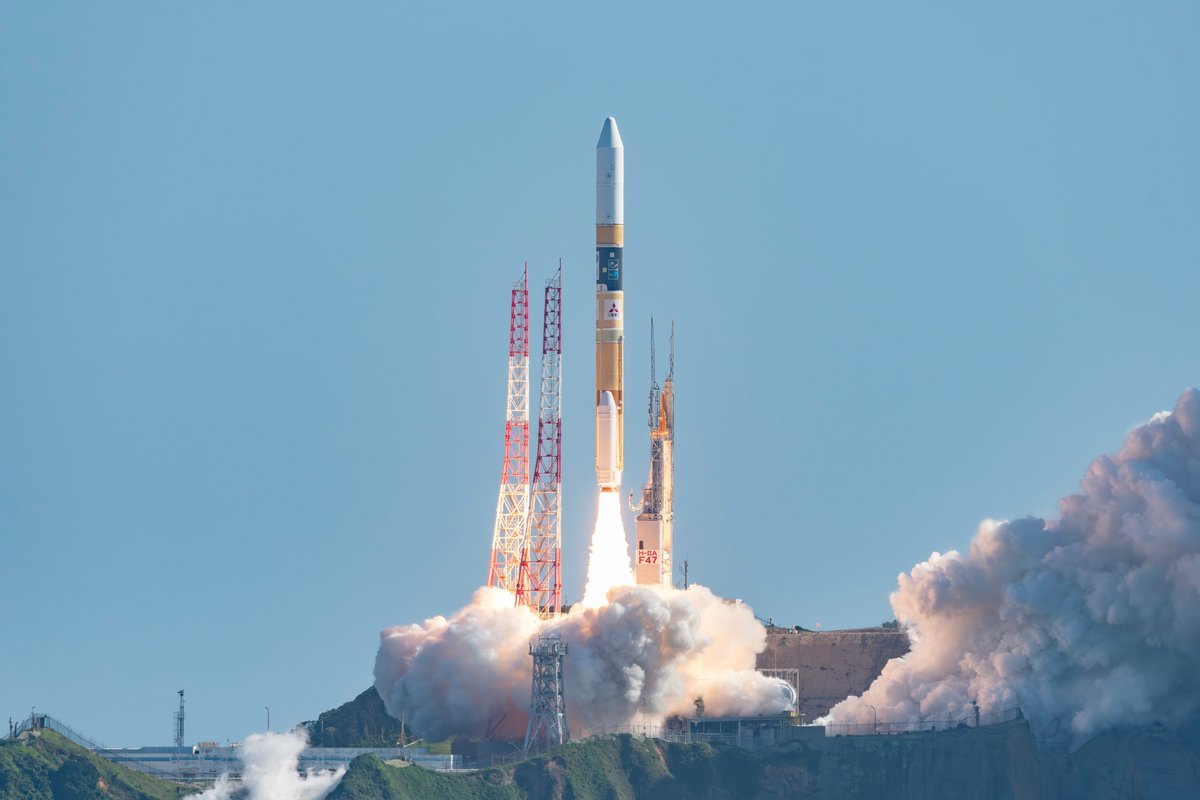
SLIM launched on 6 September 2023 aboard an H-IIA-202 rocket from Tanegashima Space Center, together with the XRISM X-ray astronomy satellite. After entering lunar orbit on 25 December 2023, it soft-landed near Shioli crater on the western edge of Mare Nectaris on 19 January 2024, making Japan the fifth country — after the Soviet Union, United States, China, and India — to achieve a soft lunar landing.
Post-flight analysis confirmed that SLIM's vision-based navigation system guided the spacecraft to within approximately 55 metres of its intended touchdown point, itself well inside the 100-metre requirement. During the guided descent, the navigation system demonstrated position errors as small as 3–4 metres. An engine anomaly in the final phase caused the additional offset. JAXA formally concluded the mission on 23 August 2024.
Mission objectives
SLIM had two primary objectives set by JAXA. The first was to demonstrate high-precision ('pin-point') lunar landing technology — reducing the landing ellipse from the several-to-tens-of-kilometres typical of past landers to a target accuracy of approximately 100 metres. Achieving this required vision-based navigation using onboard cameras to match real-time descent imagery against pre-loaded maps derived from the SELENE (Kaguya) lunar orbiter, a laser landing radar for final altitude measurement, and an advanced autonomous navigation, guidance and control system. A two-stage landing sequence and metal shock absorbers at the contact points completed the landing architecture.
The second objective was to prove that a lightweight, compact lander architecture could support precise lunar and planetary landings. SLIM was built to show that small, high-performance chemical propulsion and reduced-mass subsystems — covering tanks, engines, structures, power, and navigation — could enable frequent, cost-effective missions beyond Earth orbit.
Spacecraft design
SLIM is a compact, box-like lander optimised for mass reduction and autonomous guidance. Its wet (fuelled) mass at launch was approximately 700–730 kg, reducing to around 200 kg after propellant consumption. Main propulsion came from two ~500 N class bipropellant thrusters burning hydrazine (N₂H₄) and MON-3 oxidiser. Attitude control was provided by twelve 22 N thrusters.
Power was generated by thin-film solar cells emphasising lightweight design. Communications used an S-band antenna. The navigation suite comprised dedicated navigation cameras (CAM-PX) for image-based guidance and a landing radar for final-phase altitude measurement. The guidance algorithm applied image-processing techniques derived from facial-recognition technology to identify and match lunar craters against the onboard Kaguya-derived map, enabling continuous autonomous position updates during descent.
Landing site: Shioli crater
SLIM targeted the rim of Shioli crater, on the western edge of Mare Nectaris (Sea of Nectar), at approximately 25.2°E, 13.3°S. The site was selected because the crater rim is believed to expose olivine-rich material from the lunar mantle, making it scientifically valuable for studying the Moon's internal structure. The topographically complex terrain also made it an appropriate test for precision landing — a conventional large landing ellipse would have been scientifically and operationally impractical there.
During its autonomous descent, SLIM recognised craters and terrain features in real time, updated its estimated position relative to the pre-loaded Kaguya maps, and selected a safe touchdown point close to the designated spot. NASA's Lunar Reconnaissance Orbiter (LRO) imaged the SLIM lander on 24 January 2024, documenting its position from orbit.
Landing accuracy and engine anomaly
SLIM's vision-based navigation performed to a high standard throughout the powered descent. JAXA's evaluation at approximately 50 metres altitude recorded hover-point offsets of 3.4 metres and 10.2 metres from the target, indicating a demonstrated guidance accuracy of approximately 10 metres or better, with best performance in the 3–4 metre range.
In the final phase of descent, one of SLIM's two main engines appears to have shut down, causing the spacecraft to drift. As a result, the actual touchdown point was approximately 55 metres from the originally intended landing site. This remained well within the 100-metre mission requirement. JAXA stated that without the engine anomaly, SLIM could have landed as close as 3–4 metres from its target.
SLIM also came to rest at an abnormal attitude — essentially nose-down — leaving its solar panels misoriented and unable initially to generate power. The lander operated for several hours on battery power before being intentionally powered down with approximately 12% battery remaining, to preserve the possibility of later recovery. The abnormal attitude was confirmed by imagery from the deployed LEV-2 rover.
Power recovery and surface operations
After landing, JAXA determined that SLIM's solar cells were facing west and that power generation might resume when sunlight reached them from that direction. On 28 January 2024 — more than a week after touchdown — JAXA re-established contact and confirmed the spacecraft had resumed operations as changing illumination geometry allowed sunlight to reach the panels.
SLIM subsequently survived multiple lunar day and night cycles, continuing imaging and spectral measurements of surrounding rocks. Contact was lost again by late May 2024 as lighting conditions worsened. JAXA officially concluded the mission on 23 August 2024. Total surface operations spanned approximately 3 months and 10 days (intermittent, constrained by power and attitude).
Science instruments and rovers
- Near-Infrared Multiband Camera
Main science instrument on the lander. Observed the lunar surface around the landing site in multiple wavelengths to determine mineralogical composition — in particular to identify olivine-rich mantle-derived rocks near Shioli crater.
- Navigation Cameras
Onboard cameras used during descent for image-based terrain-relative navigation, matching real-time imagery against pre-loaded Kaguya maps to guide autonomous landing.
- Lunar Excursion Vehicle 1
Small hopping rover deployed just before landing. Carried a thermometer, radiation monitor, inclinometer, and wide-angle optical cameras. Equipped with a direct-to-Earth communications link independent of the lander; operated for approximately 107 minutes and executed seven hops.
- Lunar Excursion Vehicle 2 (Sora-Q)
Baseball-sized transformable rover developed jointly by Tomy, Sony, Doshisha University, and JAXA. Unfolded from an approximately 8 cm spherical configuration into a wheeled rover, then autonomously navigated, performed onboard image processing 240 times over approximately 108 minutes, and transmitted images of SLIM via LEV-1 — confirming the lander's abnormal nose-down attitude.
Key events
- 6 Sep 2023Launch
SLIM and XRISM lifted off aboard an H-IIA-202 rocket from Tanegashima Space Center at 23:42 UTC.
- 25 Dec 2023Lunar orbit insertion
SLIM successfully entered lunar orbit and began preparations for powered descent.
- 19 Jan 2024Lunar landing
SLIM soft-landed near Shioli crater (~25.2°E, 13.3°S) at approximately 15:20 UTC (00:20 JST 20 Jan). Japan became the fifth nation to achieve a soft lunar landing. LEV-1 and LEV-2 were deployed just before touchdown.
- 20 Jan 2024Battery shutdown
Unable to confirm solar power generation due to the lander's abnormal nose-down attitude, JAXA powered SLIM down with ~12% battery remaining to preserve recovery potential.
- 24 Jan 2024LRO imaging
NASA's Lunar Reconnaissance Orbiter photographed the SLIM lander on the surface, documenting its position and orientation from orbit.
- 28 Jan 2024Power recovery
Changing solar illumination angle allowed sunlight to reach SLIM's westward-facing solar panels. JAXA re-established contact and confirmed resumption of surface operations.
- Late May 2024Contact loss
Contact with SLIM was lost again as lunar lighting conditions deteriorated.
- 23 Aug 2024Mission end
JAXA officially concluded the SLIM mission after completion of its technology demonstration and scientific objectives.
What SLIM demonstrated
SLIM touched down approximately 55 metres from its intended point — well within its 100-metre requirement — establishing the first demonstrated precision lunar landing. Navigation data during descent showed position errors as small as 3–4 metres, with a best-evaluated accuracy of under 10 metres.
SLIM validated a new navigation paradigm using image-processing techniques derived from facial recognition to identify and match craters against Kaguya-derived maps in real time during descent. This approach is directly applicable to future landings near scientifically significant but geometrically challenging sites such as pits, boulder fields, and resource deposits.
SLIM proved that a spacecraft with a landed mass of approximately 200 kg, using advanced guidance and bipropellant chemical propulsion, can perform complex, accurate lunar landings — supporting Japan's strategy for frequent, cost-effective planetary missions.
SLIM made Japan the fifth country to achieve a soft landing on the Moon, after the Soviet Union, United States, China, and India.
LEV-2 (Sora-Q) demonstrated that a palm-sized, transformable robot can perform fully autonomous lunar surface exploration, including onboard image processing (240 operations in ~108 minutes) and data relay via LEV-1. Imagery from LEV-2 confirmed SLIM's abnormal landing attitude.
By successfully recovering operations on 28 January 2024 after an initial power failure caused by the lander's nose-down orientation, SLIM demonstrated fault-tolerance and the possibility of reactivating a lander following an anomalous landing configuration.
Frequently asked questions
Related
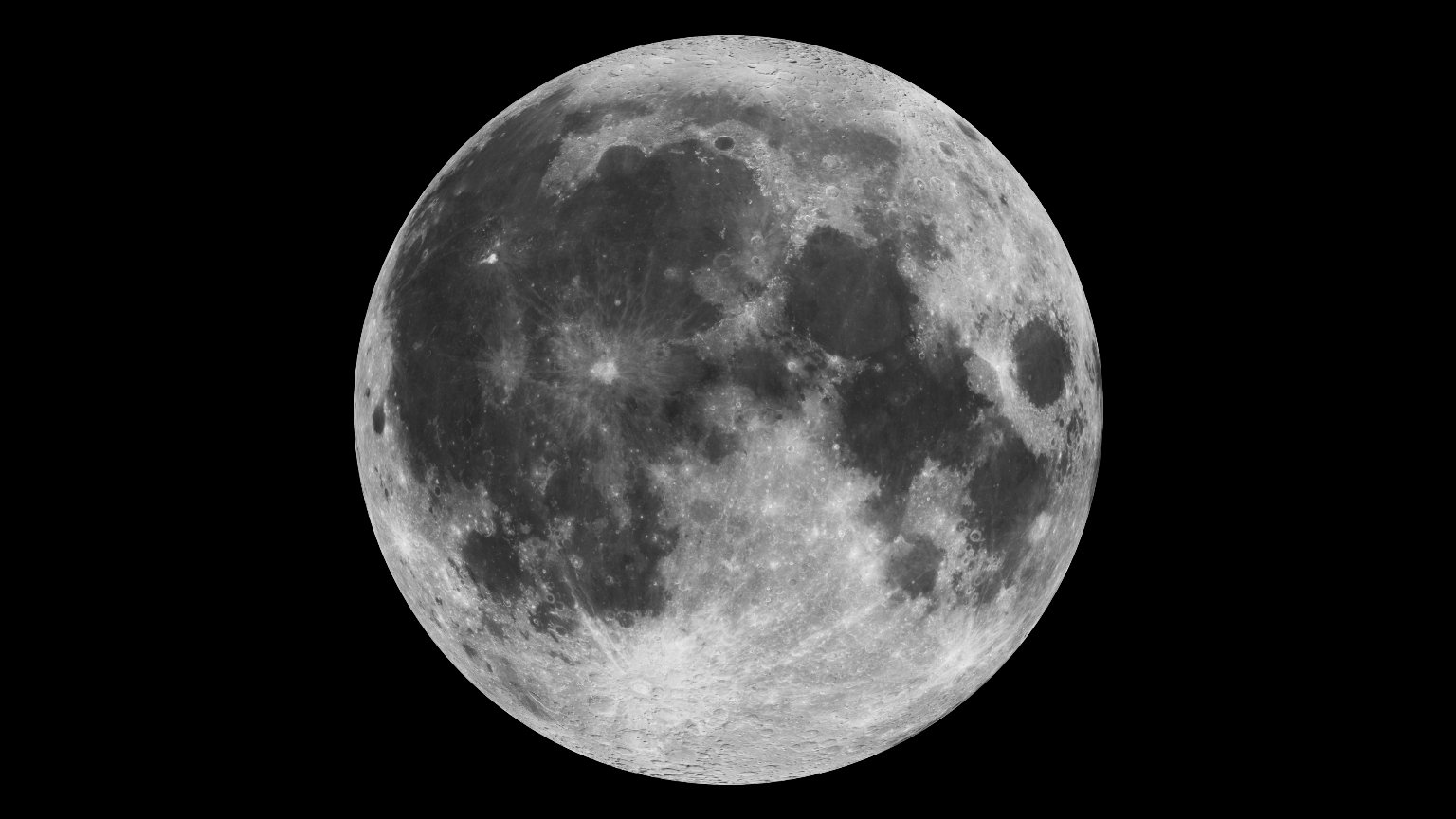
The Moon
Earth's only natural satellite — a world of craters, ancient volcanoes, and frozen water that shapes our tides, steadies our seasons, and beckons a new generation of explorers.
Apollo Program
RetiredLanding humans on the Moon, 1969–1972
Artemis Program
OperationalReturning humans to the Moon — to stay
Sources
- SLIM, Japan's precision lunar lander — The Planetary Society
- Smart Lander for Investigating Moon — Wikipedia
- SLIM — Gunter's Space Page
- Results from Japan's 'SLIM' spacecraft landing on the Moon (JAXA/UNOOSA PDF)
- NASA's LRO Spots Japan's Moon Lander — NASA
- Moon landing results of SLIM — Acta Astronautica (ScienceDirect)
- Smart Lander for Investigating Moon (SLIM) — ISAS/JAXA
- Japan praises 'pinpoint' moon landing by its SLIM probe — Reuters
- 'We proved that you can land wherever you want.' — Space.com
- Research on Lunar Demonstration Results of the Transformable Nano Rover — JAXA press release
- Japan's SLIM probe regains power more than a week after moon landing — Reuters