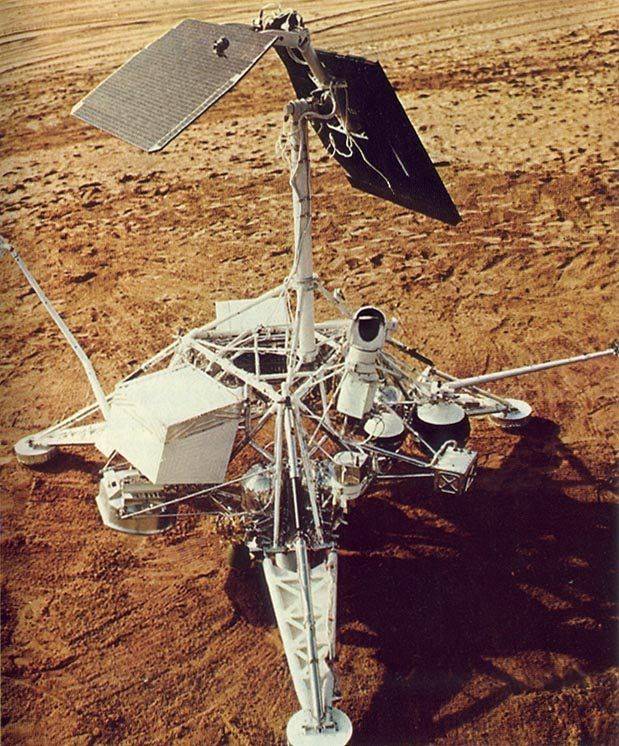
Surveyor 1
Surveyor 1 was NASA's first successful lunar soft-landing mission and the first United States spacecraft to land softly on another world. It launched on May 30, 1966, from Cape Canaveral Air Force Station Launch Complex 36A, and touched down on the Moon on June 2, 1966, just 63.5 hours after liftoff. The spacecraft landed in the southwestern portion of Oceanus Procellarum at approximately 2.45°S, 43.22°W, within the northeast corner of the buried impact structure known as Flamsteed P, about 14 km from its planned target.
The mission had two interlocking objectives: to demonstrate that a fully automated, radar-guided soft landing on the Moon was feasible, and to return engineering and scientific data needed to support the Apollo program. Surveyor 1 met both goals. Its photographs and surface-strength measurements reassured engineers that the lunar regolith could support the mass of a crewed lander, and its successful descent validated the Atlas–Centaur launch vehicle and the spacecraft's novel terminal descent system.
Over roughly 30 days of surface operations Surveyor 1 transmitted 11,240 high-resolution television images. The primary mission concluded on July 14, 1966, though intermittent engineering contact continued until January 7, 1967. The spacecraft remains on the lunar surface as an inactive lander; its site has been clearly resolved in imagery from the Lunar Reconnaissance Orbiter Camera and has been identified as a high-priority target for future human lunar exploration.
Program context and mission objectives
Surveyor 1 was the first spacecraft in the seven-mission Surveyor program, which ran from 1966 to 1968. NASA designed the program to accomplish two broad goals: prove the engineering feasibility of soft landings on the Moon, and gather the scientific and engineering data required to select and certify safe sites for the Apollo crewed landings. At the time of Surveyor 1's launch, there was genuine uncertainty about whether the lunar surface was firm enough to support a lander without sinking, and no American spacecraft had previously achieved a controlled touchdown on any extraterrestrial body.
Four Surveyor missions — 1, 3, 5, and 6 — were directed specifically at mare sites in the equatorial belt relevant to Apollo landing planning. Surveyor 1 was assigned to a site in Oceanus Procellarum. Its landing pad strain gauges and surface-imaging data were designed from the outset to answer Apollo engineering questions about bearing strength and terrain hazards. Surveyor 7, the final mission, was aimed at a highland site near Tycho for primarily scientific reasons, sent there only after the program's obligations to Apollo had been judged satisfactorily met.
Spacecraft design
Surveyor 1's structural core was a thin-walled aluminum triangular frame approximately 27 kg in mass, standing about 3.3 m tall with a footprint roughly 4.5 m in diameter. At launch, the complete spacecraft weighed approximately 995 kg; after expending propellant and jettisoning the solid retrorocket, the landing mass was approximately 294 kg. Power came from a three-meter-square solar panel producing roughly 85 W, supplemented by a 24-volt battery system.
The primary scientific instrument was a television camera system capable of returning high-resolution images. Engineering sensors included a radar altimeter, strain gauges on each of the three landing-leg shock absorbers to record peak touchdown forces, and systems for measuring surface temperatures and radar reflectivity. The strain gauges were specifically intended to provide data on landing dynamics relevant to future Apollo missions.
The three landing legs each carried aircraft-type shock absorbers designed to accept peak axial forces of up to approximately 800 kgf (7.8 kN). The wide stance and low centre of gravity gave the structure stability even on modest slopes or near small craters.
Terminal descent system
Surveyor 1 used a two-stage descent architecture. The first stage was a large central solid-propellant retrorocket that accounted for more than 60 percent of the spacecraft's total launch mass. This motor provided primary braking, igniting at approximately 75.3 km altitude when the spacecraft was travelling at about 9,403 km/h, burning for roughly 40 seconds, and slowing the vehicle to approximately 396 km/h by the time it burned out at around 11 km altitude. Twelve seconds after burnout, explosive bolts jettisoned the spent retro casing.
After retro jettison, three throttleable liquid-fuel vernier engines took over. Each engine produced between 30 and 104 lbf of thrust and was capable of restart. The verniers had been used earlier in the flight for midcourse trajectory corrections; during terminal descent they worked in concert with a radar altimeter and a Doppler velocity sensor to continuously reduce vertical and horizontal velocity, with an onboard analog autopilot commanding throttle and attitude changes in real time.
At approximately 3.5 m above the surface, the guidance system commanded engine cutoff. Surveyor 1 then free-fell the final few meters, touching down at an impact speed of approximately 10.8 km/h (about 3 m/s). This deliberate final free-fall avoided engine-plume erosion of the regolith immediately beneath the pads and reduced the risk of tipping. The sequence — radar-guided, automatically executed, without any orbital braking phase — demonstrated for the first time that a fully autonomous rocket-powered soft landing was achievable, directly informing the design and risk assessment of the Apollo Lunar Module descent system.
Key milestones
- May 30, 1966Launch
Surveyor 1 lifted off from Cape Canaveral Launch Complex 36A at 14:41:01 UTC aboard Atlas LV-3C Centaur-D (AC-10). The Centaur upper stage performed translunar injection, placing the spacecraft on a direct trajectory to the Moon.
- Jun 2, 1966Soft landing
After approximately 63.5 hours of flight, Surveyor 1 touched down at 06:17:36 UTC in Oceanus Procellarum at ~2.45°S, 43.22°W — the first successful U.S. soft landing on another world.
- Jun 2–14, 1966First lunar day imaging
The television camera began returning high-resolution images shortly after landing. The spacecraft transmitted the bulk of its 11,240 photographs during the first lunar day, providing detailed views of the surrounding terrain.
- Jun 14–Jul 7, 1966Lunar night
Operations were suspended during the first lunar night. The spacecraft survived the extreme cold and resumed contact after sunrise.
- Jul 14, 1966Primary mission complete
NASA declared the primary science and engineering mission concluded. By this point Surveyor 1 had transmitted 11,240 images and returned data on surface bearing strength, temperatures, and radar reflectivity.
- Jan 7, 1967Final contact
Intermittent engineering interrogations of the spacecraft continued through January 1967. Contact ceased on January 7, 1967.
Key findings
Landing pad strain gauges and the shallow depression left by the footpads demonstrated that the lunar surface had sufficient bearing strength to support a landed vehicle. This directly addressed one of the central uncertainties facing the Apollo program.
The 11,240 transmitted photographs revealed a gently rolling, cratered terrain with fragmented debris typical of mare basalt plains. The site showed no deep dust layer or surface hazards that would prevent a crewed landing.
Surveyor 1 returned measurements of surface temperatures and radar reflectivity, expanding understanding of the physical properties of the lunar regolith at an Oceanus Procellarum mare site.
The successful operation of the combined radar altimeter, Doppler velocity sensor, analog autopilot, and throttleable vernier engines proved that fully automated, radar-guided soft landings were feasible, validating the approach later adopted for the Apollo Lunar Module.
Landing site and current status
Surveyor 1 came to rest in the northeastern corner of Flamsteed P, a roughly 100 km diameter impact crater almost entirely buried by mare basalt lavas in southwestern Oceanus Procellarum. Only the uppermost rim of Flamsteed P remains exposed above the surrounding plains. The spacecraft sits on a relatively smooth surface with a slope of less than about 3°, just south of a subdued 40-metre-diameter crater and approximately 110 metres northwest of a 190-metre-diameter boulder-lined crater.
The landing site has been positively identified and visually resolved in high-resolution Narrow Angle Camera imagery from the Lunar Reconnaissance Orbiter. The spacecraft is clearly visible in these images. The Lunar Reconnaissance Orbiter Camera team has noted that the Surveyor 1 site is among the areas identified by Project Constellation as a high-priority target for future human lunar exploration, reflecting both its well-characterised mare terrain and the historic engineering artefact present on the surface.
Frequently asked questions
Related
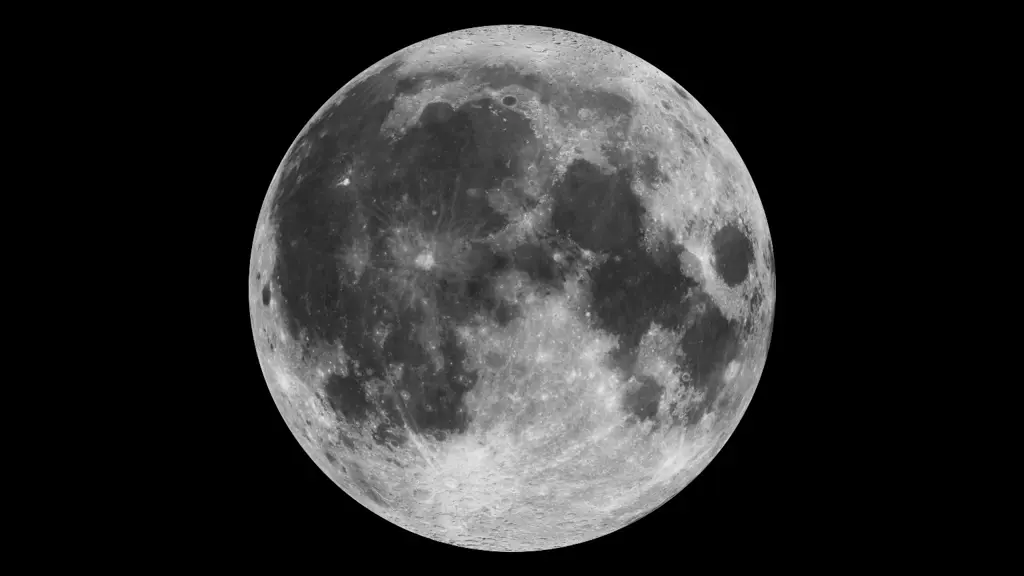
The Moon
Earth's only natural satellite — a world of craters, ancient volcanoes, and frozen water that shapes our tides, steadies our seasons, and beckons a new generation of explorers.
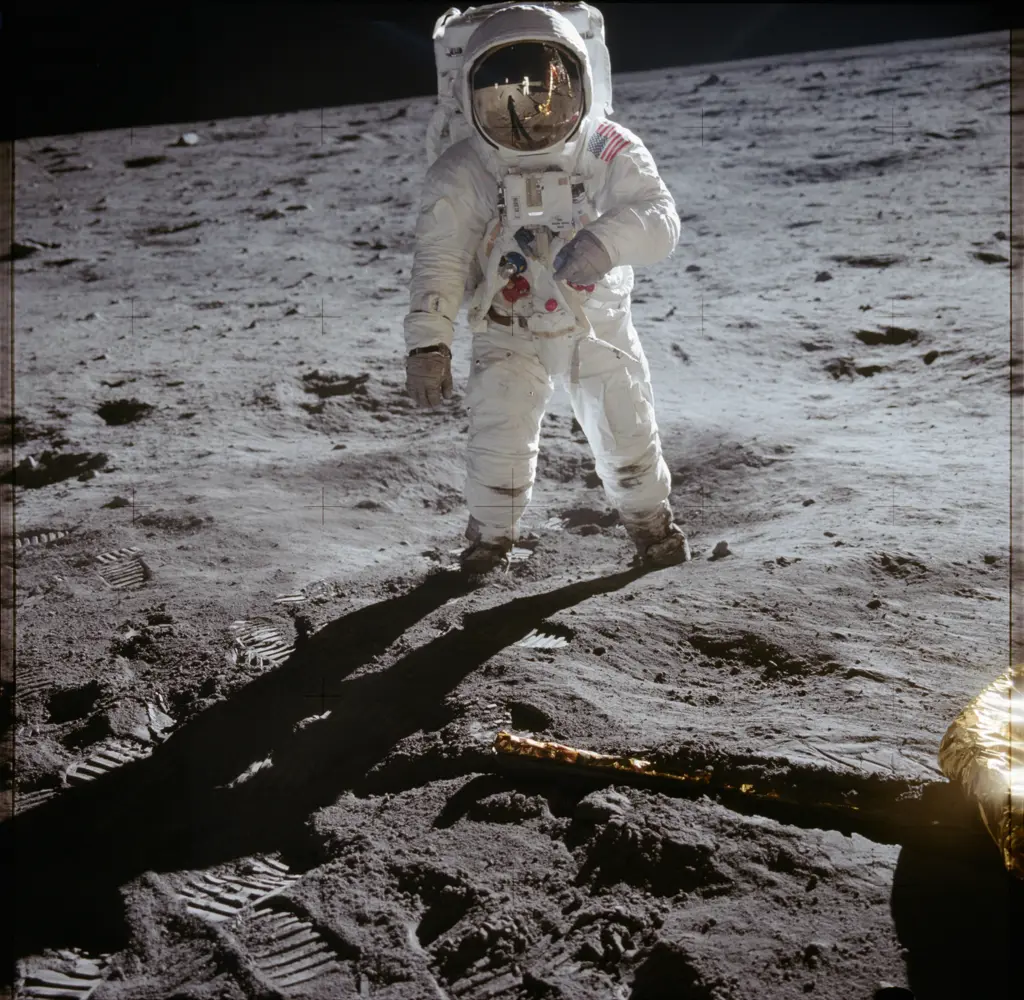
Apollo Program
RetiredLanding humans on the Moon, 1969–1972
Artemis Program
OperationalReturning humans to the Moon — to stay
Sources
- Surveyor 1 - Wikipedia
- Surveyor 1 - NASA's Jet Propulsion Laboratory
- The Surveyor Program - Lunar and Planetary Institute
- Surveyor 1 - NASA Science
- Surveyor 1, 2, 3, 4, 5, 6, 7 - Gunter's Space Page
- Surveyor 1 Essay by Hamish Lindsay
- Surveyor I - Space Imagery Center, University of Arizona
- Surveyor 1 - America's first soft lunar landing (LROC)
- Surveyor A Target Landing Area - JPL