Beresheet
First privately-funded lunar lander attempt — Israel's Beresheet reached lunar orbit before crashing on final descent on 11 April 2019.
Beresheet
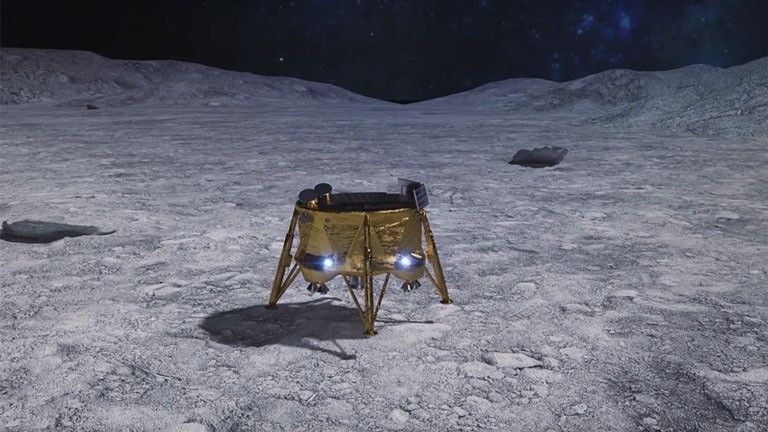
Beresheet (Hebrew: בראשית, meaning "in the beginning") was a small, privately funded Israeli lunar lander developed jointly by SpaceIL, a non-profit organisation, and Israel Aerospace Industries (IAI). Originally nicknamed "Sparrow" during development, the spacecraft was officially renamed Beresheet in December 2018.
The mission was conceived as an entry for the Google Lunar XPRIZE competition and aimed to demonstrate a compact robotic lander, inspire STEM interest in Israel — a goal later dubbed the "Beresheet effect" — and conduct focused lunar science including local magnetic field measurements, laser ranging, and surface imaging.
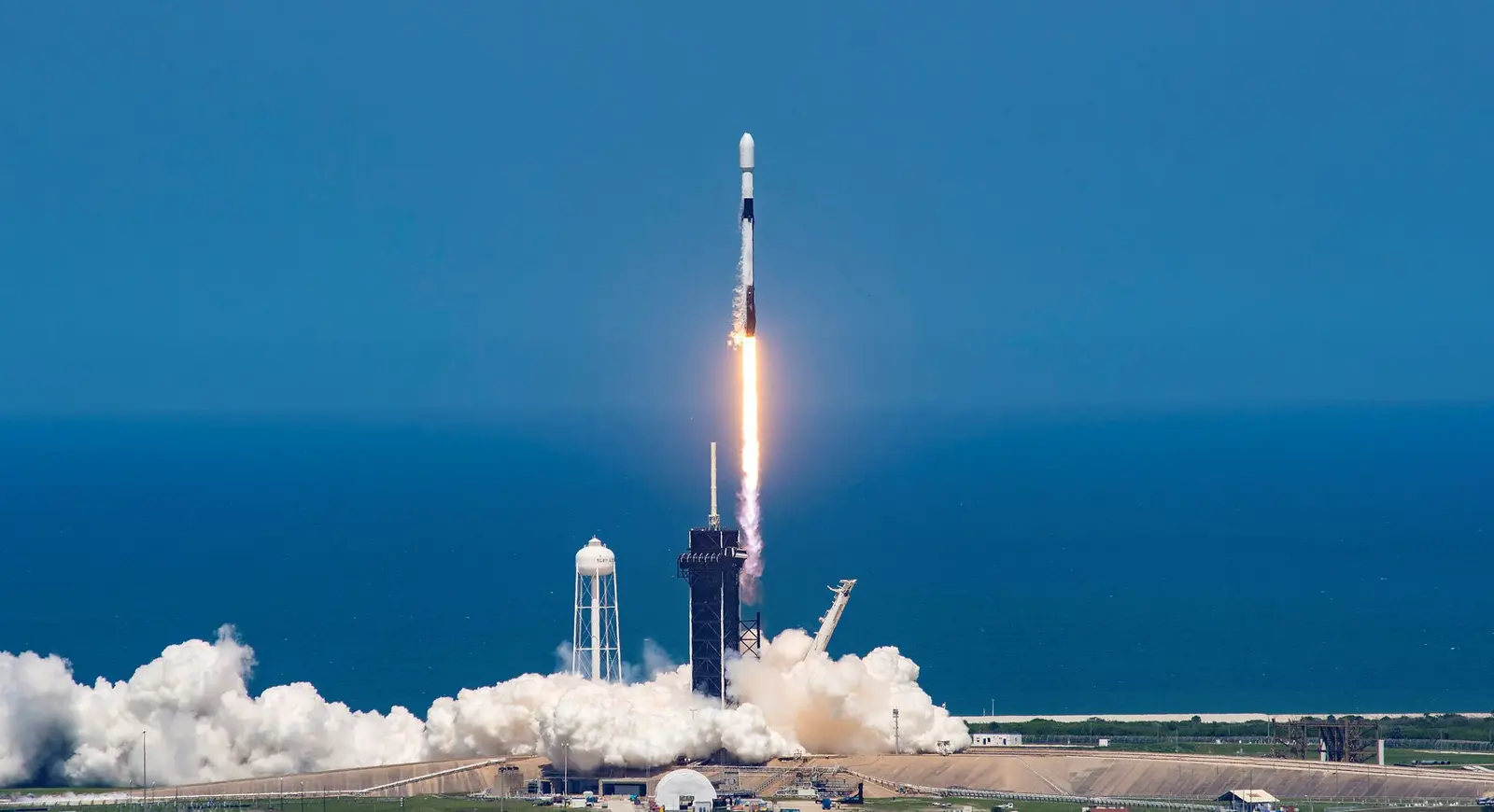
Beresheet launched on 22 February 2019 aboard a SpaceX Falcon 9 as a secondary payload on a commercial rideshare mission. It entered lunar orbit on 4 April 2019 — making Israel the seventh nation to achieve lunar orbit — but crashed in Mare Serenitatis on 11 April 2019 during its powered descent, becoming the first privately funded spacecraft ever to reach the Moon's surface, albeit not softly.
Key Events
- 22 Feb 2019Launch
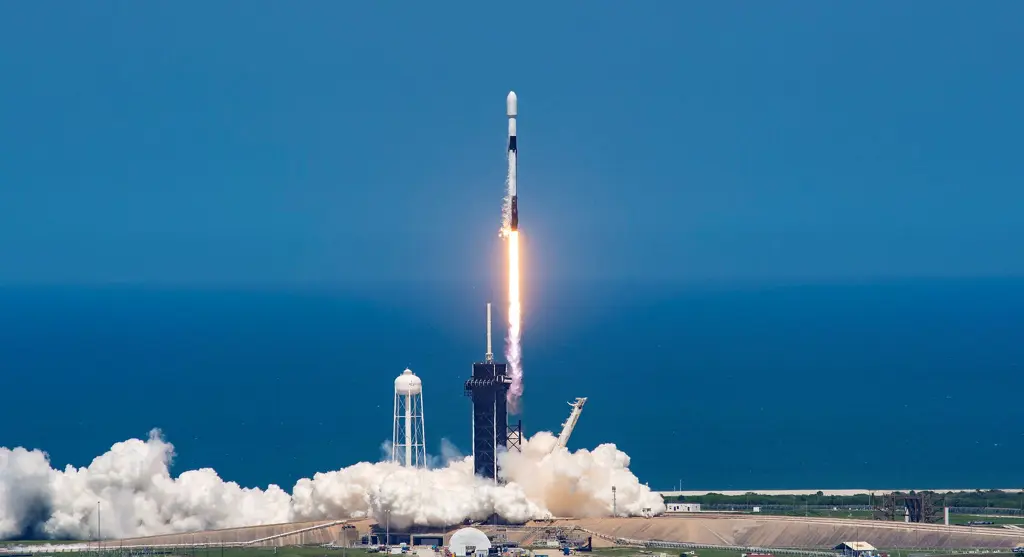
Beresheet lifted off from Cape Canaveral at 01:45 UTC aboard a SpaceX Falcon 9 Block 5 as a secondary payload alongside an Indonesian communications satellite (PSN-6/Nusantara Satu), entering a highly elliptical Earth orbit.
- 24 Feb 2019First major orbit-raising maneuver
SpaceIL and IAI confirmed the first successful apogee-raising burn at 11:29 UTC (13:29 Israel time), beginning a series of perigee burns to widen the spacecraft's Earth orbit.
- Mar–Apr 2019Earth orbit phase
Over roughly one month, multiple burns gradually raised Beresheet's apogee toward lunar distance (~400,000 km), covering a total cruise distance of about 6.5 million km in a propellant-efficient 'long route' to the Moon.
- 4 Apr 2019Lunar orbit insertion
Beresheet performed a successful lunar capture burn and entered lunar orbit, making Israel the seventh nation to achieve lunar orbit. The spacecraft subsequently flew several elliptical lunar orbits, lowering periapsis in preparation for landing.
- 11 Apr 2019Landing attempt and crash
Beresheet began its powered descent toward Mare Serenitatis. At approximately 14 km altitude an inertial measurement unit (IMU) failure triggered a chain of events that shut down the main engine. Controllers briefly restarted the engine, but by then the vertical speed was approximately 500 km/h at about 150 m altitude. Contact was lost shortly before expected touchdown and the lander crashed, ending the mission after 48 days, 17 hours, and 38 minutes.
Spacecraft Design
Beresheet was a compact spacecraft built around a boxy central structure mounted on a circular deck supported by four reverse-tripod landing legs. Its exterior was covered with gold multi-layer insulation (MLI) for passive thermal protection. The assembled lander stood approximately 1.5 m tall and about 2.3 m wide, a scale commonly compared to a domestic washing machine. Launch mass was approximately 585–600 kg fully fueled; dry mass was approximately 150–180 kg, with propellant making up the bulk of the launch mass.
The propulsion system was developed by IAI. It used monomethylhydrazine (MMH) fuel with mixed oxides of nitrogen (MON) as the oxidizer, a hypergolic bipropellant combination. The main engine was a LEROS 2b restartable liquid-propellant engine, used for all major maneuvers: Earth-orbit apogee raising, lunar orbit insertion, descent braking, and the planned landing. Eight smaller thrusters handled attitude control and minor trajectory corrections.
Beresheet had no active thermal control system, relying entirely on passive methods. This imposed a planned surface lifetime of approximately two days, after which the lander was expected to overheat as the lunar day advanced. The spacecraft's design reflected a deliberate emphasis on low cost and low mass, which also meant limited redundancy — a design trade-off that SpaceIL executives acknowledged increased vulnerability to single-point failures.
Mission operations were conducted from a control center in Yehud, Israel, southeast of Tel Aviv, operated jointly by SpaceIL and IAI. The ground segment used seven stations worldwide to maintain communications during flight and lunar orbit.
Instruments and Objectives
- Magnetometer (SILMAG)
A fluxgate magnetometer built by a research group at UCLA in cooperation with the Weizmann Institute of Science, weighing less than 1 kg. Designed to measure local lunar crustal magnetic field anomalies during descent and on the surface in Mare Serenitatis, a region where prior missions detected magnetic signatures. Science lead: Oded Aharonson (Weizmann Institute).
- Laser Retroreflector Array (LRA)
Provided by NASA Goddard Space Flight Center under a cooperative agreement with the Israel Space Agency. Comprised eight quartz corner-cube mirrors in a small dome-shaped aluminum frame approximately 5 cm across — smaller than a computer mouse. Intended as a passive target for the Lunar Reconnaissance Orbiter's laser altimeter to achieve centimetre-level (~10 cm) localization of the lander, demonstrating precision navigation for small commercial landers.
- Imaging System
Six color (RGB) 8-megapixel Imperx Bobcat B3320C cameras with Ruda optics; field of view 60° × 80°, resolution 2488 × 3312 pixels. Five cameras arranged around the lander circumference for full panoramic coverage of the surface; one shorter focal-length 'selfie' camera pointed inward toward a plaque bearing the Israeli flag. Intended to produce panoramic images and video from the lunar surface.
Non-Scientific Payloads
A digital archive of Israeli cultural and historical artifacts was carried aboard Beresheet and is now located at the crash site.
A physical Israeli flag was mounted on the lander deck, visible in the planned 'selfie' imagery.
A DVD-sized stack of thin nickel plates etched with approximately 30 million pages of analog and digital content, including books, Wikipedia snapshots, human DNA samples, and thousands of desiccated tardigrades. The Arch Mission Foundation assessed that the library was likely mostly or wholly intact after the crash, meaning it and its biological material remain at the Mare Serenitatis impact site.
Descent Failure
The failure of the landing attempt resulted from a chain of events triggered by a hardware fault. During the powered descent on 11 April 2019, an inertial measurement unit (IMU) — a sensor that provides acceleration and orientation data essential for guidance, navigation, and control — failed. SpaceIL and IAI officials, including Opher Doron, general manager of IAI's space division, publicly stated that the IMU failure initiated an "unfortunate chain of events" that caused the main LEROS 2b engine to shut down.
The first anomaly was detected at approximately 14 km altitude. Mission controllers succeeded in restarting the main engine, but by the time it resumed thrust the spacecraft had already accumulated too much vertical velocity at too low an altitude to decelerate to a safe speed. At the point of final loss of contact — approximately 150 m above the surface — the lander's vertical speed was approximately 500 km/h toward the Moon. Impact followed shortly thereafter. NASA's Lunar Reconnaissance Orbiter subsequently imaged the crash site in Mare Serenitatis, confirming a dark, elongated mark consistent with a high-speed impact.
SpaceIL's pre-mission design philosophy prioritised low cost and low mass, resulting in limited redundancy across critical systems. This approach — a conscious trade-off given the mission's budget — meant that a single IMU failure could propagate without backup systems compensating, as ultimately occurred during the final descent.
Funding and Development
The total cost of the Beresheet mission, including launch, was approximately US $90–100 million. The project was co-developed by SpaceIL, a non-profit organisation formed to compete in the Google Lunar XPRIZE, and Israel Aerospace Industries, which served as the prime spacecraft contractor and contributed substantial engineering and manufacturing support.
Almost all funding came from private donors and corporate sponsors. The single largest contributor was Morris Kahn, who provided approximately US $40 million. Other major donors included Miriam and Sheldon Adelson, Sami Sagol, Lynn Schusterman, Stephen Grand, and Sylvan Adams, along with contributions from the general public via crowdfunding. The Israeli government, through the Israel Space Agency, contributed approximately US $2 million in cash — roughly 2% of the total — alongside technical support.
Tardigrades and Planetary Protection
Among the contents of the Arch Mission Foundation's Lunar Library were thousands of desiccated tardigrades (microscopic animals also known as water bears) in a dehydrated tun state, along with human DNA samples. Arch Mission Foundation founder Nova Spivack assessed after the crash that the nickel-plate library was likely mostly or wholly intact, meaning the tardigrades and DNA are probably present at the crash site in Mare Serenitatis.
In their tun state, tardigrades halt metabolism and can tolerate vacuum, radiation, and extreme temperatures for extended periods. Laboratory testing has shown survival after impacts at speeds up to approximately 2,600 km/h, and Beresheet's impact speed was lower than that threshold. However, conditions at the lunar surface — hard vacuum, intense solar ultraviolet and cosmic radiation, and temperature swings from roughly −170 °C at night to over +100 °C during the day, combined with the total absence of liquid water, oxygen, or food — preclude any revival or reproduction. Scientific assessments have concluded that the tardigrades cannot reactivate on the Moon, let alone colonise it.
Under the 1967 Outer Space Treaty, states are required to avoid harmful contamination of celestial bodies, but the Moon is not subject to the stringent planetary-protection requirements applied to potentially habitable worlds such as Mars. NASA's planetary-protection framework classifies the Moon as presenting minimal contamination concern, and because Beresheet was a private non-NASA mission to a non-habitable body, the presence of dehydrated tardigrades is not treated as a planetary-protection violation. The episode has nonetheless generated ongoing discussion among researchers about the ethics of depositing Earth biological material on other worlds without broad international consensus, and is frequently cited as an example of why planetary-protection norms may need updating to address the growing commercial spaceflight sector.
Legacy and Achievements
Despite the loss of the spacecraft during landing, Beresheet achieved several significant milestones. It was the first Israeli mission to reach lunar orbit, making Israel the seventh nation to do so. It was the first attempt by a private organisation to land on the Moon, and it remains one of the smallest spacecraft ever to travel from Earth orbit to the lunar vicinity. The mission demonstrated that a compact, commercially procured spacecraft could independently execute the complex series of orbit-raising maneuvers and translunar injection required to reach the Moon.
The mission's educational impact — the "Beresheet effect" — was a stated primary goal alongside the scientific objectives. SpaceIL reported a measurable increase in Israeli students' interest in science, technology, engineering, and mathematics following the mission. SpaceIL subsequently announced plans for a follow-on mission, Beresheet 2, though that effort encountered significant funding challenges.
Beresheet FAQ
Related
The Moon
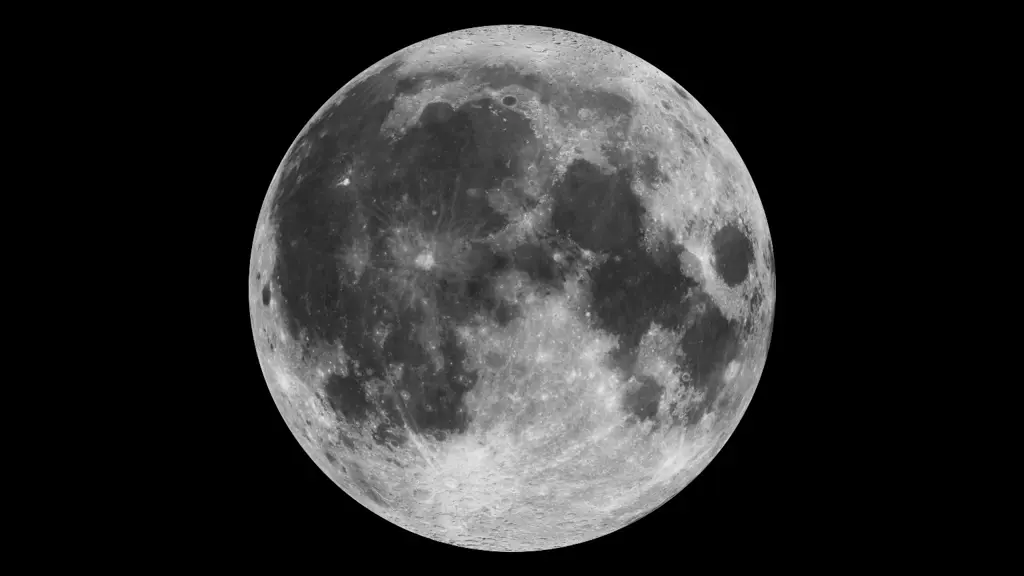
Earth's only natural satellite — a world of craters, ancient volcanoes, and frozen water that shapes our tides, steadies our seasons, and beckons a new generation of explorers.
Falcon 9
OperationalSpaceX's partially-reusable workhorse — the most-flown orbital rocket in history.
Apollo Program
RetiredLanding humans on the Moon, 1969–1972
Artemis Program
OperationalReturning humans to the Moon — to stay
Sources
- Beresheet (SpaceIL Lunar Lander) — Gunter's Space Page
- Beresheet Lunar Lander — eoPortal
- Thruster Firing Puts Beresheet Lunar Lander on Course for the Moon — SpaceUpClose
- Beresheet — Wikipedia
- Beresheet — NASA Science
- Moon Lander — IAI
- Beresheet1, a private Israeli Moon mission — The Planetary Society
- The science mission of SpaceIL's Beresheet lander — ScienceDirect
- The science mission of SpaceIL's Beresheet lander — Elsevier Pure
- The Lunar Library: Genesis — Arch Mission Foundation
- Beresheet spacecraft: 'Technical glitch' led to Moon crash — BBC
- Beresheet Moon Impact Site — NASA Science
- Israel's Beresheet spacecraft crashes on Moon — BBC
- SpaceIL's Beresheet, first privately funded moon lander, crash-lands — National Geographic
- A Crashed Israeli Lunar Lander Spilled Tardigrades on the Moon — Wired
- There Are Thousands of Tardigrades on the Moon. Now What? — Live Science
- Could tardigrades have colonized the Moon? — The Conversation