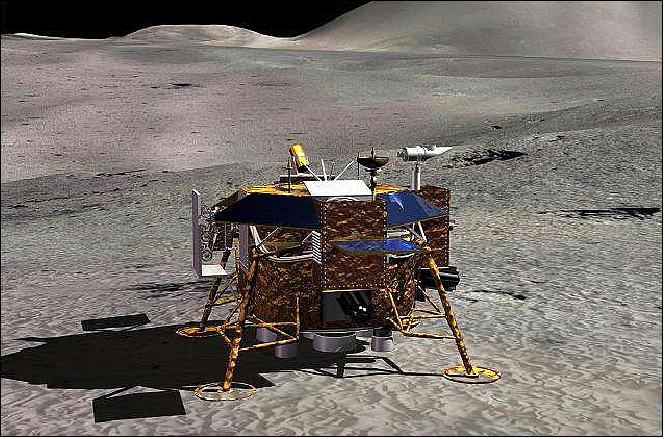
Chang'e 3 (Yutu)
China's first soft landing and rover — the first lunar surface mission anywhere in the world since 1976.
Chang'e 3 (Yutu)
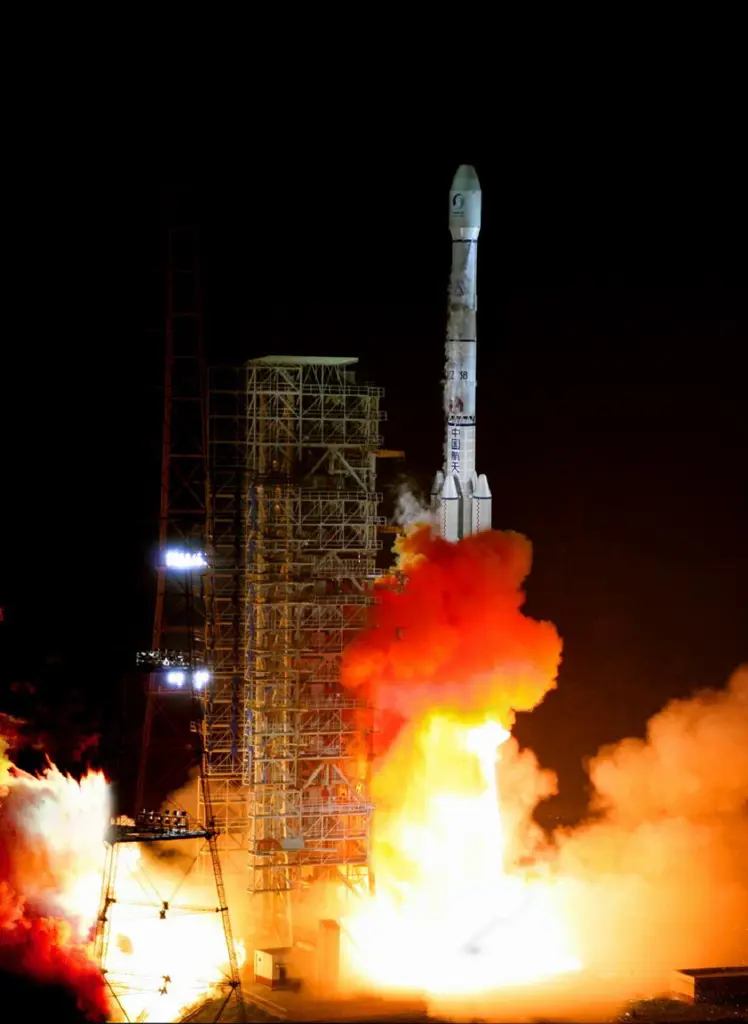
Chang'e 3 was China's first lunar lander and rover mission, and the first soft landing on the Moon anywhere in the world since the Soviet Union's Luna 24 mission in 1976. Launched on 2 December 2013 (01:30 CST / 1 December 17:30 UTC) aboard a Long March 3B rocket from the Xichang Satellite Launch Center, it touched down on 14 December 2013 at 13:11 UTC in the northern Mare Imbrium, near Sinus Iridum, at approximately 44.12°N, 19.51°W.
The mission was the centrepiece of the second phase of China's Lunar Exploration Program (CLEP), whose objectives were to demonstrate orbiting, landing, and eventually sample-return technologies. Chang'e 3 carried two scientific platforms: a stationary lander equipped with cameras and an ultraviolet astronomical telescope, and the six-wheeled Yutu (Jade Rabbit) rover, which performed surface geology, compositional analysis, and subsurface radar profiling.
The mission made China the third nation — after the Soviet Union and the United States — to achieve a soft lunar landing and rover operation. Its success directly enabled the subsequent Chang'e 4 farside mission in 2019 and the sample-return missions Chang'e 5 and 6.
Key Events
- 2 Dec 2013Launch
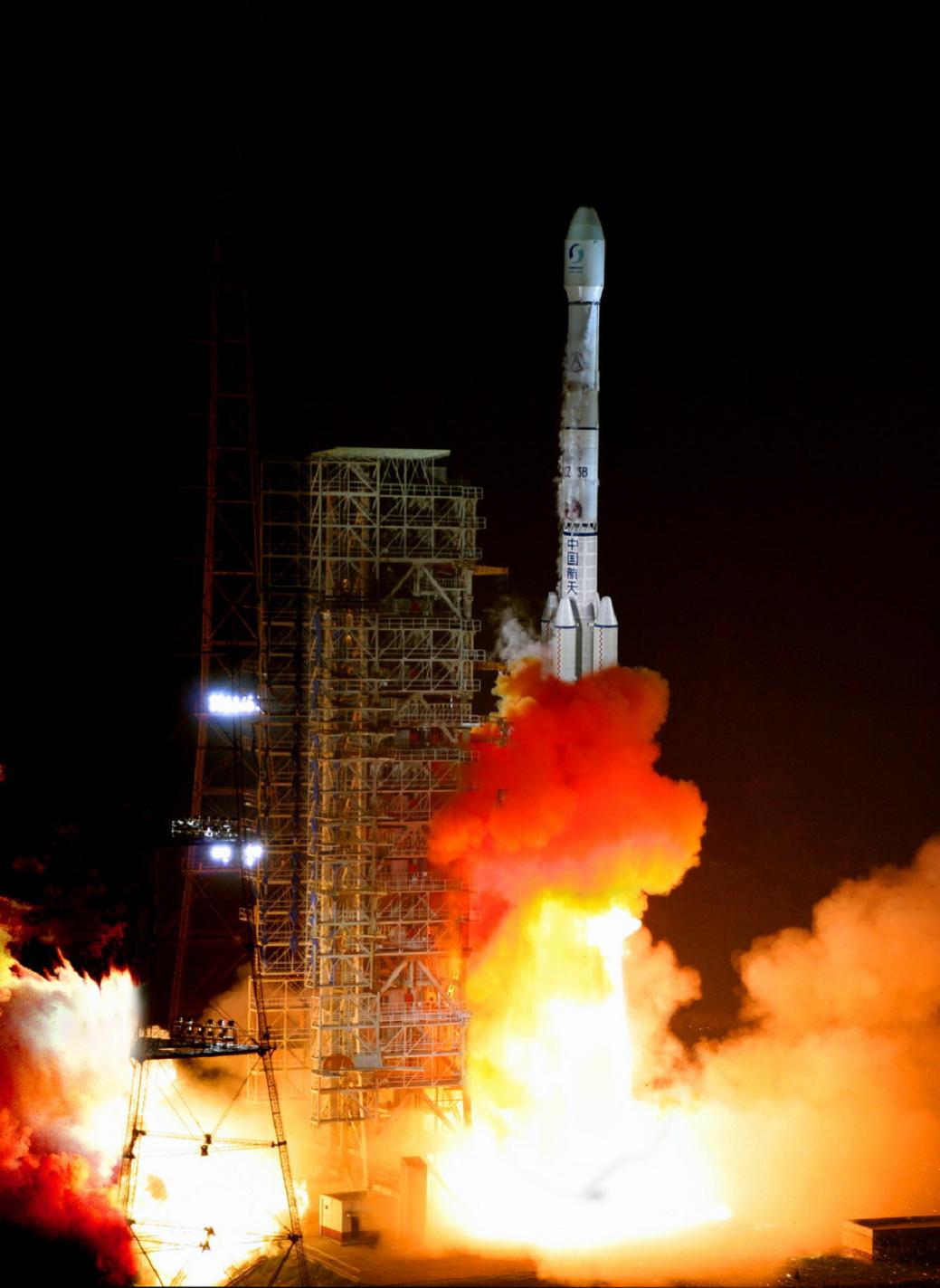
Chang'e 3 lifted off at 01:30 CST (1 Dec 17:30 UTC) on a Long March 3B from Xichang Satellite Launch Center, injected directly onto a trans-lunar trajectory.
- 6 Dec 2013Lunar orbit insertion
The spacecraft entered a 100 km circular lunar orbit at 09:53 UTC. The orbit was later adjusted to an elliptical 15 × 100 km pre-landing orbit.
- 14 Dec 2013Soft landing in Mare Imbrium
A ~12-minute powered descent sequence brought the lander to touchdown at 13:11 UTC (21:11 CST) in northern Mare Imbrium, ~40 km south of crater Laplace F. The descent included a hover at ~100 m for hazard avoidance and final engine shutdown at ~4 m altitude.
- 14 Dec 2013Yutu rover deployment
At 20:35 UTC (15 Dec 04:35 CST), Yutu drove off the lander's ramp onto the lunar surface. The lander and rover then photographed each other, prompting an official declaration of 'complete success'.
- 25 Jan 2014Yutu mechanical anomaly
While preparing for its second lunar night hibernation, Yutu suffered a 'mechanical control abnormality'. The rover subsequently woke after hibernation but could not move normally; the cause remained unresolved.
- 28 Dec 2015New lunar basalt identified
Analysis of Chang'e 3 data led to the identification of a new type of basaltic rock on the Moon, unusually rich in ilmenite (FeTiO₃), providing constraints on late-stage lunar volcanism.
- 31 Jul 2016Yutu last contact
Yutu ceased communication after approximately 31 months of operation — far exceeding its 3-lunar-month design life — and was declared inoperative. The lander continued to function beyond this point.
Landing Site and Descent
The original landing target was Sinus Iridum (Bay of Rainbows), on the northwestern margin of Mare Imbrium at approximately 44°N. High-resolution imaging of candidate sites — including Sinus Iridum, Mare Nectaris, Mare Humorum, Kepler crater, and Aristillus crater — had been gathered by the Chang'e 2 orbiter in 2010. The actual touchdown point proved to be in the northern Mare Imbrium, at the far eastern edge of the designated landing box, geologically classified as Mare Imbrium rather than strictly within the Sinus Iridum bay. It lies about 40 km south of the 6 km-diameter crater Laplace F and just east of a roughly 450 m-diameter impact crater visible in Lunar Reconnaissance Orbiter Camera (LROC) imagery.
The powered descent lasted approximately 12 minutes. After de-orbit burn at periselene (~15 km altitude), the lander descended to 100 m, then hovered and translated horizontally under autonomous guidance using the dedicated Landing Camera (LCAM), which imaged terrain from ~12 km to 3 m altitude. The main engine shut down at approximately 4 m above the surface, followed by a short free-fall to touchdown. At the moment of landing, the Sun's elevation above the horizon at the site was approximately 20°, providing moderate illumination favourable for hazard detection and imaging.
Lander Instruments
- Moon-based Ultraviolet Telescope
The first lunar-based astronomical observatory. Conducted long-term UV observations of variable stars and studied how solar activity affects Earth's ionosphere. Continued operating after primary mission completion.
- Extreme Ultraviolet Camera
Imaged the Earth's plasmasphere and studied the Sun–Earth–Moon space environment in the extreme ultraviolet band.
- Terrain Camera
Surface colour imaging for geological context and rover navigation support.
- Landing Camera
Mounted on the underside of the lander; imaged terrain from ~12 km to 3 m during descent for hazard avoidance and precise landing site localisation. Descent engine plume dispersion recorded over ~60 m (E–W) by ~135 m (N–S).
Yutu Rover Instruments
- Panoramic Camera
Stereo colour cameras providing 360° surface imaging for geological context, rock identification, and engineering assessment.
- Visible and Near-Infrared Imaging Spectrometer
Measured visible and near-infrared reflectance spectra of regolith and rocks to determine mineralogical composition. Used in identifying the unique basalt at the landing site.
- Active Particle-induced X-ray Spectrometer
Used alpha particles and X-rays to measure elemental composition of lunar rocks and soil.
- Lunar Penetrating Radar
Dual-frequency ground-penetrating radar. Channel 1 (60 MHz centre frequency, 40 MHz bandwidth) provided ~1–2 m range resolution for deeper structure; Channel 2 (500 MHz) penetrated to ~35 m depth at higher resolution. Performed the first direct in situ measurements of lunar regolith thickness and subsurface layering.
Key Discoveries
Using VNIS and APXS data, analysis published in December 2015 identified a basalt at the Mare Imbrium landing site with a unique mineral and chemical composition not matching Apollo samples. The rock is unusually rich in ilmenite (FeTiO₃) and shows distinct titanium and iron content, expanding the known diversity of lunar basalts and constraining models of late-stage lunar volcanism and mantle evolution.
The Lunar Penetrating Radar returned the first direct measurements of lunar regolith structure at metre-scale resolution. At the Mare Imbrium site, regolith thickness was measured at approximately 4–6 m. Deeper profiling revealed multiple lava flow units and interbedded regolith/impact ejecta layers, helping reconstruct the eruptive history of nearside basalts.
APXS and VNIS data confirmed the landing area is a high-titanium basalt terrain of relatively young geological age. Post-landing analysis showed the site is geologically richer and more diverse than the originally targeted Sinus Iridum location, valuable for studies of Imbrium basalt stratigraphy.
The Moon-based Ultraviolet Telescope conducted sustained observations of variable stars and monitored the Sun–Earth–Moon space environment from the lunar surface — the first such lunar-based observatory — with data made globally accessible for research.
Landing Camera analyses showed that the descent engine plume redistributed dust over roughly 60 m (east–west) by 135 m (north–south), providing empirical data on how lunar soil responds to spacecraft landing events.
The Yutu Rover: Operations and Mechanical Failure
Yutu (Jade Rabbit) was a six-wheeled, solar-powered rover with a mass of approximately 120 kg, carrying a payload of roughly 20 kg. It was designed for a three-lunar-month operational lifetime. The rover drove onto the lunar surface on 14 December 2013 at 20:35 UTC, and during its first lunar day it conducted surface traverses, acquired panoramic imagery, and collected VNIS and APXS spectra. It survived its first lunar night using radioactive heater units (RHUs) to maintain component temperatures during the approximately two-week period of darkness.
On 25 January 2014, while preparing for its second lunar night hibernation, Yutu experienced a 'mechanical control abnormality'. The rover subsequently awoke from hibernation but was unable to move normally; Chinese officials stated the problem remained unresolved. Despite being effectively immobile, Yutu continued operating in a stationary science role for an extended period, with some instruments still functioning. It ceased communication on 31 July 2016 after approximately 31 months of operation on the surface — far exceeding its original three-month design life.
Mission Significance
Chang'e 3 was a pivotal milestone in the Chinese Lunar Exploration Program. It marked the completion of CLEP's second phase and demonstrated, for the first time in China's space history, the technologies of precision lunar landing, autonomous hazard avoidance, surface rover operations, and long-duration survival through multiple lunar nights.
The mission restored global soft-landing capability to the Moon after a 37-year gap — the Soviet Luna 24 mission had last achieved this in 1976 — and made China the third nation to conduct a lunar soft landing and rover mission. Chinese state bodies described Chang'e 3 as a 'milestone' in the development of China's space programs.
Operationally, the mission validated technologies and operational approaches that directly supported Chang'e 4's historic farside landing in Von Kármán crater in January 2019, as well as the sample-return missions Chang'e 5 and Chang'e 6. The CLEP's longer-term ambitions — a robotic research station near the lunar south pole and an eventual crewed lunar landing in the 2030s — rest substantially on the foundations laid by Chang'e 3.
Chang'e 3 FAQ
Related
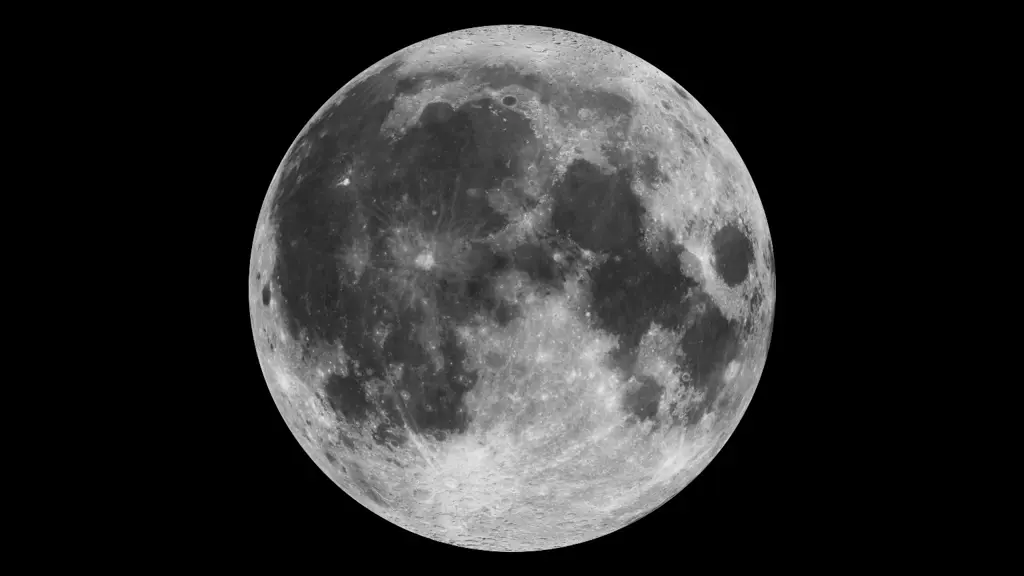
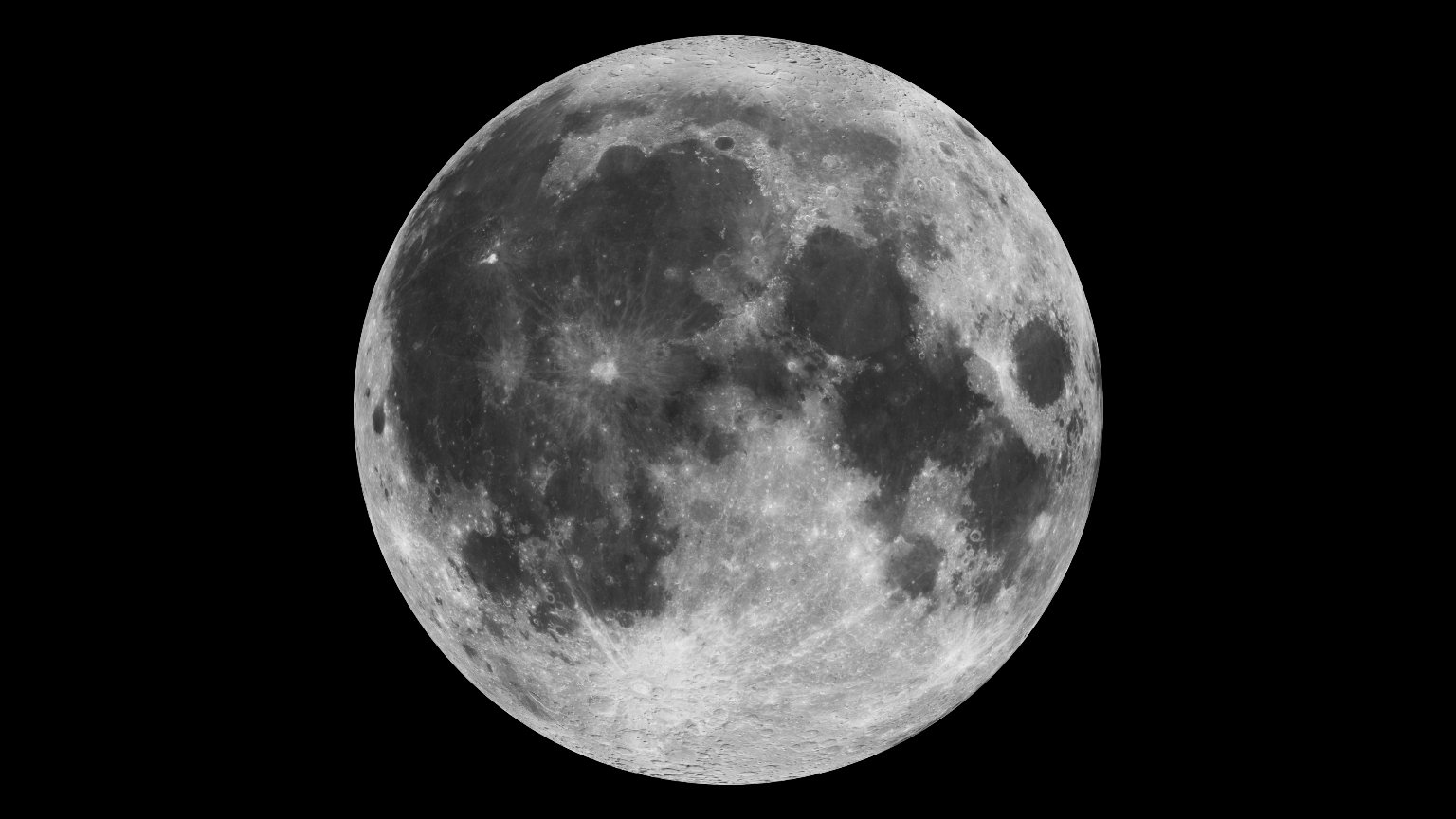
The Moon
Earth's only natural satellite — a world of craters, ancient volcanoes, and frozen water that shapes our tides, steadies our seasons, and beckons a new generation of explorers.
Apollo Program
RetiredLanding humans on the Moon, 1969–1972
Artemis Program
OperationalReturning humans to the Moon — to stay
Long March 5
OperationalChina's most powerful rocket, enabling its lunar, Mars and space-station ambitions.
Tiangong Space Station
China's permanently crewed modular space station in low Earth orbit — humanity's newest long-duration outpost among the stars.
Sources
- Chang'e 3 — China Space Report
- Chang'e-3 Moon-landing Mission — eoPortal
- Chang'e-3 — National Space Science Data Center (NSSDC)
- Chang'e 3 — Wikipedia
- Yutu (rover) — Wikipedia
- Chang'e Missions — Orbital Data Explorer (Washington University)
- Chang'e 3 Landing Site — Lunar Reconnaissance Orbiter Camera
- Mechanical anomaly raises concern for Chinese rover — Spaceflight Now
- Yutu technical problems persist — Phys.org
- Yutu Awakes Again, But Mechanical Problem Remains Unresolved — Space Policy Online
- China's Yutu Moon Rover Bites the Lunar Dust — Space.com
- China announces Chang'e-3 mission 'complete success' — CNSA
- Chang'e 3 may launch December 1 with Yutu — The Planetary Society
- In situ optical measurements of Chang'E-3 landing site in Mare Imbrium — AGU Geophysical Research Letters