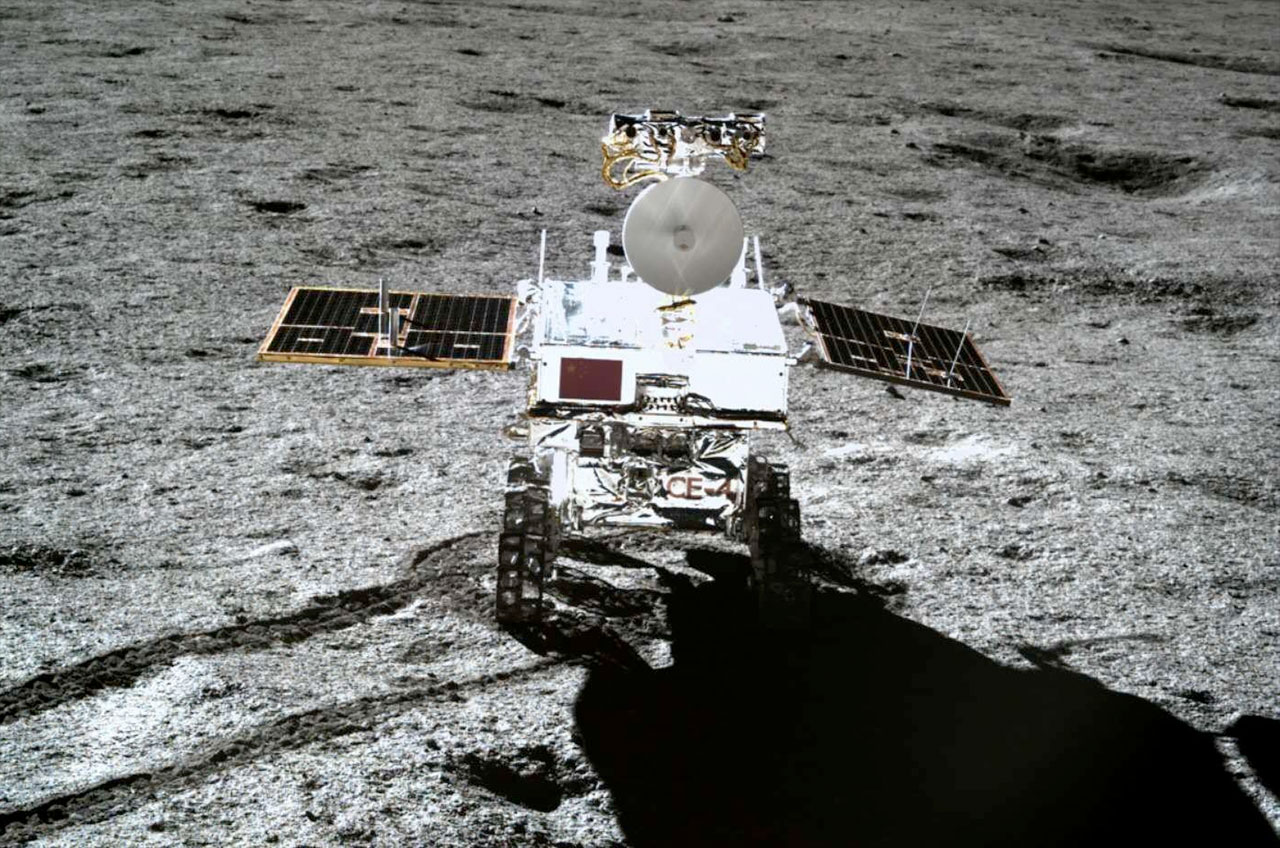
Chang'e 4 (Yutu-2)
First-ever soft landing on the Moon's far side — and the rover that kept rolling for years beyond its design life.
Chang'e 4 — First Mission to the Lunar Far Side
Chang'e 4 is a robotic lander and rover mission operated by the China National Space Administration (CNSA) that achieved the first-ever soft landing on the Moon's far side on 3 January 2019. The spacecraft touched down in Von Kármán crater inside the South Pole–Aitken (SPA) basin at approximately 45.44°S, 177.60°E — a region never before visited by any lander. The mission forms part of the second phase of China's Lunar Exploration Program (CLEP), following the Chang'e 3 mission.
The mission consists of two main elements: the Chang'e 4 lander and the Yutu-2 (Jade Rabbit-2) rover. Because the Moon permanently blocks direct radio contact with its far side, a dedicated relay satellite — Queqiao — was placed in a halo orbit around the Earth–Moon L2 point in May 2018 to provide continuous two-way communications with Earth.
Chang'e 4's principal scientific goals include low-frequency radio astronomy from the radio-quiet far side, geological and mineralogical characterisation of Von Kármán crater and the SPA basin, radar profiling of the lunar subsurface, and measurement of the particle and radiation environment on the far side. The mission has produced the first in-situ compositional evidence for deep mantle-related material on the Moon, the first detailed far-side subsurface stratigraphy, and ground-truth data for the largest and oldest impact basin in the Solar System.
Key events
- May 2018Queqiao relay satellite launched
China launched Queqiao separately and inserted it into a halo orbit around the Earth–Moon L2 point on 14 June 2018, about 65,000 km from the Moon, establishing the communications relay needed before Chang'e 4 could land.
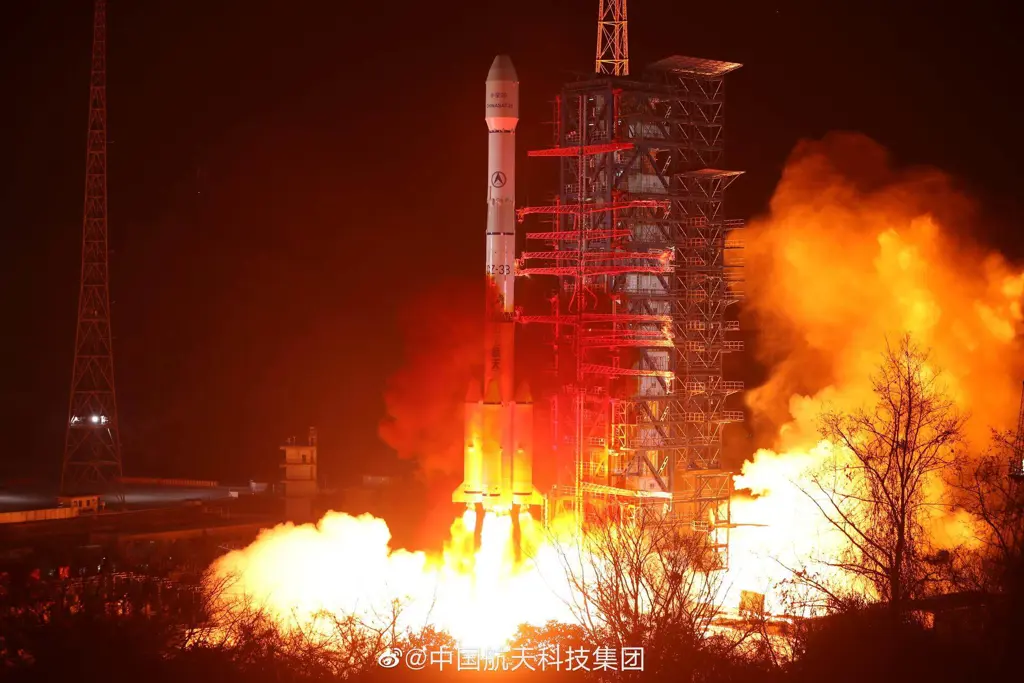
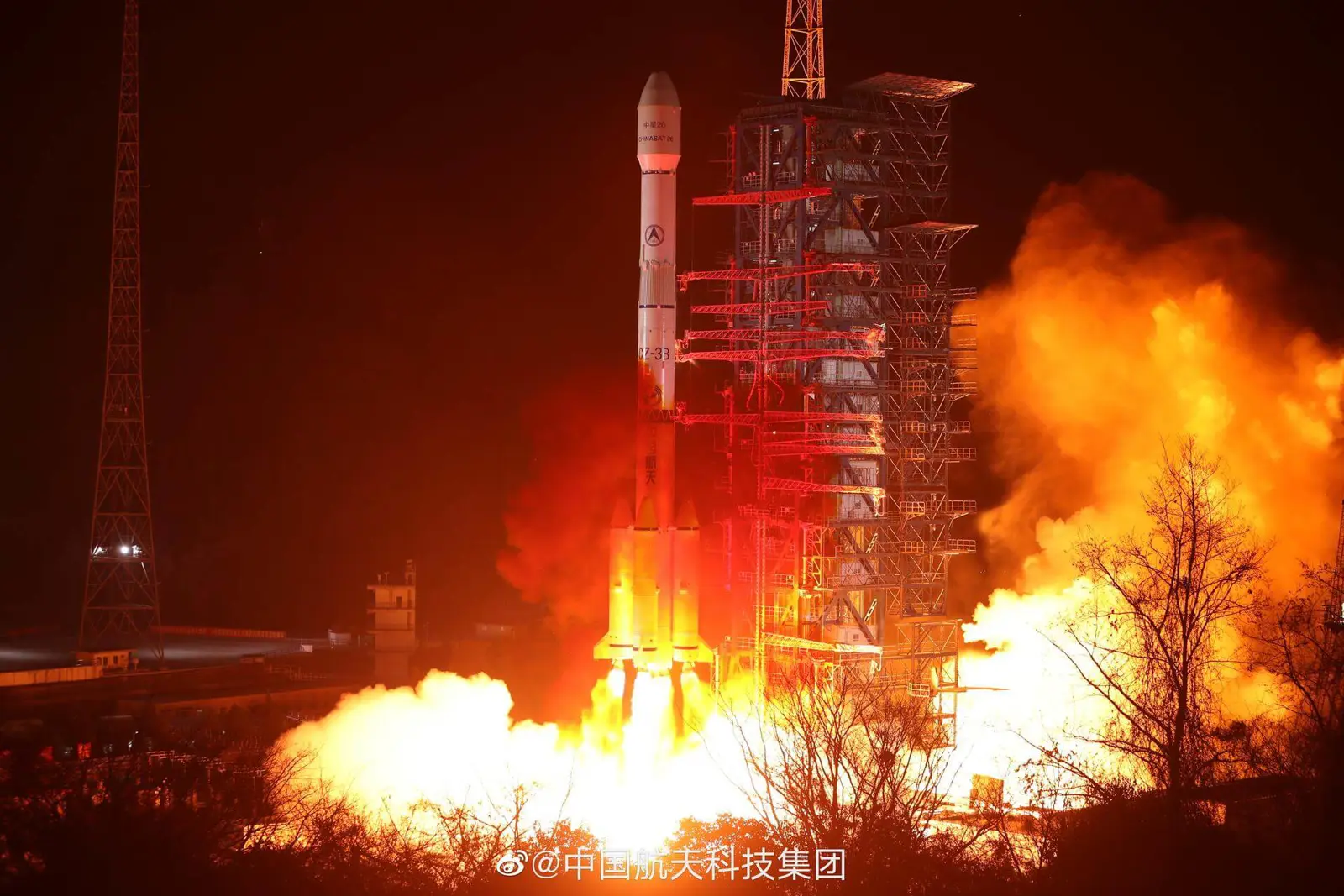
- 7 Dec 2018Chang'e 4 launches
A Long March 3B rocket lifted off from Xichang Satellite Launch Center at 18:23 UTC, carrying the Chang'e 4 lander and Yutu-2 rover toward the Moon.
- 3 Jan 2019First soft landing on the Moon's far side
Chang'e 4 touched down in Von Kármán crater at 02:26 UTC — the first spacecraft in history to land softly on the lunar far side. Yutu-2 deployed from the lander onto the surface later the same day.
- Jul 2019Discovery of 'gel-like' material
Yutu-2 imaged an unusual dark, greenish, shiny substance on a small crater floor. Subsequent analysis identified it as impact melt breccia, approximately 52 × 16 cm, analogous to Apollo samples 15466 and 70019.
- Feb 2020Subsurface stratigraphy reported
Chinese scientists published the first high-resolution image of a lunar ejecta sequence on the far side, based on Yutu-2's Lunar Penetrating Radar data, revealing multiple layered lava and regolith units beneath Von Kármán crater.
- Mar 2024Rover movement ceases
Yutu-2 had accumulated approximately 1.6 km of total traverse across more than 71 lunar days. After March 2024 the rover ceased moving, though the lander and instruments continued to return data.
Von Kármán crater — the landing site
Von Kármán is a large, ancient impact crater approximately 186 km in diameter on the Moon's far side, centred near 44.5°S, 176.2°E. It lies within the South Pole–Aitken basin — roughly 2,500 km across and about 13 km deep — one of the largest and oldest impact structures in the Solar System, and it is classified as Pre-Nectarian, meaning it formed more than 3.92 billion years ago.
The crater's interior floor was flooded by mare basalt lava flows after the original impact, particularly in its southern portion, producing a nearly flat, low-albedo surface. A central peak marks the crater's approximate centre; spectral studies show it bears an olivine-bearing noritic gabbro composition, interpreted as originating from depths of approximately 18–30 km and suggesting excavation of deep crustal or upper mantle material. Such deep material inside the SPA basin helps test models of crustal thickness, mantle composition, and the distribution of KREEP-rich material that is more typical of the nearside.
Lunar Penetrating Radar data from Chang'e 4 revealed a complex subsurface stack beneath the landing site, including multiple Imbrian-age lava flow units, several paleoregolith horizons preserved between those flows, an Eratosthenian mare unit, pyroclastic deposits, and crater ejecta. These findings imply intermittent volcanic activity with thin lava flows of 2–10 m, showing that far-side lava flow processes can be similar in scale to nearside mare volcanism.
Queqiao relay satellite
Because the Moon permanently occludes direct radio communication between Earth and any spacecraft on its far side, CNSA launched the Queqiao relay satellite in May 2018. Queqiao was inserted into a halo orbit around the Earth–Moon L2 point on 14 June 2018, approximately 65,000 km from the Moon. This location provides simultaneous visibility of both Earth and the far-side landing site, enabling uninterrupted relay of commands and science data.
The spacecraft has a mass of approximately 325–425 kg and is based on the earlier Chang'e 2 bus. Its primary communications architecture uses a 4.2 m parabolic antenna directed at the lunar surface via X-band links to the lander and rover, with reported data rates from the lander to Queqiao of up to 555 kbit/s depending on mode, and commands downlinked to the surface at 125 bit/s. The relay link to Earth uses S-band at a maximum of approximately 4 Mbit/s.
Beyond its relay role, Queqiao carries the Netherlands–China Low-Frequency Explorer (NCLE), jointly developed with Radboud University, which conducts low-frequency radio astronomy in the range 80 kHz to 80 MHz from the radio-quiet environment near L2. This instrument works in synergy with the low-frequency radio spectrometer on the Chang'e 4 lander.
Queqiao exceeded its designed lifespan and has since been supplemented by Queqiao-2, a more capable relay satellite launched by China to continue supporting Chang'e 4 and to serve future far-side and lunar south-pole missions including Chang'e 6.
Yutu-2 scientific instruments
- Panoramic Camera
Two-color cameras on a rotating mast capable of 360° panoramic imaging. Used for geological context imaging of craters, boulders and regolith textures, and for navigation and targeting of other instruments.
- Lunar Penetrating Radar
Ground-penetrating radar that profiles the subsurface structure to depths exceeding 100 m, constraining regolith thickness, buried rock distributions, and impact-related layering beneath the rover's traverse path.
- Visible and Near-Infrared Imaging Spectrometer
Measures mineral composition and maturity of lunar soils in visible and near-infrared wavelengths. Used to identify specific minerals such as pyroxenes and olivine linked to crustal or mantle materials in the SPA basin.
- Advanced Small Analyzer for Neutrals
Contributed by the Swedish Institute of Space Physics. Studies solar-wind interaction with the lunar regolith by detecting energetic neutral atoms sputtered from the surface, characterising space-weathering processes and the near-surface exosphere on the far side.
Yutu-2 rover — design and performance
Yutu-2 (Jade Rabbit-2) is a six-wheeled, solar-powered lunar rover with a mass of approximately 135 kg. It features high-performance off-road suspension and four steering motors for enhanced maneuverability on the uneven floor of Von Kármán crater. Two deployable solar arrays power the rover during lunar day; during lunar night it enters a dormant state maintained by internal heating.
Designed for a nominal lifetime of approximately three lunar months, Yutu-2 vastly exceeded this figure. By 19 September 2024 it had traversed approximately 1.613 km across the far side over more than 71 lunar days of activity — making it the longest-lived lunar rover in history, surpassing the previous record held by Lunokhod-1. Movement appeared to cease after March 2024, though the rover's instruments and systems were reported as still functioning during 2024.
Key discoveries
The VNIS spectrometer recorded the first in-situ reflectance measurements on the lunar far side, detecting strong signatures of olivine and low-calcium pyroxene — minerals expected in the Moon's upper mantle. A 2019 Nature paper interpreted these spectra as evidence for mantle-derived material at the surface, likely excavated and emplaced by impacts. Follow-up work indicated much of this material originates from the nearby Finsen impact crater, implying the surface is dominated by impact-excavated deep crustal and possibly mantle material mixed with younger basalts.
Reported in February 2020, LPR data produced the first high-resolution image of a lunar ejecta sequence on the far side, revealing a layered structure of ejecta and lava units in the upper tens of metres. The profiles show the landing area has experienced multiple impact events and basaltic eruptions, intermittently resurfacing the Von Kármán crater floor across multiple lunar geologic periods.
A dark, greenish, shiny substance imaged by Yutu-2 in July 2019 attracted widespread attention. Analysis showed it is impact melt breccia — regolith and rock fragments welded by impact-generated heat — measuring approximately 52 × 16 cm and closely resembling Apollo samples 15466 and 70019. This confirms the material is a typical high-energy impact product and provides far-side ground truth for remote sensing of impact melts in the SPA region.
Combining LPR, VNIS and geological data, Chang'e 4 revealed that Von Kármán crater's floor records multiple volcanic episodes — thin (2–10 m) lava flows separated by paleoregolith horizons — alongside impact ejecta from neighbouring craters such as Finsen. These results clarify the complex formation and resurfacing history of the SPA basin and constrain models of far-side crustal and volcanic evolution.
Chang'e 4's in-situ measurements helped guide site selection and scientific targeting for Chang'e 6, which returned SPA basin samples. Together, the two missions are reshaping understanding of near-side versus far-side asymmetries in crust thickness, mantle temperature, water content, and KREEP distribution.
Frequently asked questions
Related
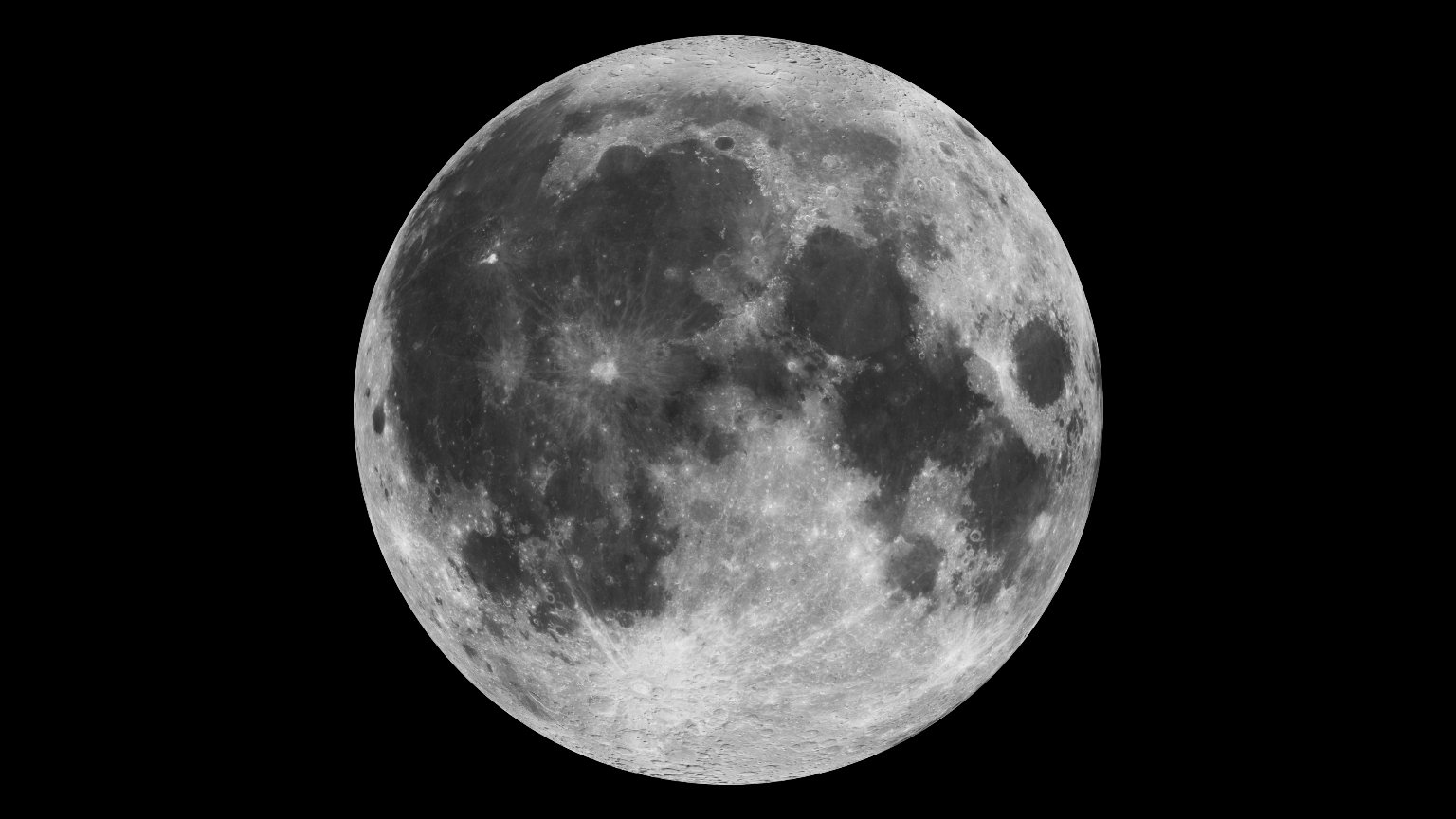
The Moon
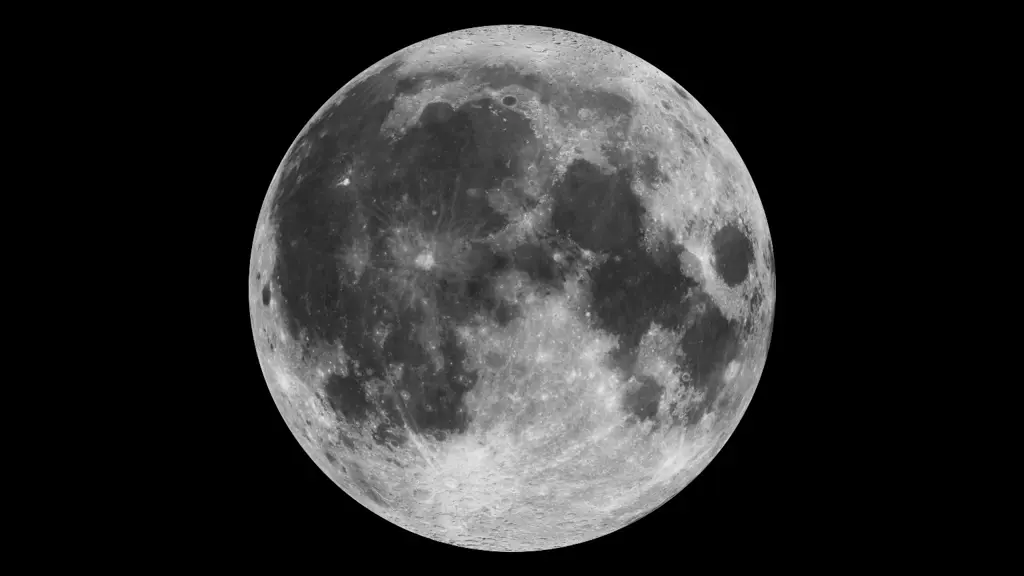
Earth's only natural satellite — a world of craters, ancient volcanoes, and frozen water that shapes our tides, steadies our seasons, and beckons a new generation of explorers.
Apollo Program
RetiredLanding humans on the Moon, 1969–1972
Artemis Program
OperationalReturning humans to the Moon — to stay
Long March 5
OperationalChina's most powerful rocket, enabling its lunar, Mars and space-station ambitions.
Sources
- Chang'e 4 - Wikipedia
- Yutu-2 - Wikipedia
- Chang'e-4 Far Side Moon-landing Mission - eoPortal
- China declares Chang'e-4 mission complete success - CNSA
- Chang'e 4 and Yutu-2: China's mission to the Moon's farside - The Planetary Society
- Chang'e | Missions & Facts - Britannica
- A 2-year locomotive exploration and scientific investigation of the Chang'e-4 rover - Science Robotics
- China's Yutu-2 Moon Machinery: Longest-working Lunar Rover - Leonard David
- China's Yutu 2 rover still going strong after nearly 6 years on the far side - Space.com
- Chang'e-4 may have discovered material from the Moon's mantle - The Planetary Society
- Development and Prospect of Chinese Lunar Relay Communication Satellite - SPJ
- Von Kármán (lunar crater) - Wikipedia
- Intermittent volcanic activity detected in the Von Kármán crater on the farside of the Moon
- The Moon's Farside Von Kármán Crater - PSRD
- Orbit and tracking data evaluation of Chang'E-4 relay satellite - ScienceDirect