Heater units (RHUs)
Passive plutonium-238 heat sources — no moving parts, no wiring, just continuous warmth for spacecraft surviving the deep cold of space.
Radioisotope Heater Units (RHUs)
A radioisotope heater unit (RHU) is a small, sealed passive heat source that uses the decay heat of a radioisotope — historically plutonium-238 (Pu-238) — to keep spacecraft components warm in environments where temperatures would otherwise fall to destructive extremes. RHUs contain no moving parts, require no electrical input, and produce no electricity; their sole function is to deliver a continuous, low-level flow of heat directly to nearby instruments, batteries, avionics, or propellant lines.
The standard modern U.S. design, the Light-Weight Radioisotope Heater Unit (LWRHU), produces approximately 1.1 W of thermal power from a ceramic pellet of plutonium-238 dioxide (PuO₂) roughly the size of a pencil eraser. The complete assembly — fuel, cladding, graphite insulation, and aeroshell — fits inside a package about the size of a C-cell battery and weighs around 40–42 g. RHUs have flown on Mars rovers, outer-planet probes, and lunar landers, wherever passive survival heating is more practical than drawing from scarce electrical reserves.
RHUs are distinct from radioisotope thermoelectric generators (RTGs), which use the same Pu-238 decay heat but convert a fraction of it into electricity via thermocouples. An RTG also produces waste heat that can serve a heating role, but an RHU is the heater-only counterpart — simpler, far lighter, and deployed in numbers wherever localized warmth is needed without bulk electrical power.
Physical principles: how an RHU generates heat
Pu-238 decays primarily by alpha emission, converting a small amount of mass into kinetic energy that is deposited almost entirely as heat within the PuO₂ ceramic pellet. With a specific power of approximately 0.57 W per gram of Pu-238 and a fuel load of about 2.66 g of PuO₂, the LWRHU yields roughly 1.1 W of thermal output at the beginning of a mission. Because the decay rate falls exponentially with the 87.7-year half-life of Pu-238, power output decreases slowly — by the 2010s, units from the 1980s averaged approximately 0.90 W, declining by about 0.01 W per year — but useful heat is maintained across mission durations of many decades.
Heat produced in the fuel pellet conducts outward through the metallic cladding and graphite layers to the outer aeroshell, and from there into the spacecraft mounting structure. Depending on where the RHU is installed, warmth reaches its target by conduction into an instrument housing or avionics box, or by radiation and convection within a sealed cavity such as a rover's warm electronics box. Because the unit is purely thermal, it generates no electromagnetic interference — an advantage when mounted near sensitive sensors — and needs no wiring or control circuitry.
Internal construction
Modern RHUs are engineered as layered containment systems designed to deliver reliable heat while retaining their fuel in accident scenarios, including launch failures and inadvertent atmospheric re-entry.
At the centre sits the fuel pellet: a small ceramic piece of PuO₂ containing at least 80% Pu-238. The ceramic form was chosen because of its high melting point and its tendency to fracture into large, non-respirable pieces rather than dispersing as fine dust if mechanically damaged. The pellet is encapsulated in a primary cladding of platinum–30% rhodium (Pt-30Rh) alloy, selected for its high-temperature strength and corrosion resistance. Built into this cladding is a frit vent — a disk of pressed and sintered platinum powder — that allows helium gas produced by Pu-238 alpha decay to escape gradually, preventing pressure buildup that could deform the capsule, while retaining all solid fuel particles.
The clad fuel capsule is then enclosed in three concentric cylindrical sleeves of pyrolytic graphite, capped at both ends. These graphite components serve multiple roles simultaneously: they act as thermal insulators that direct heat toward the spacecraft mounting surface rather than losing it to space; they provide mechanical cushioning against high-g shock loads during launch or impact; and during a potential re-entry event, they ablate in a controlled manner — analogous to a heat shield — keeping the Pt-30Rh cladding below its melting point. The maximum permitted aeroshell ablation recession is 50% of the original thickness. The entire assembly is enclosed in a robust graphite outer aeroshell that also provides the mechanical interface to the spacecraft. This lightweight design was developed in the late 1970s, introducing the ceramic PuO₂ fuel form, improved cladding alloys, and the multi-layer graphite insulation and aeroshell that define the current LWRHU.
Isotope variants
While Pu-238 is the standard fuel for U.S. RHUs, other programs have used different isotopes suited to different mission profiles. The Soviet Lunokhod lunar rovers used polonium-210 (Po-210), which has a half-life of only 138.4 days; its very high power density made it attractive for short-duration missions but renders it unsuitable for long-duration spacecraft. ESA's Rosalind Franklin Mars rover is designed to use americium-241 (Am-241) RHUs; Am-241 has a half-life approximately five times longer than Pu-238, meaning lower power density but an extremely long useful life. Strontium-90 has also been proposed but is less commonly employed in RHU applications. The ESA ESTEC prototype RHU differs markedly from the U.S. LWRHU in mass (approximately 200 g versus 40 g) and stands less than 5 cm tall, reflecting a different engineering approach to the same thermal-control function.
RHUs versus the General Purpose Heat Source (GPHS)
The General Purpose Heat Source (GPHS) module is a larger, standardized Pu-238 heat source block that serves as the building block inside RTGs and Stirling converters. Where an RHU produces roughly 1 W per unit, each GPHS module produces approximately 250 W of thermal power from four iridium-clad PuO₂ pellets and has a mass of up to about 1.5 kg — roughly 35 times heavier than an RHU. A GPHS-RTG, such as those flown on Galileo, Ulysses, Cassini–Huygens, and New Horizons, contains 18 GPHS modules, producing roughly 4,215 W thermal and about 290 W electric at beginning of life. RHUs and GPHS modules are complementary: Cassini, for example, carried three GPHS-RTGs delivering approximately 870 W of electrical power at launch, alongside 157 RHUs providing a further ~157 W of localized passive heating to components distributed across the spacecraft. The total Pu-238 in Cassini's RHUs was about 300 g, versus several kilograms in its RTGs.
Missions using RHUs or RHU-like heater sources
Mars Pathfinder / Sojourner
1996–1997Solar-powered Mars lander and micro-rover; RHUs used to maintain instrument temperatures during Martian nights
Mars Exploration Rover Spirit
2003–2010Solar-powered Mars rover; RHUs kept batteries and electronics within survival temperatures overnight
Mars Exploration Rover Opportunity
2003–2018Solar-powered Mars rover; same thermal-control architecture as Spirit
Cassini–Huygens
1997–2017Saturn orbital mission; RHUs provided distributed passive heating alongside three GPHS-RTGs
Chang'e-3 / Yutu
2013–Chinese lunar lander and rover; RHUs (Pu-238) reported for 14-day lunar night survival
Zhurong Mars rover
2020–2022Solar-powered Chinese Mars rover; likely equipped with Pu-238 heater capacity for thermal control
Mars rover applications in detail
Nighttime temperatures at Mars rover landing sites can fall below −100 °C, making survival heating a critical design requirement for all surface missions. On solar-powered rovers, electrical energy is scarce and variable — further constrained by dust accumulation on arrays — making passive RHUs the preferred solution for overnight component protection. The Sojourner micro-rover on Mars Pathfinder used three RHUs positioned near its electronics and batteries; the Mars Exploration Rovers Spirit and Opportunity each carried eight RHUs for the same purpose. These missions represent the canonical Mars use case for RHUs: thermal survival on solar-powered platforms where every watt of electrical power is at a premium.
The Mars Science Laboratory Curiosity rover takes a different approach. Powered by a Multi-Mission Radioisotope Thermoelectric Generator (MMRTG), Curiosity produces approximately 110 W of electrical power and roughly 2,000 W of thermal power at start of mission. Its thermal architecture uses a fluid-loop heat rejection system — about 60 m of tubing routed through the rover body — to distribute MMRTG waste heat to sensitive components and reject excess heat when the rover runs warm. Because the MMRTG continuously produces abundant heat, Curiosity does not rely on discrete RHUs; instead, thermal management is achieved through the fluid loop coupled to the MMRTG, supplemented by electrical heaters on specific components. Similarly, the Perseverance rover is powered and warmed by an MMRTG, with some of its Pu-238 oxide supplied from the restarted domestic production program at Oak Ridge National Laboratory.
Safety design and re-entry survivability
RHUs are designed to retain their fuel across the full range of credible accident scenarios, from launch failures to inadvertent atmospheric re-entry. The ceramic PuO₂ fuel has a high melting point and fractures into large, non-respirable pieces under mechanical loads rather than dispersing as inhalable dust. The Pt-30Rh primary cladding maintains fuel containment under the impact and thermal conditions specified in the design: the intact capsule can withstand impacts up to 49 m/s, and the assembly is rated to a maximum dynamic loading of 425 g. The graphite insulation and aeroshell ablate progressively during re-entry heating, maintaining cladding temperatures below the melting point of the Pt-30Rh alloy while the aeroshell recession is limited to 50% of its original thickness. The frit vent prevents helium pressure buildup from compromising the cladding during long storage or mission durations.
These safety features were explicitly evaluated for the Cassini mission, which performed an Earth gravity-assist flyby in 1999. A dedicated probabilistic analysis assessed the inadvertent re-entry risk for the Cassini LWRHUs during the Venus–Venus–Earth–Jupiter trajectory, and NASA's re-entry analysis tool ORSAT was used for higher-fidelity survivability assessments. NASA's standard practice requires that the casualty risk to the public from uncontrolled re-entry of nuclear material remain below 1 in 10,000. Earlier missions including Galileo also underwent nuclear safety review for potential accidental Earth re-entry during gravity-assist phases.
Plutonium-238 supply and production history
RHUs draw from the same Pu-238 stockpile as RTGs, so their availability tracks the broader history of U.S. Pu-238 production. From the 1960s through the late 1980s, the Savannah River Site (SRS) in South Carolina produced nearly all domestic Pu-238. After SRS production ceased, the U.S. faced a growing shortage that constrained the design of new RHU- and RTG-equipped missions through the 2000s and into the 2010s.
Around 2013–2015, the Department of Energy restarted domestic Pu-238 production in collaboration with Oak Ridge National Laboratory (ORNL) and Idaho National Laboratory (INL). ORNL produced the first new batch in nearly 30 years, and a small quantity of ORNL-produced Pu-238 oxide flew aboard the Perseverance rover, supplementing legacy material. The DOE has since completed a major shipment of Pu-238 oxide to NASA explicitly to support future RTG missions including the planned Dragonfly mission to Titan. The restart of domestic production ensures that future RHU fabrication remains feasible for long-duration outer-planet and cold-environment missions where solar power and batteries are insufficient.
Frequently asked questions
Related
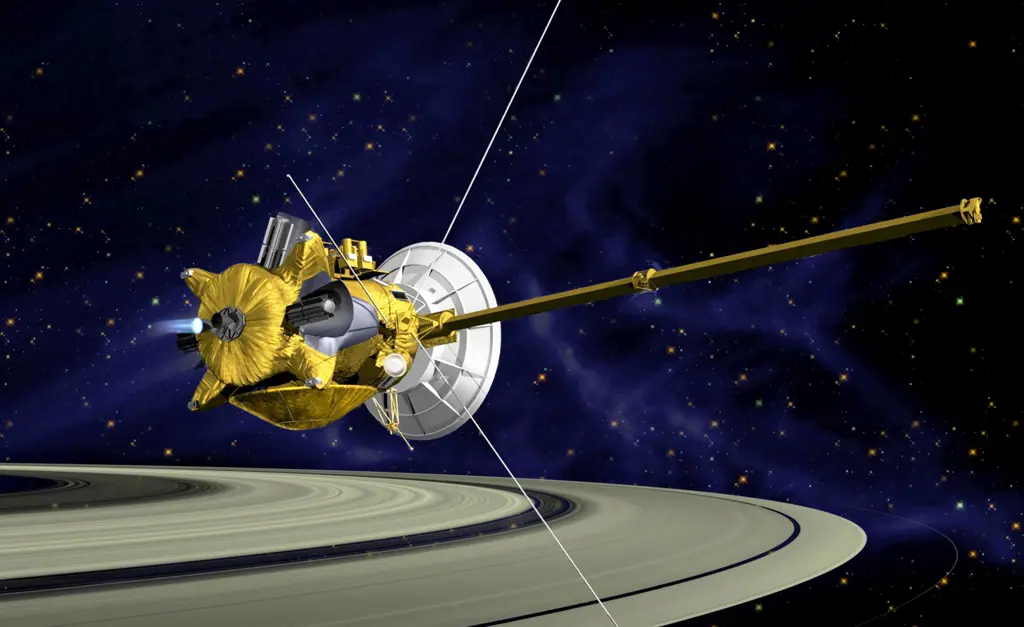
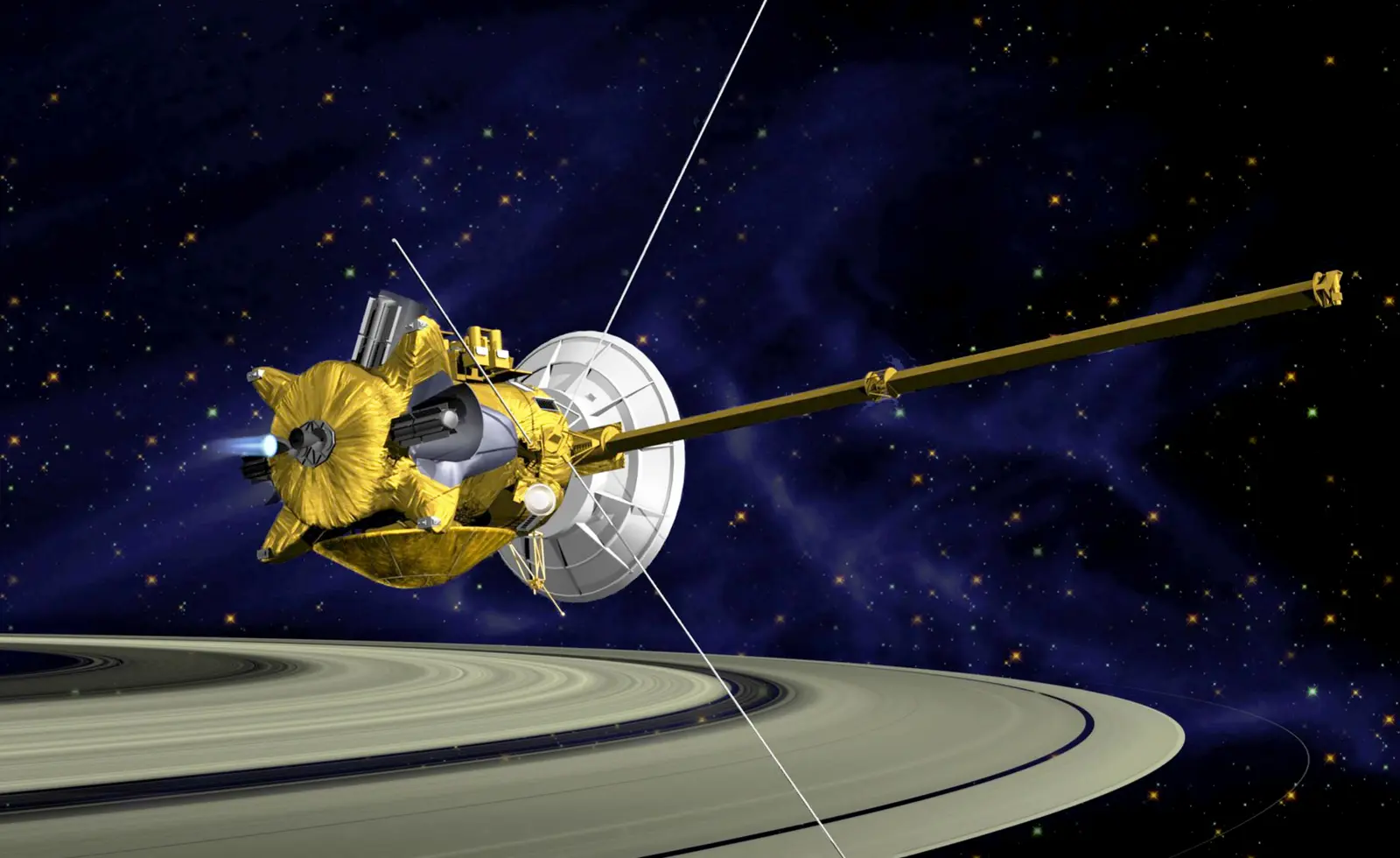
Cassini–Huygens
RetiredThirteen years orbiting Saturn
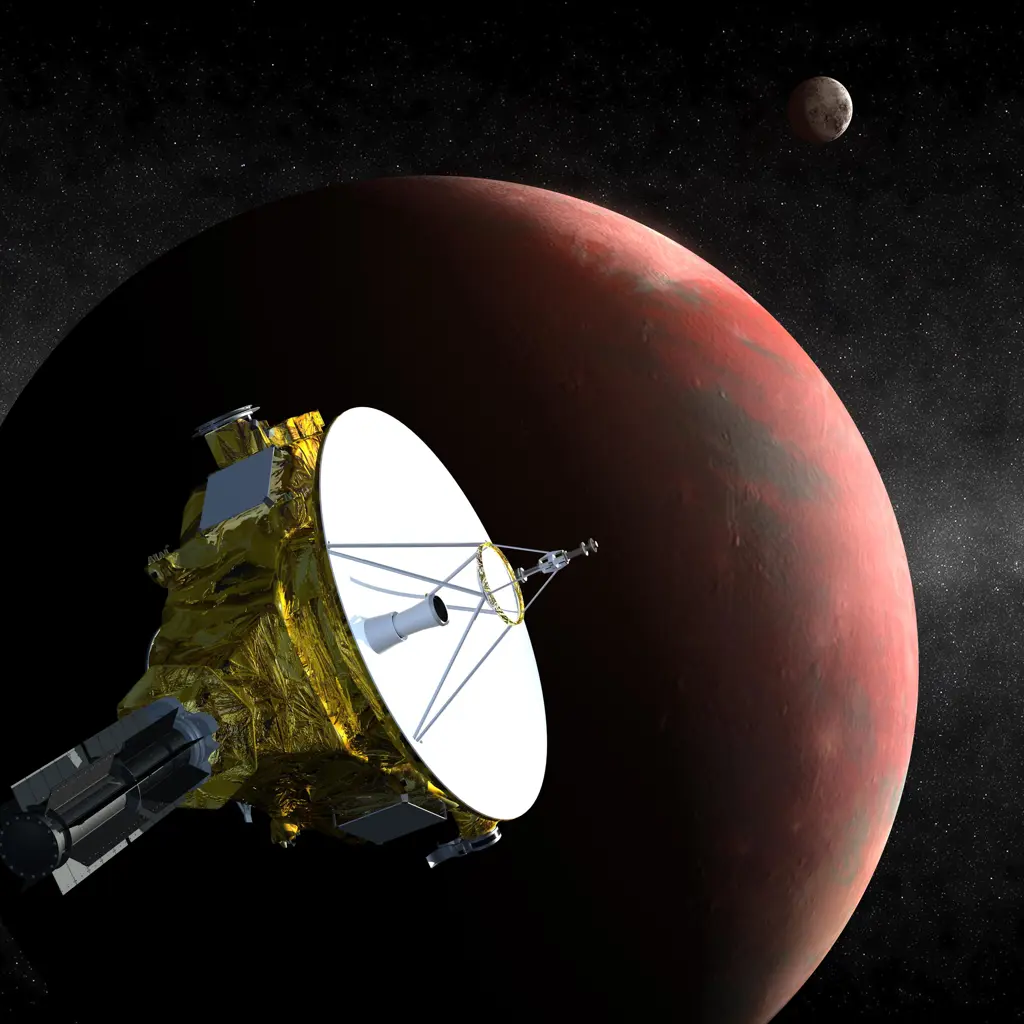
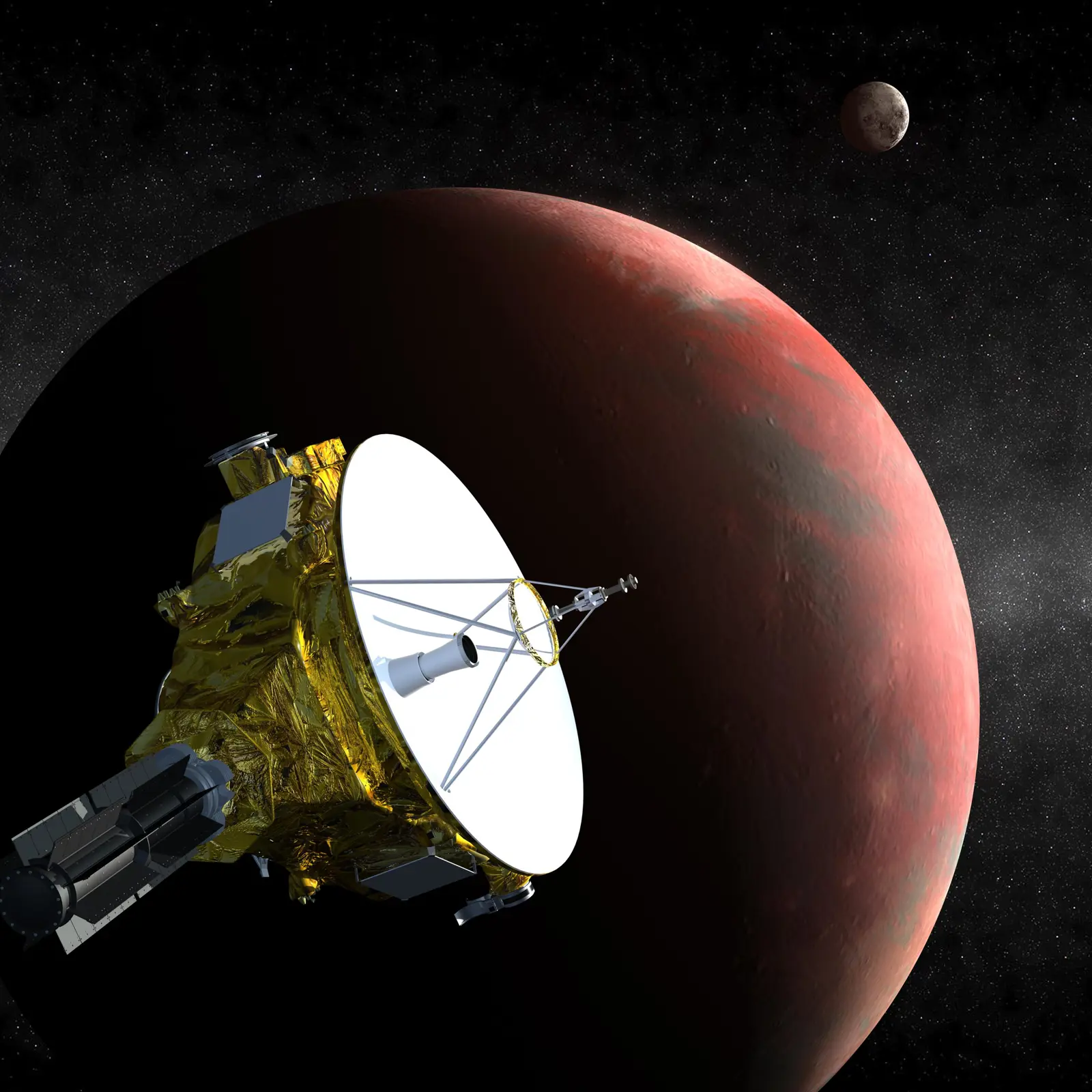
New Horizons
En RouteFirst to Pluto, now in the Kuiper Belt


Perseverance Rover
OperationalHunting for ancient life in Jezero Crater


Titan
Saturn's largest moon — the only world beyond Earth with stable surface liquids, a dense nitrogen atmosphere, and a methane-based weather cycle.


Mars
The fourth planet from the Sun — a cold, rocky desert world with the Solar System's tallest volcano, two tiny moons, and abundant evidence of an ancient watery past.


Apollo Program
RetiredLanding humans on the Moon, 1969–1972
Sources
- Thermal: Radioisotope Heater Units — NASA Science
- Radioisotope heater unit — Wikipedia
- Overview of Light Weight Radioisotope Heating Unit (LWRHU) — OSTI
- Radioisotope Heater Units (RHUs): Pull-apart Animation — Friends of NASA
- Radioisotope Heater Units — NASA Discovery (Fact Sheet PDF)
- The Light Weight Radioisotope Heater Unit (LWRHU) — INIS-IAEA
- Radioisotope Heater Unit — ESA ESTEC in 99 Objects
- Nuclear Reactors and Radioisotopes for Space — World Nuclear Association
- Radioisotope Power Systems Missions — NASA Science
- U.S. Department of Energy Completes Major Shipment of Plutonium-238 — DOE
- National Labs resume plutonium production for space exploration — INL
- Probabilistic analysis of the inadvertent reentry of the Cassini spacecraft — PubMed
- Reentry response of the lightweight radioisotope heater unit resulting from a Cassini VVEJGA accident — UNT Digital Library
- General-purpose heat source — Wikipedia
- Curiosity (rover) — Wikipedia
- Plutonium-238 Production for Space Exploration — American Chemical Society