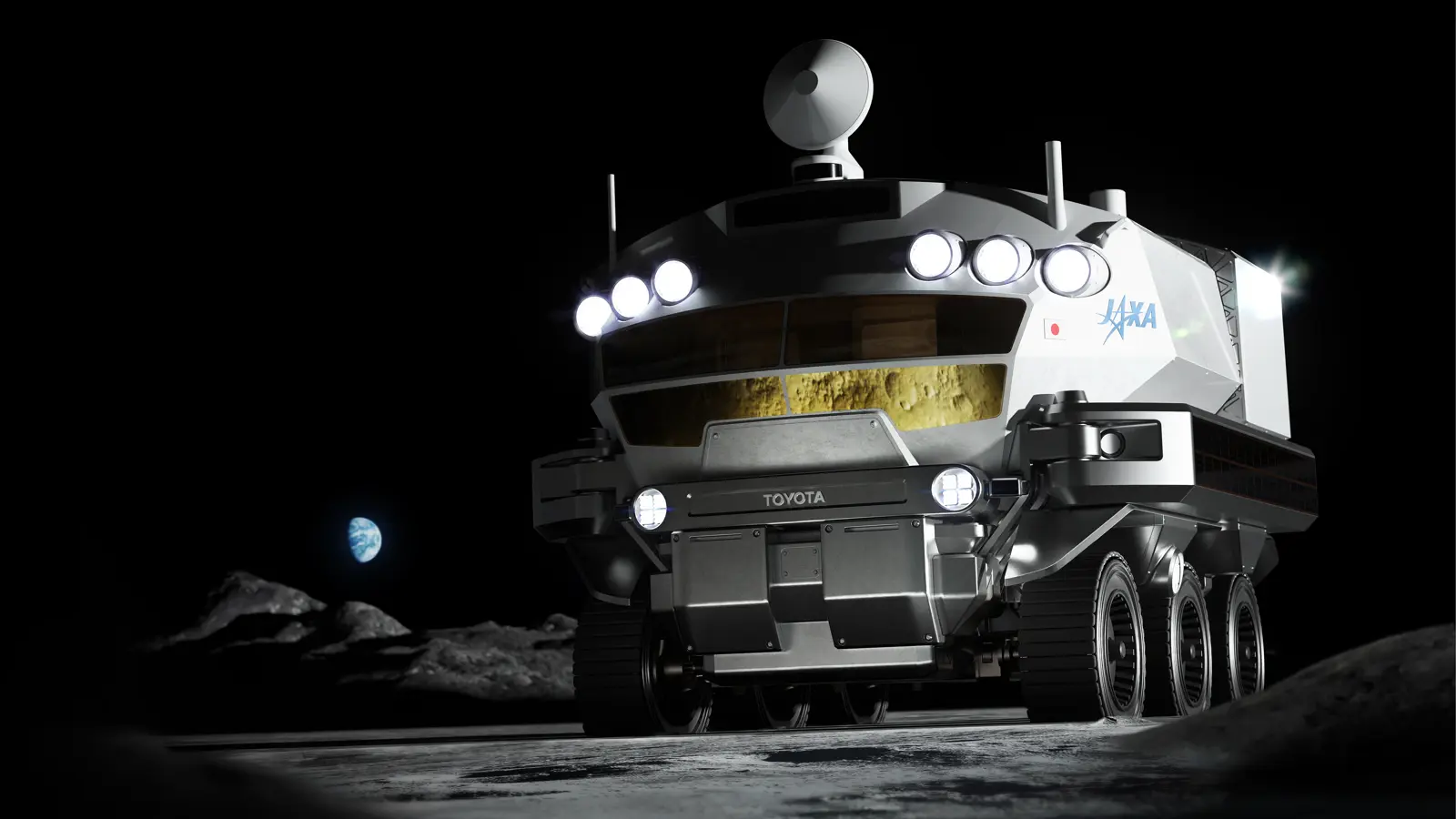
Pressurized Rover
A mobile shirt-sleeve habitat for the Moon and Mars — letting two crew live, work, and explore for weeks without spacesuits.
Pressurized Rover
A pressurized rover is a mobile, shirt-sleeve-environment vehicle that allows astronauts to travel across the surface of the Moon or Mars for days to weeks without wearing spacesuits inside the cabin. By carrying its own life support system, pressure vessel, power supply, and sleeping quarters, it functions as a small mobile habitat rather than a simple transport vehicle.
NASA describes the pressurized rover as providing a crewed vehicle with the same core functions as other human spacecraft, including habitation and life support. Astronauts can live, work, eat, and sleep inside in a shirt-sleeve environment, and conduct spacewalks by depressurizing and exiting in suits — either through an airlock or through suitports that let crew step directly into suits mounted on the vehicle's exterior.
The pressurized rover concept has a continuous lineage stretching from NASA's MOLAB studies of the mid-1960s, through Apollo-era contractor designs and the post-Apollo Exploration Rover work, to the Space Exploration Vehicle (SEV) prototype of the 2000s–2010s and the current Artemis-era vehicle being developed jointly by NASA and JAXA. Although no flight-qualified pressurized rover has yet operated on another world, the concept has been refined through decades of hardware studies, terrestrial testing, and human-factors research.
Origins: MOLAB and the Apollo Era
The earliest serious, system-level design for a pressurized planetary rover emerged during the Apollo program era. In the early-to-mid 1960s, as NASA looked beyond initial landings toward longer surface stays, it initiated studies of a Moderate Capacity Mobile Laboratory — the MOLAB — intended to support two astronauts for up to approximately two weeks of pressurized lunar traverses.
MOLAB was not part of the baseline Apollo lunar landing program but belonged to the more ambitious post-Apollo expansion concepts that envisioned eventual semi-permanent lunar presence. Concept studies estimated a gross mass of roughly 3,732 kg for a two-person, 14-day design, with approximately 12.8 m³ of pressurized volume and a separate 3.46 m³ airlock. A notional larger variant — supporting three crew for a 21-day, 900 km traverse — would have required approximately 3,810 kg.
NASA contracted multiple aerospace firms to develop competing MOLAB configurations. Boeing served as prime contractor and General Motors built and tested a full-scale MOLAB Test Article (MTA) chassis, working with Goodyear Tire and Rubber on large lunar rover wheels capable of supporting the vehicle's mass while maintaining maneuverability over loose regolith. A Northrop design study from March 1964 used four flexible torus wheels sized for the same two-crew, 14-day traverse mission.
GM's MOLAB Test Article was constructed in the mid-1960s at GM's Delco Electronics facility in Goleta, California. The chassis and running-gear mass was calibrated to equal the full pressurized vehicle's weight in lunar gravity, allowing one-sixth-g performance simulation on Earth simply by omitting the pressurized cabin modules. The vehicle was used for mobility demonstrations over rough terrain, earthbound geology excursions with the U.S. Geological Survey, and spacesuit operations development for Apollo astronauts over roughly seven years. A surviving example is preserved in museum collections.
The MOLAB concept was effectively cancelled in 1968 as Apollo's scope was reduced and post-Apollo lunar base plans were shelved. With no viable means to deliver and support such a heavy vehicle, NASA shifted focus to a lighter unpressurized design. GM ultimately teamed with Boeing to develop the flight Lunar Roving Vehicle, which debuted on Apollo 15 in July 1971. Engineering challenges tackled in MOLAB studies — wheel design, mobility over regolith and rocks, vehicle stability, and spacesuit operations integration — fed directly into the LRV program.
Apollo-Era Design Studies: PLR Concepts
Parallel to the MOLAB work, detailed NASA and contractor studies produced two significant Pressurized Lunar Rover (PLR) concepts that established performance targets referenced in subsequent exploration rover literature.
The single-hull PLR, documented in NASA Contractor Report CR-192034, featured a cylindrical pressurized cabin 7 m long and 3 m in diameter, carrying four astronauts for 14-day missions at a nominal speed of 10 km/h and a top speed of 18 km/h. Total vehicle mass was 6,197 kg. It included a crew airlock for EVA and a power and heat-rejection trailer, and could tow utility loads of up to 3 metric tons.
The dual-hull PLR was an articulated design with two cylindrical hulls — each 5 m long and 4 m in diameter — connected by a 1 m flexible passage, for a total vehicle length of 11 m. Its 2 m diameter wheels gave a 7.5 m wheelbase. Primary power came from a Dynamic Isotope Power System using a closed Brayton cycle, with sodium-sulfur batteries and a photovoltaic array as secondary sources. The vehicle carried four crew for 14 days under nominal conditions, with emergency capacity for six crew in a survival shelter mode. Nominal range was 2,000 km. With four wheels driven, maximum velocity was 14.7 km/h; with all eight wheels driven, 29.4 km/h. The design could traverse crevices up to 1.7 m wide and climb gradients of up to 26.5°. External equipment included two robotic arms, two crew airlocks, a scientific airlock, a 1.2 m parabolic antenna, and exterior cameras with driving lights.
Post-Apollo Exploration Rover Studies
NASA's post-Apollo "Exploration Rover Concepts and Development Challenges" synthesis revisited the PLR parameters and introduced a compact small pressurized rover cabin designed to fit within launch fairings such as Titan IV or the Space Shuttle.
This small pressurized rover concept used a cylindrical pressure vessel 2.6 m in diameter and 4.1 m long, closed by two elliptical bulkheads, with a Shuttle-type hatch in the aft bulkhead for ingress and egress. To save mass, it included no dedicated crew airlock; the cabin was exposed to ambient conditions during EVA when the hatch was opened, mirroring the approach used on the Apollo Lunar Module. Six flexible wire-mesh wheels of 1.23 m diameter provided mobility. Landed mass was constrained to 4.3 metric tons. Power during teleoperation came from a 700 W solar array and battery system; crewed missions in Shuttle-based scenarios used 8 kW from Shuttle fuel cells. The concept supported two crew for 14 days, with a maximum range of approximately 80 km at 16 hours per day over the full mission at 1 km/h nominal crewed speed. Teleoperated speed was 0.3 km/h.
The same study reiterated the long-range PLR requirements — four crew for 14 days, emergency capacity for six, towing up to 3 metric tons, and an operational radius of approximately 500 km — demonstrating continuity in NASA's design goals for pressurized lunar rovers from the 1970s into the post-Apollo planning era.
Space Exploration Vehicle (SEV)
In the 2000s and 2010s, NASA developed the Space Exploration Vehicle (SEV) as a modular, pressurized cabin concept and terrestrial prototype for both lunar surface and microgravity applications. The SEV embodied many features central to the pressurized rover architecture and was extensively tested in analog environments such as the Desert RATS field exercises.
In its surface configuration, the SEV measured approximately 4.5 m long, 4.0 m wheelbase, and 3.0 m tall, with a vehicle weight of approximately 3,000 kg and a payload capacity of approximately 1,000 kg. It carried a nominal crew of two, with emergency capacity for four. Travel speed was approximately 10 km/h. The mobility chassis featured wheels that could pivot 360°, enabling sideways and omnidirectional driving for precise maneuvering and docking to other surface assets. The SEV's design intent centered on a small, low-mass, low-volume pressurized cabin that would allow two vehicles to operate on the surface simultaneously, extending safe exploration range and providing operational redundancy.
A key feature of the SEV prototype was its suitports: surface suits were stowed on the vehicle's exterior, allowing crew members to climb into them from inside the cabin and detach, greatly reducing dust ingress and EVA preparation time compared to a conventional airlock. The SEV was not flight-rated but is widely cited as a direct precursor to current pressurized rover concepts for both the Moon and Mars.
Artemis-Era Pressurized Rover
Within the Artemis program, NASA's Pressurized Rover (PR) is intended to support two-person mobile habitation for up to roughly 30 days in duration. Operational concepts envision a 33-day lunar surface mission in which a crew swap occurs approximately halfway through, with two crew using the PR for multi-day excursions away from a fixed surface habitat. The rover carries dedicated private bunks for each crew member, a galley and workspace, and the ability to conduct EVAs by depressurizing the cabin.
NASA describes the Artemis PR as a mobile habitat in which crew can live in a pressurized environment, eat, sleep, drive, and perform other work in a shirt-sleeve environment. It can be operated remotely between crewed missions — repositioning itself at the next crew landing site ahead of arrival and conducting science in an uncrewed mode. The PR is also envisioned to work in tandem with the unpressurized Lunar Terrain Vehicle (LTV): in some mission scenarios the LTV accompanies the PR, enabling the pressurized rover to reach sites up to 20 km from a surface habitat by a known path.
Under a formal agreement between NASA and the Japan Aerospace Exploration Agency (JAXA), Japan will design, develop, and operate a pressurized rover for the Artemis lunar surface program; NASA will launch and deliver the rover and provide two Japanese astronaut lunar surface missions. The JAXA pressurized rover — also known as the Lunar Cruiser — is described as a camper-van-like mobile habitat, the largest dedicated surface asset ever planned for the Moon, with a notional mass of approximately 15 tonnes. It is equipped with cameras, sensors, robotics, and scientific instruments, and can be operated remotely between crewed missions. Delivery on a SpaceX Starship cargo lander is planned no earlier than fiscal year 2032 to support Artemis VII and later missions.
The Artemis pressurized rover represents a direct architectural descendant of the MOLAB, PLR, and SEV studies, retaining the core features that have defined the concept for six decades: a pressurized shirt-sleeve cabin, two-person crew capacity, multi-week habitation, EVA staging capability, and autonomous remote operation.
Relationship to the Unpressurized LTV
The pressurized rover is a distinct vehicle from NASA's Lunar Terrain Vehicle (LTV), which is explicitly unpressurized and requires astronauts to wear spacesuits at all times when aboard. The LTV is conceptually similar to the Apollo Lunar Roving Vehicle — an open rover for suited EVA transport and cargo movement — and is targeted for Artemis V, currently planned around 2030. In May 2026 NASA selected Venturi Astrolab as one of two providers of a crewed unpressurized lunar rover (the CLV-1, derived from Astrolab's FLEX architecture) under the Lunar Terrain Vehicle Services (LTVS) program, with a task order value of approximately $219 million. Intuitive Machines and Lunar Outpost hold parallel LTVS contracts for competing unpressurized designs.
NASA envisions the unpressurized LTV and the pressurized rover as complementary systems: the LTV handles short-range transport and routine traverses, while the pressurized rover provides long-range, long-duration mobile habitation. A NASA manager has described the relationship directly: the LTV is unpressurized, and the pressurized vehicle will be able to extend the cruise range even further away from a lander — the two rover types working together on the surface.
Life Support and Habitability
A pressurized rover must provide the same core life support functions as other human spacecraft. Its systems must maintain a breathable atmosphere and cabin pressure, supply oxygen and consumables for multiple crew members over the full mission duration, handle recharge and refill of portable life support systems when astronauts return from EVA, and support hygiene and thermal control. More capable designs incorporate partial water recycling, air regeneration, and radiation protection that allows the cabin to serve as a storm shelter during solar particle events.
The Lunar Electric Rover (LER) concept developed under the Constellation program established a key emergency function: its heavily shielded cabin could sustain and protect a crew of two for up to 72 hours during solar particle events or other contingencies. The LER also introduced suitports as a standard feature, allowing rapid ingress and egress to spacesuits and a quick return to a safe pressurized environment. These requirements directly inform the current Artemis pressurized rover design.
The rover is also expected to carry consumables and umbilical connections to recharge its systems at an outpost or surface habitat between excursions, extending effective operational life beyond what onboard consumables alone would allow.
Mars Applicability
While current flight hardware planning is lunar-first, NASA and academic institutions have studied pressurized rover architectures explicitly intended for Mars surface missions. A small pressurized rover concept for extended lunar and Mars exploration (Akin and Bowden, mid-2000s) described a compact, lander-compatible vehicle providing a full shirt-sleeve environment for multi-day sorties, with a common architecture adaptable to both the Moon and Mars.
A NASA power and thermal system trade study (NASA TM-20220006678) modeled a Small Pressurized Rover (SPR) mechanically linked to an Unpressurized Rover (UPR) that carried the primary power source. The nominal combined system mass was approximately 6,000 kg with a five-year design life. The study explicitly treated the rover as usable on both lunar and Martian surfaces, examining radioisotope power system (RPS) options with radiation shielding to keep crew exposure near Mars surface background levels.
In 2018, Auburn University in collaboration with NASA's Advanced Concepts Group at Marshall Space Flight Center conducted a Mars Pressurized Rover design studio, focusing on a vehicle for an operational crew of two for up to three weeks on Mars. The work examined interior layout, ergonomics, living and working space, storage, and system integration in support of NASA's human Mars surface exploration studies for the 2030s.
As of the mid-2020s, no Mars surface mission with a baselined pressurized rover design has been formally funded or assigned a launch date. However, NASA's current lunar pressurized rover development — including systems, operations concepts, and lessons learned — is explicitly framed as applicable to future Mars explorers. Mars's dynamic weather and dust storms make mobility a particularly critical capability, as a pressurized rover would allow crews to relocate rather than remain fixed at a single lander site.
Key Milestones
- Mid-1960sMOLAB studies and GM Test Article
NASA and contractors including Boeing and General Motors conduct Moderate Capacity Mobile Laboratory (MOLAB) studies. GM builds a full-scale MOLAB Test Article chassis for terrestrial testing, used for geology excursions and spacesuit operations development.
- Mar 1964Northrop MOLAB design study
Northrop produces a four-wheeled MOLAB design concept sized for two crew and a 14-day traverse, one of several competing configurations studied under NASA contract.
- 1968MOLAB concept cancelled
MOLAB is effectively cancelled as Apollo's scope is reduced and post-Apollo lunar base plans are shelved. No pressurized MOLAB ever flies.
- Jul 1971Unpressurized LRV debuts on Apollo 15
GM teams with Boeing to deliver the flight Lunar Roving Vehicle. Engineering challenges tackled in MOLAB and PLR studies feed directly into LRV design. Apollo 15, 16, and 17 carry the LRV.
- Early 1970sNASA PLR Contractor Report CR-192034
Detailed study documents the single-hull Pressurized Lunar Rover concept: 7 m × 3 m cylinder, 4 crew for 14 days, 6,197 kg, 10 km/h nominal speed, 3-tonne tow capacity.
- Mid-2000sSmall Pressurized Rover concept (Akin & Bowden) and SEV development
AIAA paper describes a compact pressurized rover for extended lunar and Mars sorties. NASA develops the Space Exploration Vehicle (SEV) prototype, featuring omnidirectional drive and suitports, tested in Desert RATS exercises.
- 2018Auburn University / NASA Mars Pressurized Rover design studio
Auburn University and NASA Marshall Advanced Concepts Group conduct a design studio for a two-person, three-week Mars pressurized rover, focusing on habitability and interior layout for 2030s human Mars exploration.
- 2024NASA–JAXA Lunar Surface Exploration Implementing Arrangement
Under a formal agreement, JAXA will design, develop, and operate a pressurized rover for the Artemis program. NASA will launch and deliver the rover and provide two Japanese astronaut lunar surface missions.
- No earlier than FY 2032JAXA pressurized rover lunar delivery planned
The JAXA pressurized rover (Lunar Cruiser), with a notional mass of approximately 15 tonnes, is planned for delivery on a SpaceX Starship cargo lander to support Artemis VII and later missions.
Frequently Asked Questions
Related
Artemis Program
OperationalReturning humans to the Moon — to stay
Apollo Program
RetiredLanding humans on the Moon, 1969–1972
The Moon
Earth's only natural satellite — a world of craters, ancient volcanoes, and frozen water that shapes our tides, steadies our seasons, and beckons a new generation of explorers.
Mars
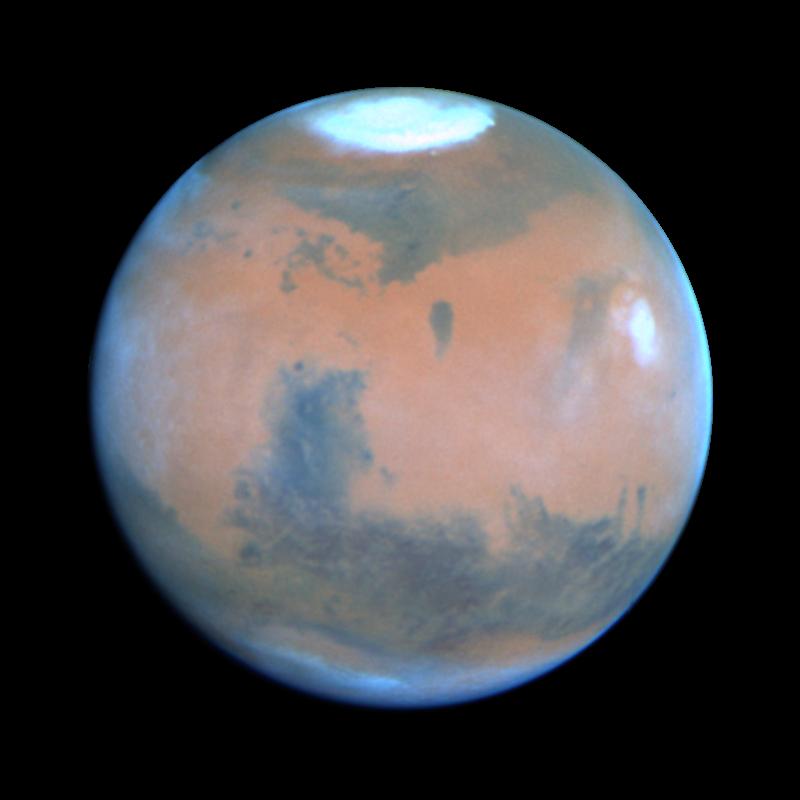
The fourth planet from the Sun — a cold, rocky desert world with the Solar System's tallest volcano, two tiny moons, and abundant evidence of an ancient watery past.
Starship
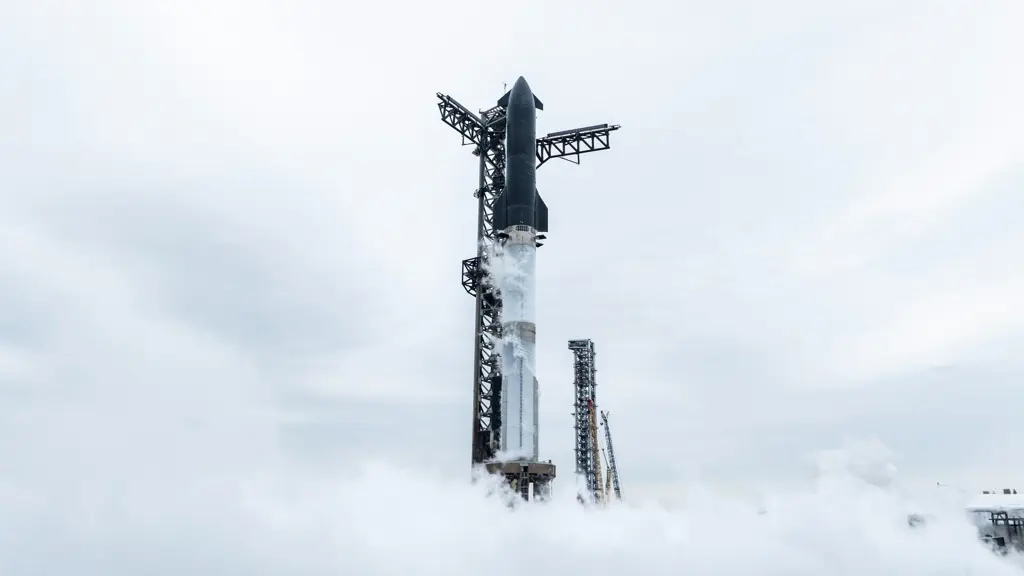
In DevelopmentSpaceX's fully-reusable super heavy-lift rocket — the most powerful launch vehicle ever flown.
Sources
- Pressurized Lunar Rover – Dual Hull (Astronautix)
- NASA CR-192034: Pressurized Lunar Rover (LPI/NTRS PDF)
- Exploration Rover Concepts and Development Challenges – NASA
- Power System Design Trades for a Pressurized Lunar/Mars Rover (NASA TM-20220006678)
- Pressurized Rover – NASA Official Page
- Space Exploration Vehicle Fact Sheet – NASA
- Toyota Lunar Cruiser Technology Page
- JAXA Lunar Surface Exploration Implementing Arrangement
- Lunar Terrain Vehicle – NASA Official Page
- Commercial and International Lunar Rovers – NASA Podcast
- NASA Picks Three Companies for Lunar Terrain Vehicle Feasibility Studies – SpacePolicyOnline
- LER Fact Sheet – NASA / Lunar and Planetary Institute
- Habitability Considerations for a Notional Five-Day Small Pressurized Rover Excursion (NTRS)
- Habitation and Life Support Systems for a Pressurized Rover (NTRS)
- MOLAB – Astronautix
- Meet The Pressurized Rover – Space Scout
- Pressurized Rover – Mitsubishi Heavy Industries
- Mars Pressurized Rover Design – Auburn University CADC
- A Small Pressurized Rover Concept for Extended Lunar and Mars Exploration (AIAA)
- NASA Selects Astrolab to Provide Lunar Rover for Artemis – Venturi/Astrolab
- Of Firebirds and Lunar Rovers – The Space Review