Power generators (RTGs)
Nuclear batteries powering humanity's deepest space missions — from the lunar surface to interstellar space.
Power from decay: RTGs in spaceflight
A radioisotope thermoelectric generator (RTG) is a nuclear power system that converts the heat released by the natural radioactive decay of an isotope — almost universally plutonium-238 dioxide (PuO₂) in U.S. space applications — directly into electricity using solid-state thermoelectric couples. Because they contain no moving parts, RTGs are exceptionally reliable and have powered spacecraft continuously for decades, making them the preferred power source for missions beyond the inner solar system or in environments where sunlight is absent, scarce, or unreliable.
Since the first RTG flew on a U.S. Navy navigation satellite in 1961, the United States has used plutonium-238 radioisotope power systems on more than two dozen space missions, including the Apollo lunar surface experiments, the Pioneer and Voyager outer-planet probes, the Galileo, Ulysses, Cassini, and New Horizons flagship missions, and the Curiosity and Perseverance Mars rovers. The Moon, Mars, Saturn, Uranus, Neptune, Pluto, and the interstellar medium have all been reached by RTG-powered spacecraft.
Typical space RTGs deliver tens to a few hundred watts of electrical power and operate for decades, degrading slowly as both the fuel decays and thermoelectric materials age. The thermoelectric conversion efficiency of heritage designs is approximately 5–7 %, though next-generation programs aim for efficiencies approaching 10–13 % using advanced thermoelectric materials.
How RTGs work
RTGs are solid-state heat engines based on the Seebeck effect: when two dissimilar conductive materials are joined in a closed circuit and their junctions are held at different temperatures, a DC voltage is generated. In an RTG, the "hot junction" of each thermoelectric couple is placed near the radioisotope heat source, while the "cold junction" is anchored to a radiator exposed to the ambient environment — deep space, a planetary atmosphere, or the lunar vacuum. The temperature difference across the thermoelectric legs drives current; many couples are connected electrically in series and thermally in parallel to accumulate useful voltage and power.
The performance of a thermoelectric material is characterized by the dimensionless figure of merit ZT = S²σT/κ, where S is the Seebeck coefficient, σ is electrical conductivity, κ is thermal conductivity, and T is absolute temperature. Higher ZT allows a greater fraction of the available Carnot efficiency to be captured. In practice, real space RTG materials (silicon-germanium, lead telluride, TAGS alloys, bismuth telluride) achieve ZT values around 1 over limited temperature ranges, holding overall system conversion efficiency to single-digit percentages. Key loss mechanisms include finite ZT, side heat losses around the thermoelectric legs, electrical and thermal contact resistances at material interfaces, and long-term material degradation through diffusion, microcracking, and aging.
RTG electrical output declines over the mission lifetime for two compounding reasons. First, Pu-238 decays at approximately 0.79 % per year in thermal power output. Second, thermoelectric elements degrade independently; the Voyager RTGs, for example, experienced a total electrical output decline substantially larger than fuel decay alone would predict, dropping to roughly 67 % of original output after decades rather than the ~83 % expected from fuel decay alone.
Major RTG designs
U.S. space RTGs have evolved through several generations, each optimized for the missions and manufacturing technologies of their era.
RTG-powered spacecraft
- Jun 1961Transit 4A — SNAP-3
First RTG ever flown in space, producing ≈ 2.7 We from a Pu-238 source; operated approximately 15 years.
- 1969Nimbus-3 — SNAP-19
First NASA RTG application; 28.2 We at BOM.
- 1969–1972Apollo ALSEP — SNAP-27
SNAP-27 RTGs (70 We each) powered lunar surface science packages on Apollo 12, 14, 15, 16, and 17, operating until the ALSEP network was shut down in 1977.
- 1972–1973Pioneer 10 and 11 — SNAP-19
Four SNAP-19 RTGs per spacecraft (40.3 We each at BOM) powered the first missions to the outer solar system.
- 1975Viking 1 and 2 — modified SNAP-19
Modified SNAP-19 RTGs (42.6 We each at BOM) provided primary surface power for both Mars landers, operating into the early 1980s.
- 1977Voyager 1 and 2 — MHW-RTG
Each Voyager spacecraft carries three MHW-RTGs (~158–160 We each at BOM), providing a combined initial output of roughly 470 We per spacecraft. Both spacecraft remain powered after more than 45 years in space.
- 1989Galileo — GPHS-RTG
Two GPHS-RTGs carried to Jupiter; spacecraft operated approximately 14 years.
- 1990Ulysses — GPHS-RTG
One GPHS-RTG on this NASA–ESA solar polar mission; operated approximately 19 years.
- 1997Cassini — GPHS-RTG
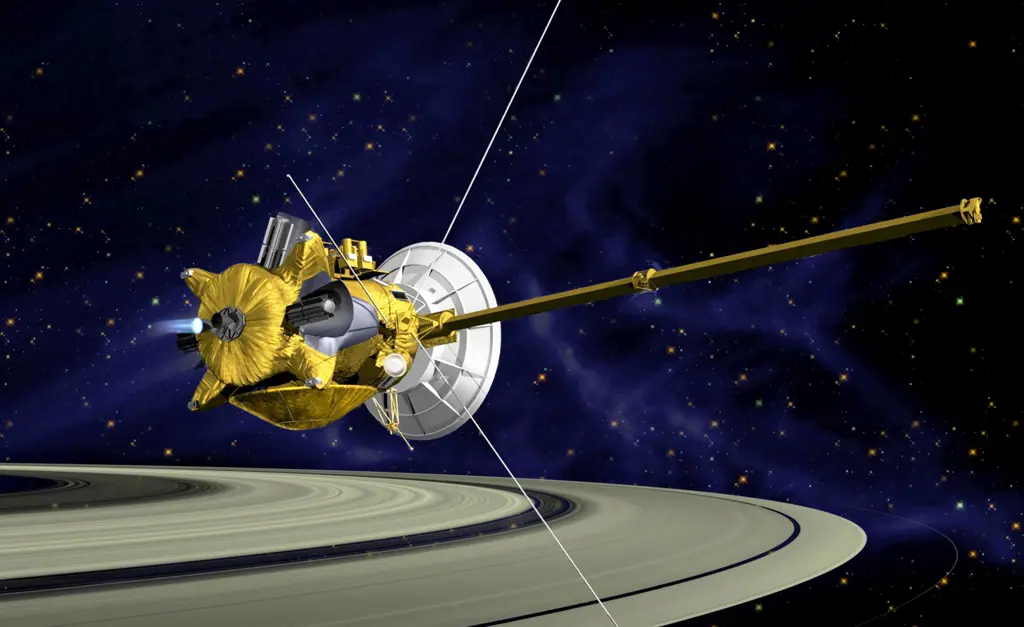
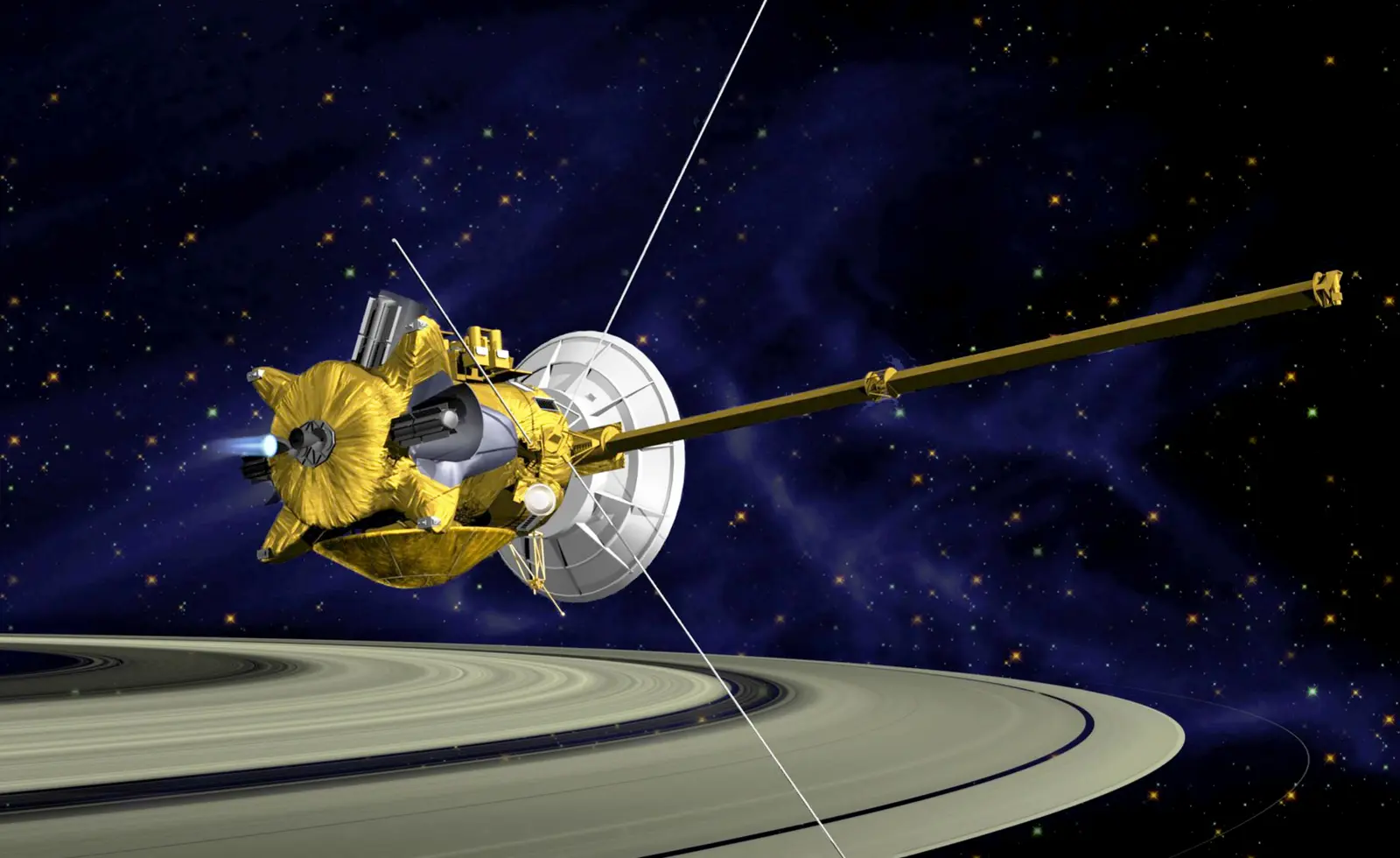
Three GPHS-RTGs (~870 We combined at launch) plus 82 Pu-238 RHUs powered the Saturn orbiter for approximately 19 years. The ESA Huygens Titan probe carried no RTG for electricity but used 35 Pu-238 RHUs for thermal control.
- Jan 2006New Horizons — GPHS-RTG
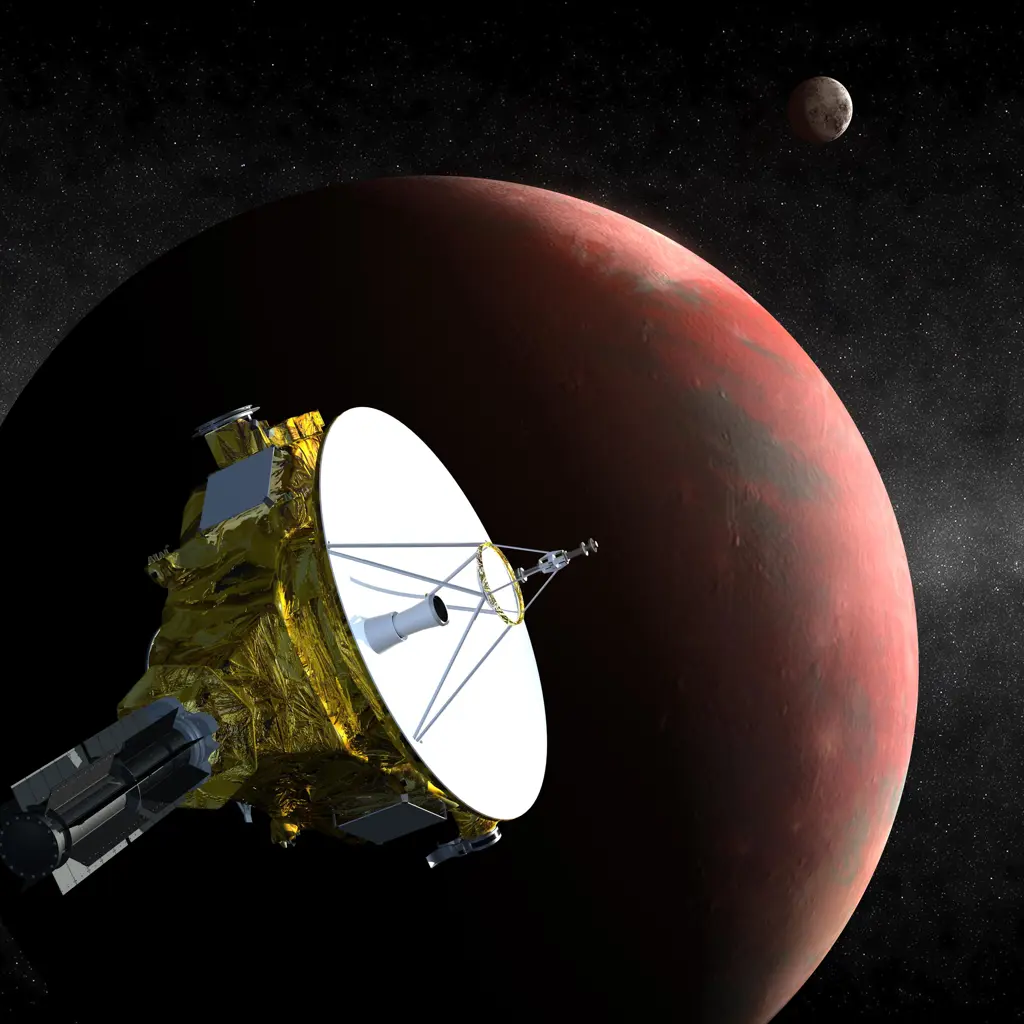
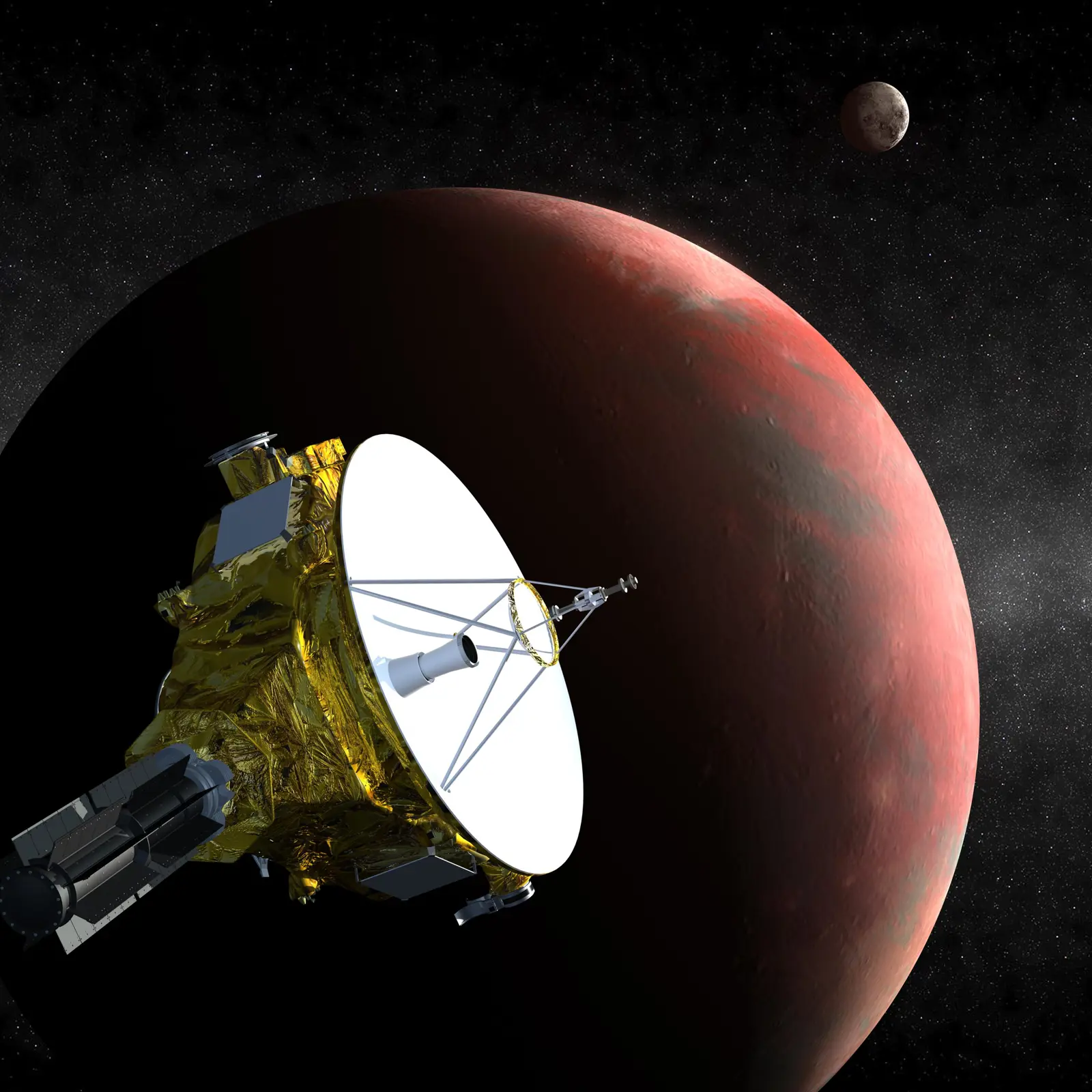
One GPHS-RTG (built as a Cassini spare; ~250 We at launch) powered the mission to Pluto and the Kuiper Belt.
- Nov 2011Mars Science Laboratory (Curiosity) — MMRTG
One MMRTG (~110 We, ~2,000 Wth at BOM) powers Curiosity on the Martian surface. Contains approximately 4.8 kg of PuO₂.
- Jul 2020Mars 2020 (Perseverance) — MMRTG
One MMRTG of the same class as Curiosity's, fueled with Pu-238, powers the Perseverance rover.
- Late 2020s (planned)Dragonfly — MMRTG
NASA has baselined a Pu-238 MMRTG as the power source for the Dragonfly rotorcraft lander at Saturn's moon Titan.
Lunar surface applications
On the lunar surface, the most critical function of an RTG is providing continuous "survival power" through the lunar night — a period of approximately 14 Earth days during which temperatures drop to around −170 °C and solar panels produce no electricity. An RTG simultaneously supplies usable electrical power and waste heat, which can maintain electronics and mechanisms above their minimum operating temperatures without large battery banks or complex active thermal control.
The historical precedent for lunar RTG use is the SNAP-27, which powered the Apollo Lunar Surface Experiments Package (ALSEP) on five Apollo missions. Each SNAP-27 unit produced 70 We at beginning of mission and operated continuously for up to 5–8 years — far beyond its two-year design lifetime — until NASA shut down the ALSEP network in 1977.
For future lunar operations under the Artemis Program, RTGs are considered practical for low-power remote instruments, small robotic vehicles that must survive repeated lunar nights, decentralized power nodes for outlying assets, and hardware sited in permanently shadowed or weakly illuminated regions near the poles. A review focused on Artemis-era lunar systems concluded that Pu-238 and Am-241 RTGs are not practical as the primary power source for a crewed base, but are well suited for low-power instruments or remote surface assets where uninterrupted operation outweighs total output considerations.
Plutonium-238 fuel supply
Pu-238 supply has been a persistent constraint on RTG-powered spaceflight. U.S. production at the Savannah River Site ended in 1988, after which NASA relied on legacy stockpiles supplemented by approximately 30–40 kg purchased from Russia in the 1990s and 2000s. Russia stopped selling Pu-238 to the United States around 2009, and U.S. planning no longer assumes any future Russian supply.
Production restarted in 2013 at Oak Ridge National Laboratory (ORNL), and in December 2015 NASA and the Department of Energy announced the first new batch — 50 grams of Pu-238 — ending a roughly 30-year production gap. The Pu-238 Supply Project is a joint DOE–NASA effort involving ORNL, Idaho National Laboratory (INL), and Los Alamos National Laboratory (LANL). The process uses neptunium-237 from DOE stockpiles, fabricates irradiation targets, irradiates them in a reactor, and chemically separates the product.
The programmatic goal is to reach and sustain a production rate of approximately 1.5 kg of PuO₂ per year — roughly the scale needed to support one large RTG-powered flagship mission every few years alongside smaller uses. A single MMRTG requires on the order of 4–5 kg of Pu-238, meaning several years of new production per unit. INL states that the U.S. now has sufficient Pu-238 to fuel space missions scheduled for approximately the next decade, but emphasizes that domestic supply remains a limited resource requiring continued production to support additional or larger missions beyond that horizon.
Next-generation RTG development
NASA and DOE have pursued two primary next-generation radioisotope power system lines since the 2010s. The first is the enhanced MMRTG (eMMRTG) concept, which proposed replacing the MMRTG's legacy PbTe/TAGS thermoelectric couples with skutterudite (SKD) couples to raise conversion efficiency while retaining the MMRTG's mechanical and safety architecture. The eMMRTG remained at the concept and technology-development level; it did not proceed to hardware development or flight qualification.
The second and more active line is the Next Generation RTG Project, a spaceflight system project within NASA's Radioisotope Power Systems Program executed with INL. Its primary goals are to re-establish manufacturing capability for silicon-germanium (SiGe) unicouple thermoelectric converters, refurbish stored GPHS-RTG hardware, and deliver a high-power, vacuum-optimized RTG for deep-space missions. The project is structured in modular configurations:
Mod 0 involves refurbishment of a legacy GPHS-RTG qualification unit for near-term availability around 2024. Mod 1 re-establishes full production of the GPHS-RTG design with updated manufacturing of thermoelectric couples and Step-2 GPHS fuel forms, targeting availability around 2028 and a performance of up to 295 We at beginning of life and up to 210 We at end of design life (17 years after BOL, including up to 3 years of ground storage). Mod 2 aims for approximately 290 We at end of design life in the early 2030s, using Mod 1 as a retrofit-ready platform for higher-performance thermoelectric converter technologies.
L3Harris Technologies serves as prime contractor for the flight-qualified Next Generation RTG optimized for vacuum. In 2021, INL tasked L3Harris to re-establish key GPHS-RTG technologies and update the design for new deep-space missions. The system cleared its Critical Design Review (CDR) on 2 April 2026. The DOE contract runs through 2027, culminating in a production readiness review. L3Harris has indicated that flight units could support NASA deep-space probes starting in the early 2030s, including a notional Uranus orbiter using two Next Gen RTGs.
A 2017 NASA Next-Generation RTG study had identified eight candidate thermoelectric couple configurations and winnowed them to three recommended RTG families — the Segmented RTG (SRTG), Segmented-Modular RTG (SMRTG), and Hybrid-Segmented Modular RTG (HSMRTG) — sized to provide approximately 50–600 We using 2–16 GPHS modules, enabling application across Discovery-, New Frontiers-, and Flagship-class missions. Advanced RTG research projects theoretical system efficiencies of approximately 10.8 % using high-ZT thermoelectric materials, roughly 90 % higher than the state-of-the-art ~5–6 %, with next-generation U.S. programs targeting approximately 13 % efficiency.
RTG questions answered
Related
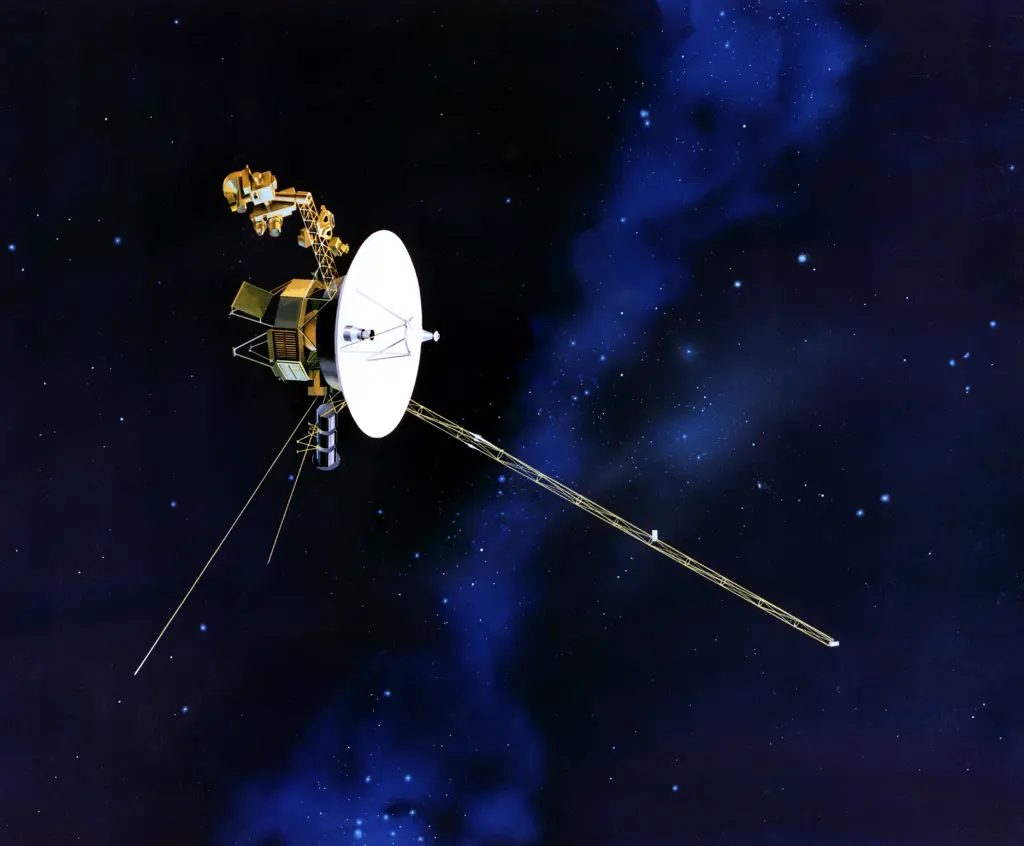
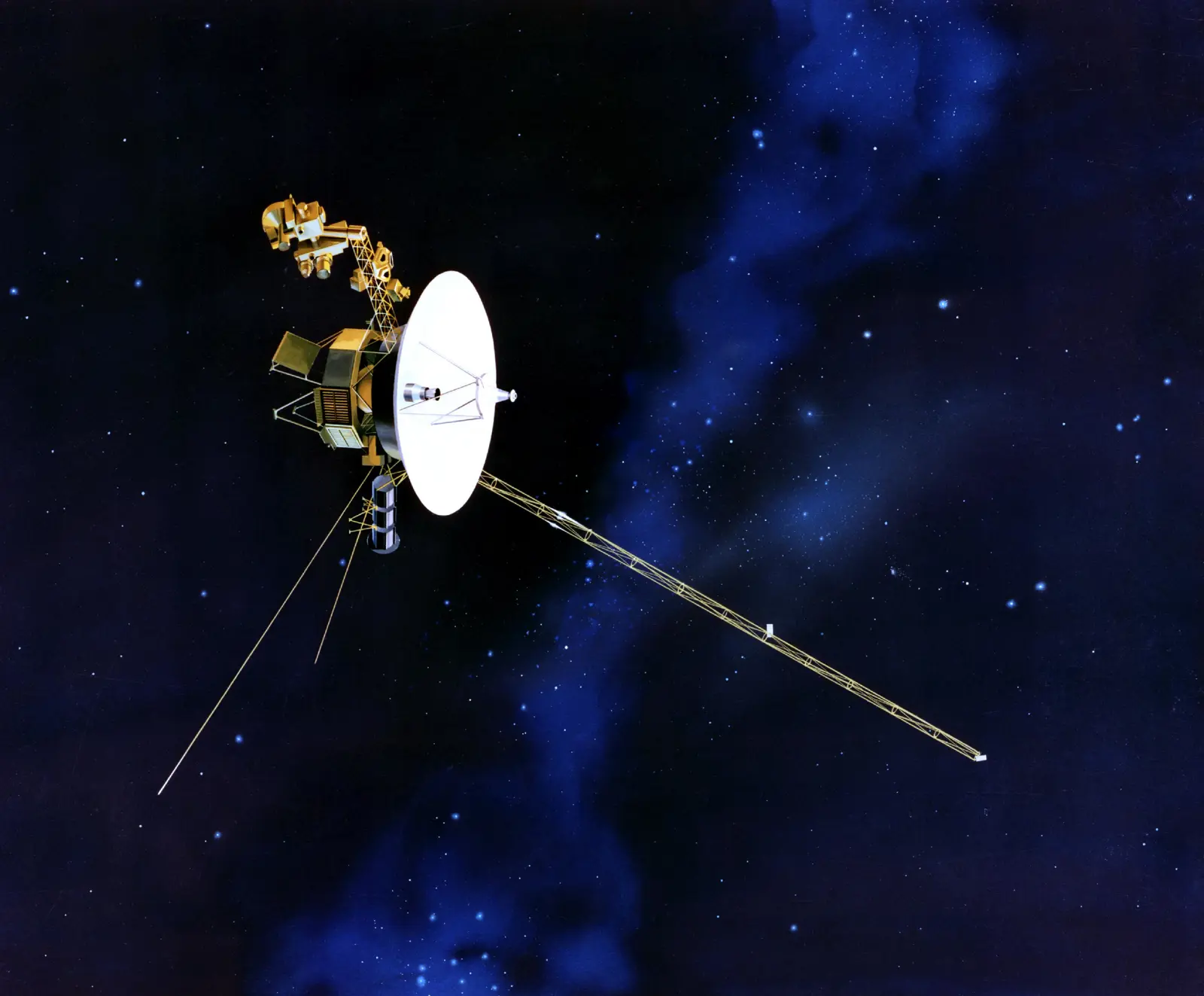
Voyager 1
En RouteThe farthest human-made object from Earth
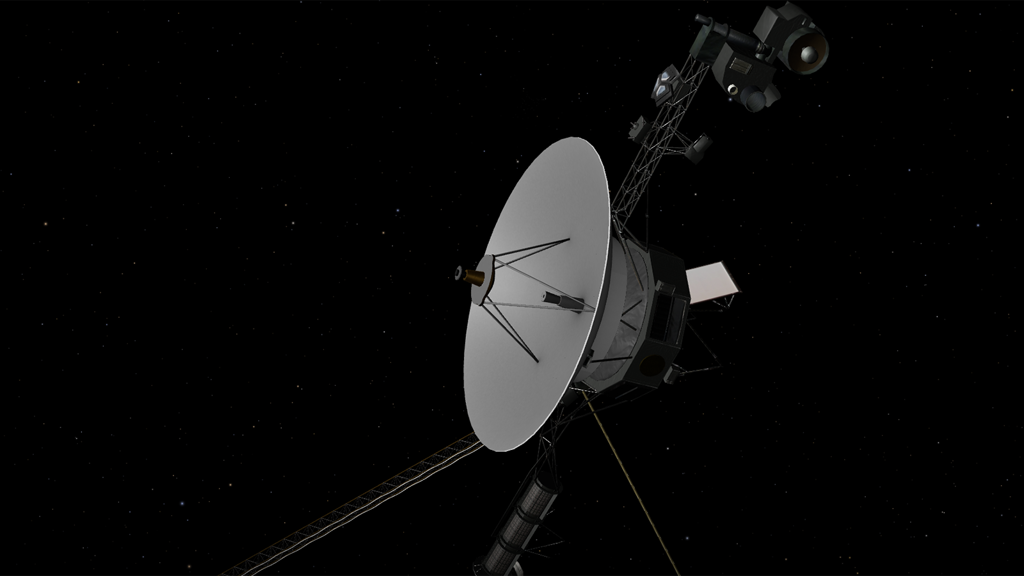
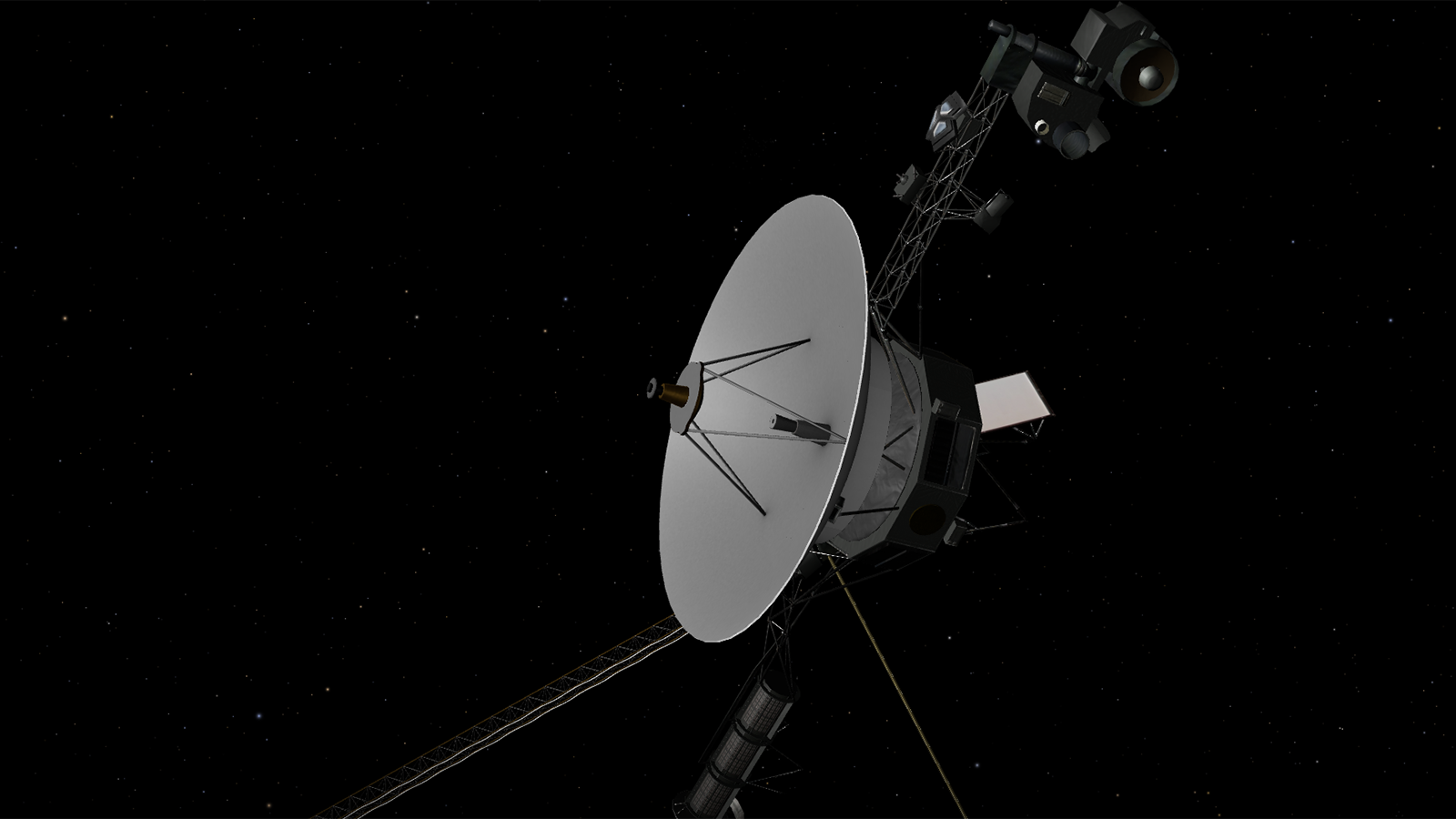
Voyager 2
En RouteThe only spacecraft to visit all four giant planets
Cassini–Huygens
RetiredThirteen years orbiting Saturn
New Horizons
En RouteFirst to Pluto, now in the Kuiper Belt


Perseverance Rover
OperationalHunting for ancient life in Jezero Crater


Apollo Program
RetiredLanding humans on the Moon, 1969–1972
Sources
- Radioisotope thermoelectric generator — Wikipedia
- Power: Radioisotope Thermoelectric Generators — NASA Science
- Performance improvement of radioisotope thermoelectric generators — ScienceDirect
- Radioisotope thermoelectric generators: Evolution, materials, and future — AIP Applied Physics Reviews
- Radioisotope Thermoelectric Generators — HyperPhysics Concepts
- About Plutonium-238 — NASA Science
- Cassini's Radioisotope Thermoelectric Generators (RTGs) — NASA Science
- Am-241 and Pu-238 for NASA Artemis Lunar RTG — Stanford University
- Plutonium-238 Production for Space Exploration — ACS National Historic Chemical Landmarks
- High Efficiency Thermoelectric Radioisotope Power Systems — NASA NTRS
- Powering Curiosity: Multi-Mission Radioisotope Thermoelectric Generators — DOE
- Next-Generation RTG Final Report — NASA Science
- The Next Generation Radioisotope Thermoelectric Generator Project — INL
- L3Harris advances Next Gen RTG — Nuclear Engineering International
- Getting into the Space Nuclear Power Game with Next-Generation Technology — L3Harris
- RADIOISOTOPE POWER FOR SCIENTIFIC EXPLORATION — LPSC 2021 (PDF)
- Radioisotope Power Systems FAQ — NASA Science
- National Labs resume plutonium production for space exploration — INL
- The Use and Re-Supply of Plutonium-238 in the United States — Stanford University
- Plutonium-238: The Fuel Crisis — Brazilian Journal of Radiation Sciences (PDF)
- Assessment of Plutonium-238 Production Alternatives — DOE (PDF)
- Lunar Night Survivability Achieved by Radioisotope and Fission Power Systems (PDF)
- Exploring Viability of Radioisotope Power Systems for a Crewed Rover — NASA TFAWS (PDF)